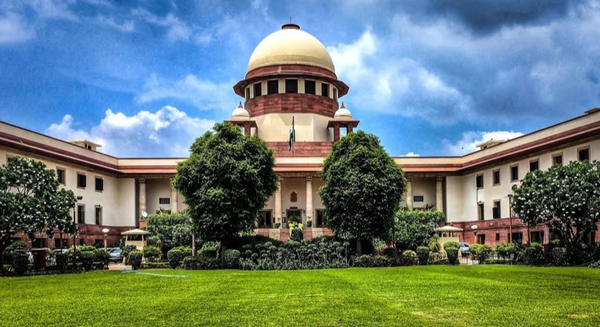
NEW DELHI — India’s Supreme Court on Tuesday acquitted a Sri Lankan Tamil refugee who spent years in custody after being wrongly identified as a fugitive LTTE suspect, in a ruling that sharply criticised Tamil Nadu’s Q Branch police for what the court described as a deeply flawed investigation built on unreliable witness testimony and defective identification procedures.
The judgment, which laid bare the vulnerability of stateless Tamil refugees caught in India’s counterterrorism apparatus, overturned the conviction of the refugee, identified in court records as Ranjan, after the court found no credible evidence linking him to an absconding member of the Liberation Tigers of Tamil Eelam, or LTTE.
A bench of Justices Vikram Nath, Sandeep Mehta and Vijay Bishnoi held that lower courts had erred in concluding that Ranjan was the same person as an absconding accused identified only as “Sri,” designated A-5 in the case.
“The conviction based on this flawed identification cannot be sustained in the eyes of the law,” the bench wrote.
The May 20 ruling, cited as 2026 INSC 516, set aside a July 2024 trial court order sentencing Ranjan to five years of rigorous imprisonment under India’s Unlawful Activities (Prevention) Act, or UAPA, as well as a subsequent Madras High Court judgment upholding the conviction.
Ordering his immediate release from the Special Camp at Trichy, the court said Ranjan remained free to pursue his long-pending request for relocation to Switzerland in accordance with the law.
The Conspiracy Allegation
According to the prosecution, a conspiracy was hatched in 2015 by several accused persons to revive the banned LTTE and to send cyanide capsules and poisonous chemicals to Sri Lanka to eliminate individuals allegedly responsible for the organisation’s downfall.
Investigators alleged that an accused identified as “Sri” handed over 75 cyanide capsules and a chemical compound called GPS-4 to a co-conspirator, for smuggling into Sri Lanka with the aim of killing rival Tamil leaders.
Several accused in the case were arrested and convicted in 2018. But “Sri” was declared absconding, and the warrant for his arrest remained pending for more than five years.
On December 16, 2021, Tamil Nadu’s Q Branch police executed a non-bailable warrant against Ranjan, claiming that he and “Sri” were the same person. Ranjan denied this from the outset.
The Case Collapses
The prosecution’s case against Ranjan rested almost entirely on the oral testimony of two Sri Lankan witnesses, Balachandran and Kumar Dharma Kumar. The Supreme Court subjected their evidence to close scrutiny and found it comprehensively unreliable.
The bench noted that during earlier investigations and trials, neither witness had ever stated that “Sri” was also known as “Ranjan.” That link emerged only after the appellant’s arrest in 2021 — a “material improvement” in their account rather than a mere clarification, and one the court treated with deep suspicion.
Both witnesses admitted in cross-examination that they had obtained Indian identity documents despite not being Indian citizens, and that they had assisted or sheltered persons allegedly connected with LTTE activities. Despite this, the court observed, no action appeared to have been taken against them by the investigating agency.
The identification procedure itself was found to be irreparably defective. No Test Identification Parade was conducted despite the prosecution’s heavy reliance on witness identification. Instead, Ranjan was shown to the witnesses only after he had been taken into police custody — a practice the bench said was inconsistent with basic evidentiary standards.
The court also noted the absence of any contemporaneous oral or documentary evidence linking “Sri” to “Ranjan,” even though the proceedings against “Sri” had been ongoing for years. At the same time, it took note of Ranjan’s open, lawful residence in India as a registered refugee and his efforts to obtain police clearance for resettlement abroad — conduct the judges said was inconsistent with that of someone absconding from the law.
Justice Mehta, writing for the bench, concluded that the two witnesses had likely used false identities to bring relatives to India and then decided to implicate Ranjan as “Sri” in order to obtain closure for their own legal jeopardy. “It is therefore clearly a case where the appellant has been falsely implicated by being assigned the identity of another person, namely, the so-called absconding accused ‘Sri’ (A-5),” the judgment stated.
Court’s Rebuke to Q Branch
The bench was sharply critical of the investigating agency’s conduct in the case. It questioned how a registered refugee, who had been regularly appearing before authorities and actively seeking police clearance certificates for relocation, could simultaneously be described and pursued as an absconding terror accused.
The judges described the Q Branch’s approach as marked by inaction and indolence, faulting investigators for failing to conduct basic verification and for accepting at face value an identification that was never properly tested in court.
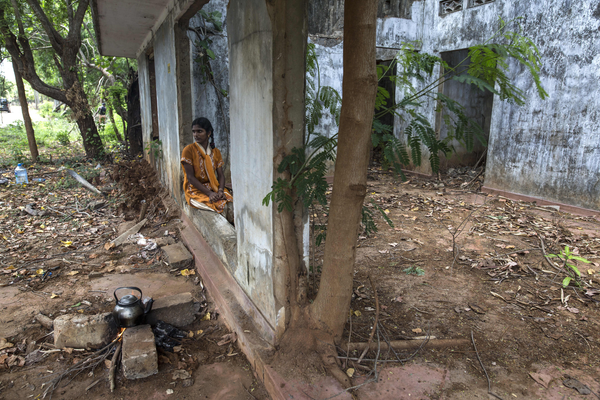
The ruling underscores, the court suggested, the responsibility of specialised anti-terror agencies to exercise greater care when dealing with stateless refugees whose liberty is already constrained by camp conditions, surveillance, and legal precarity.
A Broader Pattern
The judgment arrives against the backdrop of longstanding concerns about how Sri Lankan Tamil refugees are treated under India’s anti-terrorism laws. The LTTE, which waged a nearly three-decade armed campaign for a separate Tamil homeland in Sri Lanka’s north and east, was militarily crushed in May 2009 in a final offensive that killed large numbers of civilians, and has been outlawed in India since 1992.
In the years since the war’s end, hundreds of Tamil refugees have faced criminal proceedings under the UAPA and related statutes, often on the basis of informant testimony, tenuous intelligence inputs, and thin forensic foundations. Rights organisations have repeatedly flagged the absence of a formal asylum framework in India and warned that stateless Tamil refugees are especially vulnerable to prolonged pre-trial detention under legislation that makes bail exceptionally difficult to secure.
Ranjan’s case, in which the Supreme Court ultimately found that a man had been imprisoned for years because two compromised witnesses were allowed to assign him someone else’s identity without effective challenge from the state, is likely to intensify scrutiny of how India’s security and refugee protection regimes intersect — and of who is most at risk when they fail.