By M.R. Narayan Swamy
The fear of suffering electoral setbacks due to mass discontent over economic conditions is the key reason Sri Lanka’s main ruling party has decided against holding provincial council elections this year, Tamil political leaders say.
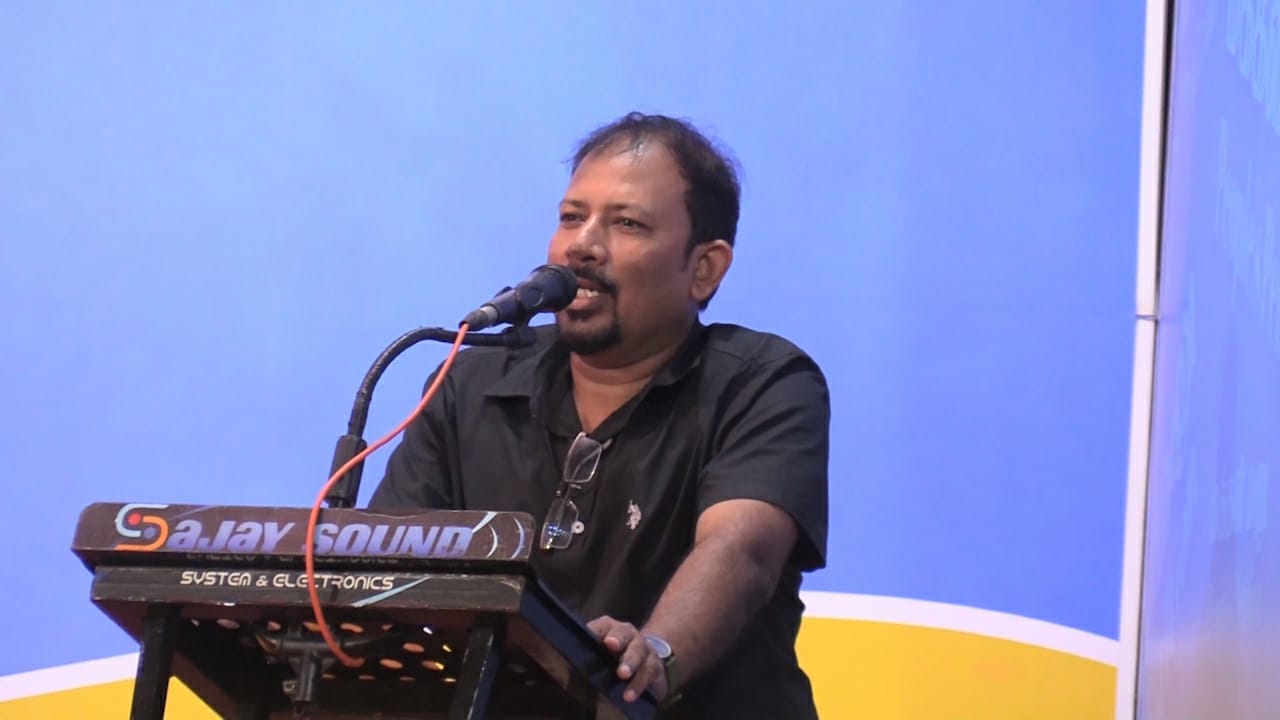
Tilvin Silva, general secretary of the Janatha Vimukthi Peramuna (JVP), said in an interview that the balloting cannot be conducted in 2026 “because of current developments in the country”.
The possibility of holding the elections would be “explored” next year, said Silva, whose Sinhalese-Marxist JVP heads the National People’s Power (NPP) alliance ruling the country.
M.A. Sumanthiran, acting general secretary of the Ilangai Tamil Arasu Katchi (ITAK), said the NPP’s 2024 election manifesto had stated categorically that the provincial council elections would be held within one year, by September 2025.
When this issue was raised with President Dissanayake in November last year, he told opposition leaders that they would be organised “next year” – 2026.
“The government, then, is no different from any previous one in terms of brazenly violating its promises,” Sumanthiran, a former MP, told Jaffna Monitor.
The Tamil lawyer-leader was clear that Tilvin Silva’s announcement was “entirely due to the fear of losing outright in the (Tamil-majority) north and the (multi-racial) east.”
“Even if they win elsewhere, it will be with much reduced majority,” he said, referring to the rest of the mostly Sinhalese-populated areas of the country. “This is clearly a denial of the franchise of the people.”
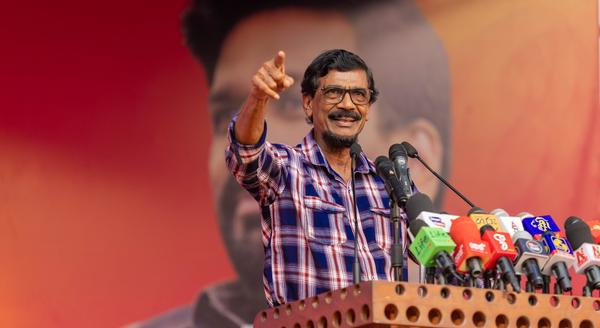
Mano Ganesan, who heads the Tamil People’s Alliance (TPA) and is a prominent leader of the “Indian Tamil” community, also spoke about the JVP’s reluctance to face the Sri Lankan voters.
“The impression is increasingly clear. They are not prepared to face elections at this moment.
“The growing public frustration over economic conditions is only intensifying that hesitation. Yes, the reality is that Tilvin Silva fears facing the electorate today,” Ganesan, told Jaffna Monitor.
Elections to all nine of Sri Lanka’s provincial councils have not been held since 2017. Although provincial councils are to be formed across the country, the demand for polls is most acute in the Northern and Eastern provinces, where the Tamil community and its leaders continue to push for greater devolution of power.
Ganesan, a member of the Parliamentary Select Committee on the provincial council electoral system, said JVP/NPP leaders had been insisting on incorporating youth and women’s reservations into any new electoral system.
While not opposed in principle to such reservation, Ganesan and other opposition leaders on the select committee have argued that insistence on this now will consume too much time.
So, Ganesan argued that the long-overdue provincial council elections should be held under the existing and reasonably fair proportional representation system, and that these should be organised without delay in the northern, eastern, and central provinces.
Later, everyone could work on reservations for youth and women. But the NPP leadership refused to accept the suggestion.
Douglas Devananda, leader of the Eelam People’s Democratic Party (EPDP), said he feared that the JVP-led government would never hold the provincial council elections because the government was against devolution of power to the provinces.
“Also, if they go for elections, they will face setbacks,” he told Jaffna Monitor, echoing a point underlined by other Tamil leaders too.
Devananda, a former Sri Lankan minister, said the JVP-NPP alliance was likely to face “major setbacks” across Sri Lanka if elections were held now. This was mainly due to the economic problems that have hit Sri Lankans hard, he said.
The multi-party Democratic Tamil National Alliance (DTNA) also blasted the government over the delay of the provincial council elections, pointing out that it was a clear violation of an election promise made by the president.
A dTNA statement added that the government of Anura Dissanayake was cleverly controlling the provincial councils through the governors without allowing the people to elect their representatives.
It also questioned the propriety of JVP leader Tilvin Silva announcing the delay of the overdue provincial council elections when he was not part of the NPP-JVP government. ‘We condemn this announcement. Who has given Tilvin Silva the right to deny the people their franchise?’
The provincial councils are part of the India-Sri Lanka Accord signed in 1987 with a view to ending Tamil separatism. The councils were conceived as an alternative to separatism and as a means of devolving power to the provinces.
The JVP, the main political force within the ruling NPP coalition, has long opposed the 1987 India-Sri Lanka Accord and its provisions, including the provincial council system.
In 2024, the JVP stunned friends and foes alike when it swept the parliamentary elections in the Tamil-majority north, virtually eclipsing the traditional Tamil parties. But its vote share declined noticeably in local body polls in the same region in 2025.
Tamil and other political sources say this worries the JVP brass, which feels that any major losses in provincial council elections will take away the sheen from the country’s centre-Left government midway through its term.