

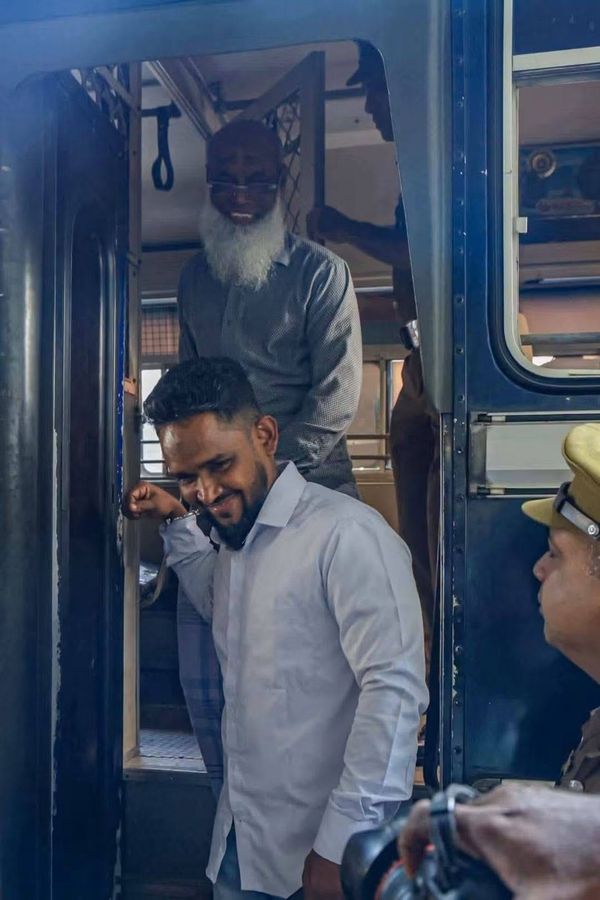
COLOMBO, Sri Lanka — A Sri Lankan court on Tuesday sentenced 15 people to between 200 and 260 years of rigorous imprisonment for their roles in the 2019 Easter Sunday bombings, more than seven years after suicide attackers struck churches and luxury hotels across the country.
The eighth defendant, Abdul Manaf Mohamed Firdous, received the longest term, 260 years of rigorous imprisonment. Four defendants were sentenced to 240 years each: Mohamed Sariboo Adam Lebbe, known as Gafoor Mama; Hayathu Mohamed Milhan; Mohamed Ibrahim Sadiq Abdullah, who prosecutors said had fought for the Islamic State in Syria; and Mohamed Ibrahim Shahid Abdul Haq.
Naufar Maulavi, the first defendant, whom prosecutors accused of radicalizing the others through his teachings, was sentenced to 220 years. The same term went to Mohamed Rameez Mohamed Sajid, known as Sajid Maulavi; Abdul Latheef Mohamed Safi, known as Safi Maulavi, who was acquitted on one charge and convicted on the rest; Mohamed Mustafa Mohamed Haris; and Rasik Raza Hussen.
Mohamed Anwar Mohamed Rizkan, Mohamed Mansoor Mohamed Sanasdeen, Husainul Risvi Khalid Sameer, Mohamed Hanifa Zainul Abdeen and Kachchi Mohamed Mohamed Jemsith received 200 years each.
The Permanent High Court Trial-at-Bar, a three-judge bench made up of Judges Navaratne Marasinghe, Ramanathan Kannan and Sujeewa Nissanka, also ordered the state to confiscate all movable and immovable property belonging to the 15 convicted defendants. Nine others who stood trial were acquitted and ordered released.
None of the 15 was sentenced to death. In July, a separate Trial-at-Bar sentenced Pujith Jayasundara, who was inspector general of police at the time of the attacks, and Hemasiri Fernando, then the Defense Ministry secretary, to death. The court found them guilty of criminal negligence and of aiding and abetting deaths through dereliction of duty for failing to act on intelligence warnings of the attacks.
That verdict was a 2-to-1 decision, with one judge finding that the prosecution had not proved its case. A different bench had acquitted both men in 2022, but the Supreme Court overturned the acquittal on appeal by the attorney general and ordered the trial to resume. Both men can appeal their sentences to the Supreme Court. Sri Lanka has not carried out an execution since 1976.
In the case decided on Tuesday, the attorney general indicted 25 people in October 2021, among them Naufar Maulavi, on 23,270 charges, including conspiracy and aiding and abetting the attacks. One defendant died in 2023 while the trial was underway, leaving 24 before the court. The case was among the most closely watched terrorism trials in Sri Lanka since the end of the civil war.
On the morning of April 21, 2019, suicide bombers attacked three churches, in Colombo, Negombo and Batticaloa, and three luxury hotels in Colombo. More than 250 people were killed and hundreds more were wounded. The authorities blamed a local Islamist group, National Thowheed Jamath, and the Islamic State later claimed responsibility.
The bombings set off a national security crisis and led to criminal investigations, presidential and parliamentary inquiries, and lawsuits over the government's handling of intelligence warnings it received before the attacks.
In 2023, the Supreme Court ruled that former President Maithripala Sirisena and several former senior security officials had violated the fundamental rights of the victims by failing to take adequate steps to prevent the attacks despite the warnings, and ordered them to pay compensation.
The bombings were the deadliest act of terrorism in Sri Lanka since the civil war ended in 2009.