

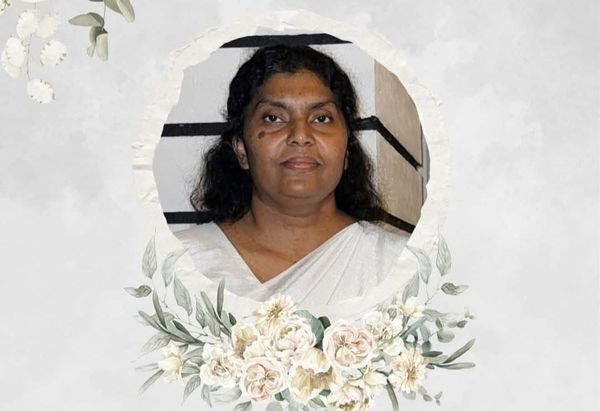
COLOMBO, Sri Lanka — A Sri Lankan diplomat helped save a domestic worker from execution in Saudi Arabia in the mid-2000s by going around formal diplomatic channels and sending a personal appeal to the Saudi royal court, according to a human rights activist who said the diplomat described the episode to him.
The activist, Muheed Jeeran, who has worked on cases involving Sri Lankan migrant workers in the Persian Gulf, said the diplomat, Nilanthini Arulpiragasam, persuaded a Sri Lankan employee of the royal household to carry a handwritten letter in Arabic to a senior woman in the royal family. The condemned woman was later granted clemency and returned to Sri Lanka, he said.
Ms. Arulpiragasam, a Tamil from Jaffna and a career officer in the Sri Lanka Foreign Service, died in Morocco last year while attending an official training program. She was 44. At the time of her death, she was director of the Latin America and Caribbean Division of the Ministry of Foreign Affairs, Foreign Employment and Tourism.
Mr. Jeeran described the case in a written statement dated Oct. 6. His account could not be independently verified, and he did not identify the domestic worker.
According to Mr. Jeeran, the worker was a poor Muslim woman from Sri Lanka's Eastern Province who had been sentenced to death in Saudi Arabia. For nearly two years, he said, the case moved through the usual diplomatic process. The Sri Lankan mission sent a formal note, Saudi Arabia's Foreign Ministry referred it to the Justice Ministry, and the reply was that the judiciary was independent and the government could not intervene.
Ms. Arulpiragasam, then posted in the Gulf, became involved after that process stalled, Mr. Jeeran said. He said she understood that another route existed through wasta, an Arabic term for the use of personal connections to get things done outside formal bureaucracy.
The opening came when a Sri Lankan man who worked as an assistant in the royal establishment came to the mission for consular help, Mr. Jeeran said. Ms. Arulpiragasam assisted him, and he asked whether he could do something for her in return. She told him she needed help saving a woman's life.
She asked him to deliver a handwritten letter privately to a senior woman in the royal family, whom Mr. Jeeran identified as either the king's mother or a senior princess. He said the letter was a personal plea rather than a legal argument, and recalled it as saying: "This girl is an orphan. She is poor. She has made a mistake. Please show a mother's mercy."
The letter reached the king through the royal court rather than the Foreign Ministry, Mr. Jeeran said, and the king granted clemency, known as Afw (عفو). The death sentence was commuted, and the woman was eventually sent home.
Mr. Jeeran said such interventions were rarely made public and that women pardoned through the royal court were often repatriated without attracting media attention.
He said he learned of the case while discussing a different outcome with Ms. Arulpiragasam: the execution of Rizana Nafeek, a domestic worker from the Eastern Province who was beheaded in Saudi Arabia in January 2013 after being convicted of killing an infant in her care. Ms. Nafeek's case drew international appeals for clemency, and rights groups questioned the fairness of her trial and said she had been a minor at the time of the infant's death.
Mr. Jeeran said he asked Ms. Arulpiragasam what more Sri Lanka could have done for Ms. Nafeek. He has argued that in death penalty cases, particularly in countries where royal and religious channels operate alongside state institutions, diplomats should not treat formal protocol as the limit of what they can do. It was during that conversation, he said, that she told him about the earlier case.
Mr. Jeeran said he first met Ms. Arulpiragasam six or seven years ago, when he went to the Consular Affairs Division of the Foreign Ministry in Colombo about another domestic worker's case. Unhappy with how it was being handled, he took it to Ms. Arulpiragasam, then a deputy director general, who intervened and helped resolve it, he said.
The two stayed in contact and often discussed how Sri Lankan missions could better assist migrant workers in distress, he said. She once suggested that he consider joining the diplomatic service. After she was posted to Norway as deputy head of mission, she continued to respond to his requests for help, he said.
Ms. Arulpiragasam was in Morocco for the training program in late 2025. Sri Lanka has no resident embassy in Morocco. While she was staying at a hotel, she fell ill with what was believed to be food poisoning and had severe diarrhea for about three days before she was taken to a hospital, severely dehydrated, Mr. Jeeran said. She died there.
Her family told him that she had earlier been considered for an ambassadorship in China but declined it because of concerns about food, and that she had been due to join Sri Lanka's embassy in Italy in January 2026, Mr. Jeeran said.
He said he regarded the clemency case as her most important achievement as a diplomat, though it never appeared in any official statement.