

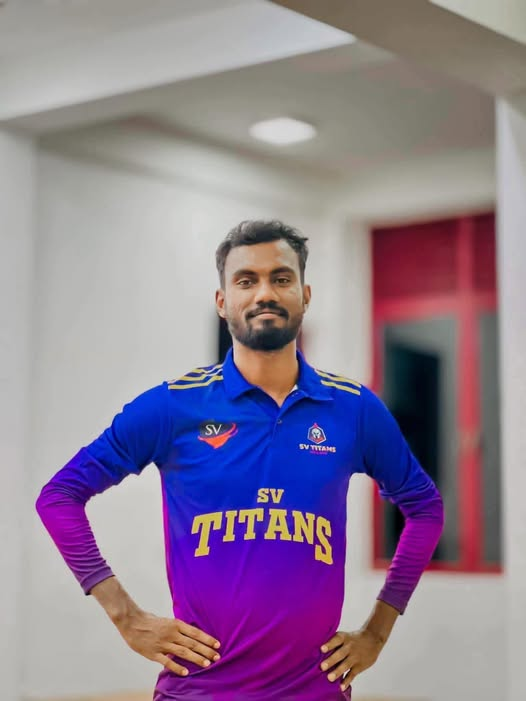
COLOMBO, Sri Lanka — Anojan Sivarasa, the Sri Lankan migrant worker whose death sentence was overturned this week by Saudi Arabia’s Supreme Court, is due to appear before a lower court on Oct. 17 in proceedings that will determine whether he is punished again, how severely, and when he might return home.
The Supreme Court ruled Tuesday that the death sentence and an earlier five-year prison term were set aside, according to Faiszer Musthapha, a Sri Lankan lawmaker and President’s Counsel involved in the defense. The court did not acquit Mr. Sivarasa, 24, pardon him or order his release. He remains in custody, reportedly at Dammam Central Prison.
His family has asked the Saudi authorities to free him. “Just as they forgave his mistake and overturned his death sentence, I hope they will also announce his release,” his mother, Yogalakshmi, said.
Why he remains in custody
When Saudi Arabia’s Supreme Court declines to uphold a death sentence, it overturns the judgment and returns the case for a new decision. It does not ordinarily rehear the evidence or issue its own verdict. The prosecution against Mr. Sivarasa therefore continues, and he remains an accused person awaiting judgment.
Under Saudi criminal procedure, once a case is before a court, the judges decide whether the accused is held or released until judgment, and prosecutors may oppose release. The reversal of a sentence does not in itself require that he be freed. His lawyers can apply for provisional release, which is uncommon in serious criminal cases.
What the lower court can do?
The case has been returned to the court of first instance, the Criminal Court in Al-Ahsa that first tried him. Its options depend on the terms of the Supreme Court’s order, which has not been made public.
The court could hear the case again in full or limit itself to the issues the Supreme Court identified. It could acquit Mr. Sivarasa, or convict him and impose a new sentence.
Much depends on how the offense is classified. Saudi Arabia has no written penal code for most crimes. Its courts apply Islamic law as interpreted in the Hanbali school, alongside statutes such as the Anti-Cyber Crime Law. Penalties fall into two broad groups. Hudud are scripturally fixed punishments for a small number of offenses. Ta’zir penalties are discretionary and are set by the judge or by statute.
The appeals court that sentenced Mr. Sivarasa to death on Sept. 17 treated his comment as a hadd offense, after prosecutors asked that he be judged under Islamic law rather than the cybercrime statute. Mr. Musthapha had said the defense would challenge that classification.
If the lower court treats the case as a ta’zir offense, the punishment will be at the judge’s discretion. The Al-Ahsa court’s first judgment, under the cybercrime law, was five years in prison and a fine of three million riyals, about $800,000. That sentence has been set aside and does not automatically return into force, but it shows the range the court considered before.
The Supreme Court’s reasoning has not been released, so it is not known whether the judges ruled out capital punishment or overturned the sentence on narrower grounds, such as procedure. Until the written judgment is available, a renewed death sentence cannot be excluded as a legal possibility.
Appeals, time served and return home
Either the defense or the prosecution can appeal any new judgment, first to the Court of Appeal for the Eastern Region and, in serious cases, to the Supreme Court. The process could take months.
If he is sentenced to prison, the time he has spent in detention since his arrest on July 1 would ordinarily count toward the term. If a fine is imposed, whether it is paid or waived could affect the date of his release.
Foreign workers in Saudi Arabia who are acquitted or complete their sentences are usually deported. Mr. Sivarasa’s return would also involve his employer and the immigration authorities, because a foreign worker’s residency and exit permits are tied to the sponsoring employer.
A royal pardon is a separate route. The king has the power to pardon prisoners serving discretionary sentences, and pardons are issued periodically, often around Ramadan. A pardon generally follows a final judgment. President Anura Kumara Dissanayake, who met the family on Sept. 21, has said Sri Lanka will continue to seek clemency alongside the court process.
The case so far
Mr. Sivarasa, from Natpiddimunai near Kalmunai in the Eastern Province, was arrested after an online argument in June that began with a video of a man kicking a dog that was accompanying Hindu pilgrims in Sri Lanka. After another user insulted a Hindu deity, he replied in Tamil with a comment insulting the Prophet Muhammad. He deleted the comment and posted an apology, but a screenshot reached his employer, which reported him to the authorities.
Amnesty International has said he had no access to a lawyer from his arrest until his first sentencing, and has called for his conviction to be quashed.
The appeal to the Supreme Court was filed on Oct. 11 by Saudi lawyers working with a Sri Lankan delegation. The delegation included Mr. Musthapha; Hafeez Azard Nawawi, an additional solicitor general in the Attorney General’s Department; K.A. Upul Indika Kumarapperuma, a President’s Counsel; and the lawyer Farisz Fazal Abdul Hafeel Mohomed. M.T. Mohamed Laffar, Sri Lanka’s consul general in Jeddah, assisted. Mr. Musthapha said legal representation had been arranged for the Oct. 17 hearing.
Mr. Sivarasa’s brother Kamsikan said the family had spoken with him after the ruling. “We have also been informed that his case is still pending and that the hearings will continue,” he said. “Please grant him a pardon and reunite him with our family.”