

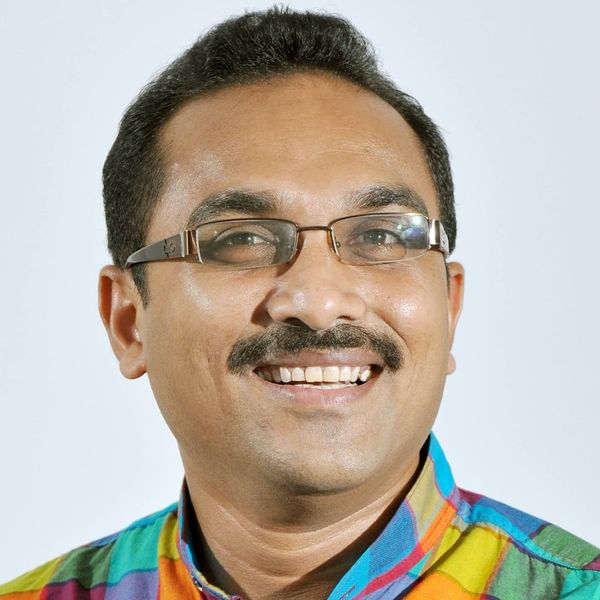
Bimal Rathnayake, arguably the most controversial minister in Anura Kumara Dissanayake's government and widely accused by Tamil parties of obstructing Northern development for racist reasons, has been removed from his powerful Ports and Aviation portfolio and reassigned as Minister of Transport, Highways and Urban Development.
Tamil political circles have long accused Rathnayake of personally blocking the development of Palaly Airport and Kankesanthurai (KKS) Harbour — two projects viewed as crucial for the Northern Province’s economic revival and backed by significant Indian investment.
Critics have described him as holding racist and anti-Indian positions on these initiatives, a stance that drew sharp condemnation from multiple Tamil parties. Rathnayake even went on record stating that the government would not develop KKS Harbour.
A Three-Month Promise
Inside sources told Jaffna Monitor that India, which had agreed to invest millions of dollars in the KKS Harbour as a grant — not a loan — was deeply disappointed and angered by Rathnayake’s obstructive stance.
According to diplomatic sources, when the Indian High Commissioner met President Anura Kumara Dissanayake a few months ago to raise the issue, the President — no political novice when it comes to handling a powerful neighbour — reportedly responded:
“Please give me three months. I will sort it out.”
Another source revealed that a senior Indian official raised the same concern about a month ago, and this time Anura reportedly said:
“Please give me one month.”
As one insider quipped, “Those three months and one month were not diplomatic timelines — they were the countdown to Bimal’s removal.”
JVP’s Internal Power Dynamics
Insiders shed light on the inner workings of the JVP’s decision-making core, which consists of seven key figures — Tilvin Silva, Anura Kumara Dissanayake, Bimal Rathnayake, Vijitha Herath, K.D. Lalkantha, Sunil Handunnetti, and Wasantha Samarasinghe.
Of these seven, most entered politics after the Indian intervention of the 1980s, carrying a deep-seated suspicion of India and Tamil political aspirations. Only Anura Kumara is widely viewed as a moderate, and more recently Vijitha Herath has also aligned with his pragmatic stance.
“The others remain highly anti-Indian and anti-Tamil,” one insider told Jaffna Monitor.
“They see development in the Northern region as a threat to their grip. They prefer to keep Northern people dependent on them — and for that, they don’t want the region to flourish economically.”
However, Anura Kumara Dissanayake (AKD) is said to hold a different view. Both AKD and the JVP Central Committee reportedly recognize that their surprise electoral victory in the North during the last parliamentary election was a powerful image-building tool internationally.
“The JVP Central Committee also understands that its rise to power came largely because of AKD’s charismatic leadership and reformist image — not because of any anti-Indian or anti-Tamil rhetoric,” the source added.
Shanakiyan’s Strategic Naivety
Meanwhile, Illankai Tamil Arasu Kachchi (ITAK) parliamentarian Shanakiyan Rasamanickam welcomed the President’s decision to reassign the Ports portfolio from Minister Bimal Rathnayake.
Rasamanickam, who has often clashed with Rathnayake in Parliament, suggested that the reshuffle may have been prompted by the alleged container clearance scam.
“We have been informed that the portfolio of Ports and Aviation held by Bimal Rathnayake has been taken away from him. We wonder whether the container clearance scam had led to this move. Anyway, we thank the President for this decision,” he said.
A party insider, however, offered a more candid explanation to Jaffna Monitor:
“Shanakiyan knew Bimal was sacked for his strong anti-Indian and anti-Tamil stand. But sometimes, you know, we need to act like we don’t know anything.”
Official Denials and Justifications
In line with the Tamil proverb “விழுந்தாலும் மீசையில் மண் ஒட்டவில்லை” (even when falling, no mud sticks to the moustache), Rathnayake brushed off the controversy with characteristic confidence.
“I am not someone who works just to earn praise from the Opposition. Cabinet changes were made only after extensive discussions,” Rathnayake stated.
“The Opposition has never appreciated the good work we have done. They have never cooperated with us. The Cabinet reshuffle was made only after four to five months of discussions.”
Rathnayake further claimed that the reshuffle resulted from broad consultations over several national priorities.
“This change reflects a common understanding reached after extensive discussions, taking into account key priorities such as the economy, national unity, drug control, digital transformation, and streamlining of public services. Based on that consensus, new and capable individuals have been assigned ministerial and deputy ministerial portfolios.”
He added that his new ministry comes with “heavy responsibilities.”
“The Ministries of Ports and Civil Aviation are major and challenging sectors, but they involve limited public interaction. Urban development, on the other hand, is directly connected to the people, which means the workload will be much greater.”
Rubbing Salt in the Wound
Rubbing salt in Bimal’s wound, it later emerged that Suranga Lakmal Senevirathne, Media Secretary to the Ministry of Transport, Highways and Urban Development, had resigned, reportedly citing his inability to work under the Minister.
Senevirathne’s exit adds to a growing exodus of senior officials who have left within just one year, citing ego-driven leadership and toxic management.
One officer, requesting anonymity, summed up the mood with brutal honesty:
“It’s more dignified to work as a coolie in Pettah than under Bimal.”
As the resignations pile up, political analysts are asking the million-dollar question:
Has Bimal Rathnayake truly become anti-Tamil — or has he simply become anti-human?