

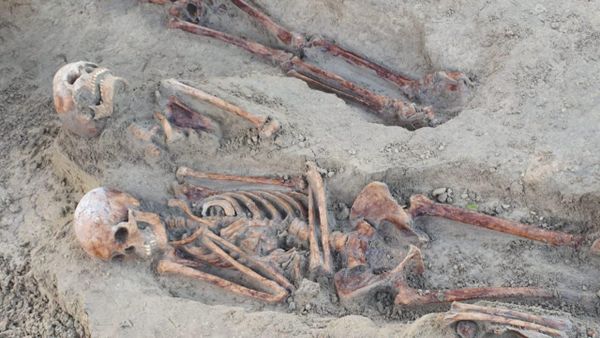
JAFFNA, Sri Lanka — Excavation at the Chemmani mass grave site in northern Sri Lanka will resume on April 27 after the Ministry of Justice released funding for an estimated eight-week dig, the Jaffna Magistrate’s Court confirmed on Tuesday, reopening an investigation that has become a test of the government’s willingness to confront civil-war-era atrocities.
Magistrate S. Lenin Kumar, presiding over proceedings on Tuesday, said the ministry had approved the budget submitted by the Judicial Medical Officer for the third phase of work at the site. The court ordered that excavations begin on the same day the case is next taken up, and scheduled a coordination meeting of all parties for Wednesday to finalise logistics.
A delegation from the European Union, which had been granted prior court permission to inspect the site, postponed a planned visit on Tuesday after determining there was little to observe while work remained suspended, lawyers for the affected families said. The delegation is now expected to travel to Chemmani after excavation resumes, with the date to be announced later.
“The European Union representatives were not interested in visiting the site when excavation work was suspended,” V.S. Niranjan, a lawyer representing relatives of the disappeared, told reporters outside the court, adding that observing active forensic work would be “more appropriate.” Ranitha Gnanaraja, who also represents the families, said the court’s permission for the visit remained valid.
The Chemmani site, located just off the crucial A9 highway on the outskirts of Jaffna town, has loomed over Sri Lanka’s postwar reckoning since 1998, when a soldier convicted in the rape and murder of the Tamil schoolgirl Krishanthi Kumaraswamy told a court that hundreds of bodies had been buried there during the military’s occupation of the peninsula in the mid-1990s. For decades, families of the missing have waited for answers.
Investigators have so far conducted 54 days of excavation across two earlier phases — nine days in the first and 45 in the second — according to official data presented in court on Tuesday. From two identified forensic zones, authorities have documented 240 sets of human skeletal remains, of which 239 have been exhumed. Forensic analysis to establish the identities, ages, and causes of death of those buried has been slow, and no prosecutions have followed.
The resumption comes at a politically delicate moment for the National People’s Power government, which took office pledging accountability for past abuses but has faced mounting criticism from Tamil families and human rights groups over the pace of transitional justice. The release of funding, after months of delay, will be read by many in the north as a signal of the administration’s intent, even as scepticism remains over whether the process will reach those responsible.
Human rights observers say the third phase could prove pivotal. A larger excavation window, combined with improved forensic capacity and international scrutiny, offers the best opportunity yet to establish the scale of the site and begin matching remains to the thousands of Tamils who disappeared during the period of heavy military deployment in Jaffna.
For the relatives who have gathered at the court for each hearing, many now elderly, the announcement was received with cautious relief. Several have attended proceedings for years without learning the fate of sons, husbands, or brothers last seen in military custody.
“The court’s order is welcome, but we have heard promises before,” said one family member, who spoke to Jaffna Monitor on the condition of anonymity for fear of reprisals. “What matters now is whether the excavations actually begin on the 27th, and whether anyone is ultimately held accountable for what is found.”
Another relative was more direct in their criticism. “Excavation alone is not enough,” the person said. “What matters is bringing those responsible to justice. Instead, we see a system that continues to promote individuals who were in positions of responsibility at the time these graves were created.”