
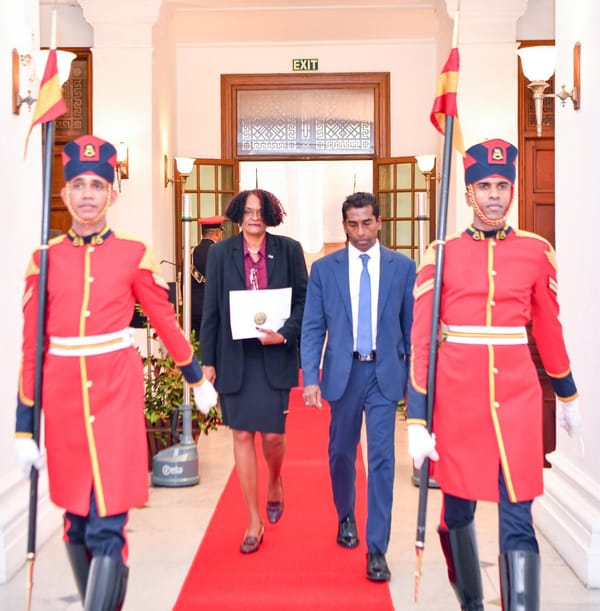
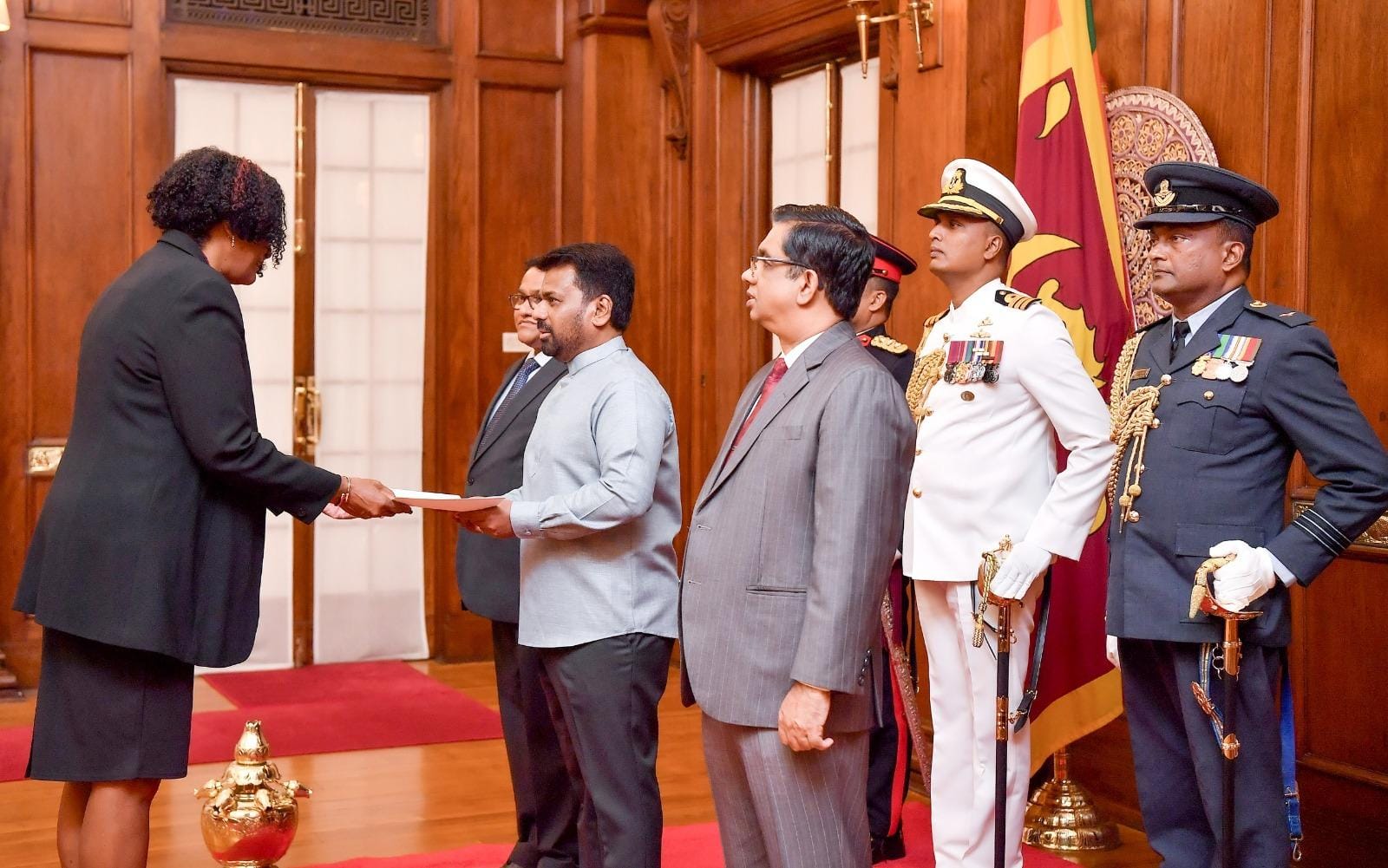
COLOMBO — Cuba's newly appointed ambassador to Sri Lanka formally assumed her duties on Monday, presenting her credentials to President Anura Kumara Dissanayake in a ceremony at the Presidential Secretariat in Colombo, Sri Lanka's Foreign Ministry announced.
Her Excellency Patricia Lázara Yego Yérrez, appointed by the Cuban government with the agreement of Colombo, presented her letters of credence at 3 p.m., completing the constitutional formality required before a foreign envoy may begin official representation in a host country.
The appointment comes at a fraught moment for Cuba. The United States blockade — which Havana and much of the international community characterise as an economic embargo — has tightened significantly in recent years, pushing the Caribbean nation into one of its deepest humanitarian crises since the collapse of Soviet-era support in the 1990s. Acute shortages of food, medicine, and fuel have displaced hundreds of thousands of Cubans and strained the government's ability to sustain the social programmes — including its internationally renowned healthcare and education systems — that have long served as the foundation of its foreign policy outreach.
The United Nations General Assembly has, for over three decades, passed annual resolutions calling for an end to the blockade. Sri Lanka has consistently voted in favour of those resolutions, a position that Havana has repeatedly acknowledged with gratitude.
It is against that backdrop that Ambassador Yérrez arrives in Colombo — tasked with sustaining and deepening a partnership that, despite the geographic distance between the two islands, has endured for more than six decades.
A Relationship Rooted in Revolution
Sri Lanka and Cuba established formal diplomatic ties on 29 July 1959, only months after Fidel Castro's revolutionary government came to power. Sri Lanka was among the first countries to recognise the new Cuban government, a relationship cemented when Ernesto Che Guevara, then serving as industry minister, visited the island on a delegation to promote trade. The two nations found natural common ground in the Non-Aligned Movement, the post-colonial framework that sought to chart an independent course between Washington and Moscow during the Cold War.
That foundation has been built upon steadily. Following the 2004 tsunami, which killed more than 35,000 people in Sri Lanka, Cuban doctors arrived with medicines and medical equipment to assist in the emergency response — a deployment that underscored Havana's practice of deploying medical solidarity as a concrete expression of diplomatic friendship.
Cuban sports trainers have also been hired to work in Sri Lank and the two countries have in recent years explored expanded cooperation in biotechnology and pharmaceuticals. Sri Lanka's ambassador to Havana held talks with CubaPharma, a government pharmaceutical research institution, with a view to developing trade and bilateral ties in the sector.
A Scholarship That Reaches the North
Among the most tangible expressions of Cuban solidarity is a programme of fully funded medical scholarships awarded annually to Sri Lankan students. Each year, the Cuban government grants these scholarships — a gesture Sri Lankan officials have consistently praised, even as they acknowledge the severe economic hardships Cuba itself is enduring.
In a detail that carries particular significance, Jaffna Monitor has learned that one of the most recent recipients is a Tamil student from Sri Lanka’s Northern Province, a region that bore the heaviest burden of the country’s three-decade civil war. That a young Tamil from the North is now studying medicine in Havana stands as a quiet but meaningful footnote to a bilateral relationship that has often been managed from Colombo’s centre.
Recalibrating Ties Under a New Government
The ceremony marks a new diplomatic chapter at a moment when Sri Lanka, still recovering from its worst economic crisis in decades, is actively broadening its international partnerships. Following his election, President Dissanayake conveyed to his Cuban counterpart, Miguel Díaz-Canel, his intention to work together in pursuit of world peace and justice.
Ambassador Yérrez is expected to take up her duties immediately.