

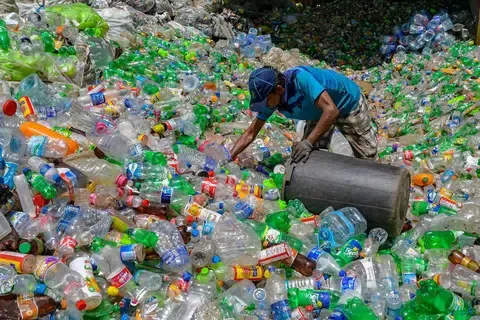
COLOMBO, Sri Lanka — Three university research teams in Sri Lanka have received grants totaling 110,000 euros to trace how single-use plastics move through food and beverage supply chains in the Colombo and Galle districts, part of a European Union-funded effort to cut plastic waste in the country's food sector.
The teams are drawn from the Faculty of Agriculture at the University of Ruhuna and the faculties of Medicine and Computing at the University of Kelaniya. The grants were awarded under CIRCULAR, a three-year program funded by the European Union with co-financing from Germany's Federal Ministry for Economic Cooperation and Development. It is carried out jointly by Expertise France, the United Nations Food and Agriculture Organization and GIZ, the German development agency.
The studies will go further than counting waste volumes. Researchers plan to examine how disposable plastics are used and how they flow through selected food and beverage value chains, and to assess their environmental and public health effects, using data collection, waste-flow mapping and life-cycle approaches.
Organizers say existing figures on plastic waste in Sri Lanka are too coarse to show which sectors, sources and types of plastic account for the most disposable waste. That leaves policymakers and businesses without a clear basis for deciding where reductions would go furthest, or which measures would work.
The teams are also expected to identify ways of reducing plastic use, including more sustainable packaging, better resource efficiency and improved waste management.
"Through our research grant programme, we aim to generate evidence that can contribute to better policy, planning and decision-making, while also strengthening collaboration between researchers, policymakers and practitioners," said Mahmoud Gaballah, the CIRCULAR project manager at Expertise France, speaking at a grant-signing ceremony at the University of Ruhuna.
CIRCULAR also works on reducing food loss and waste, and runs awareness and behavior-change activities aimed at moving the food sector away from a take-make-dispose model toward one in which materials are reused or kept in use for longer.