
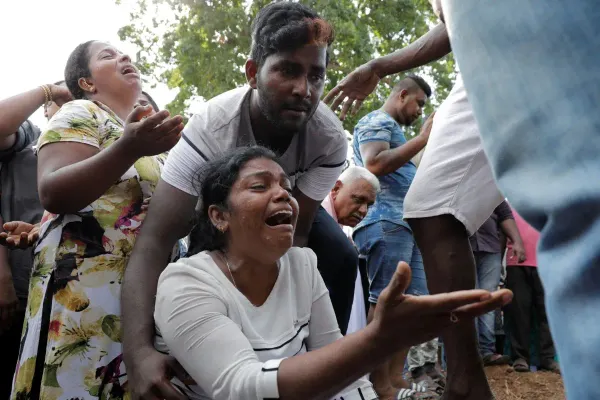
COLOMBO, Sri Lanka — A three-judge panel of the Colombo High Court on Tuesday convicted 15 men over the 2019 Easter Sunday bombings, in which suicide attackers struck three churches and three luxury hotels, killing more than 260 people and wounding hundreds more. Nine other defendants were acquitted and ordered released.
The court adjourned after delivering its verdict and was expected to hand down sentences for the 15 convicted men later on Tuesday, after hearing statements from them.
Among those convicted was Naufer Moulavi, whom prosecutors described as the mastermind of the attacks. In a statement from the dock during the trial, he said that although he had maintained connections with Zahran Hashim, the leader of the bombers, and his group, he had not instructed them to carry out the attacks. Two other defendants told the court that they had been threatened and forced to sign confessions written in Sinhala, a language they did not read.
The judges, Navaratne Marasinghe, Ramanathan Kannan and Sujeewa Nissanka, ruled that the prosecution had failed to prove the charges against the nine acquitted defendants beyond a reasonable doubt.
The Attorney General filed the case in August 2021 under the Prevention of Terrorism Act, bringing 23,270 charges against the defendants, the largest number in a single indictment in Sri Lanka's judicial history. The charges included murder, attempted murder, conspiracy and collecting arms and ammunition. Twenty-five men, all from Sri Lanka's Muslim minority, were originally indicted. One died in custody, and 24 stood trial.
The trial ran for more than 250 court sittings. The prosecution listed 2,309 witnesses and called 547, and it marked 2,076 documents and items of evidence before closing its case in August.
All of the bombers died in the attacks. The Islamic State claimed responsibility, and Sri Lankan authorities attributed the bombings to local Islamist militants. The country's Catholic Church has said that those identified so far are not the true masterminds and that a wider conspiracy lay behind the attacks.
The bombings were the deadliest violence in Sri Lanka since the end of its civil war in 2009. More than 40 foreigners were among the dead.
A parliamentary committee later found that police and intelligence officials had failed to act on repeated warnings, including one from India, before the attacks. In January 2023, the Supreme Court ordered Maithripala Sirisena, who was president at the time, to pay 100 million rupees in compensation to victims after finding that he had failed to act on the intelligence.
In July, the same court sentenced Pujith Jayasundara, a former police chief, and Hemasiri Fernando, a former defense secretary, to death for criminal negligence in a 2-to-1 decision that reversed their 2022 acquittal. Their lawyer said they would appeal. Sri Lanka has not carried out an execution since 1976, and death sentences are typically commuted to life imprisonment.
Relatives of the victims and members of the Catholic community have held regular protests since the attacks, demanding justice for those killed.