

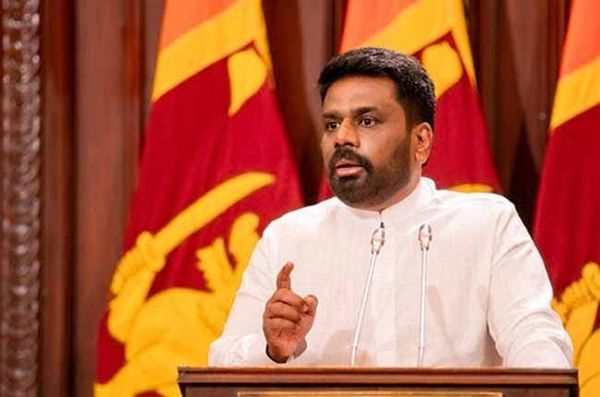
COLOMBO, Sri Lanka — President Anura Kumara Dissanayake said on Sunday that his government would not withdraw a proposed constitutional amendment extending the retirement ages of Sri Lanka's senior judges, and that he intended to move it through Parliament as soon as the Supreme Court delivers its determination on a record number of legal challenges.
Speaking at a public rally in Bulathsinhala, in the Kalutara district south of Colombo, Mr. Dissanayake presented the proposed 22nd Amendment as part of a broader effort to clear a backlog in the courts and prosecute corruption cases, brushing aside opposition from the country's largest lawyers' body, opposition parties and dozens of professional associations.
"We will not reverse any decision we make," Mr. Dissanayake said. He added that he expected the court's determination shortly, and that once it arrived, the government would table it in Parliament and pass the amendment quickly.
The amendment would raise the mandatory retirement age of Supreme Court judges to 67 from 65, and of Court of Appeal judges to 65 from 63. It would also increase the number of judges the Court of Appeal may seat, and would set a separate limit for the chief justice, who would leave office on reaching 67 or completing six years in the post, whichever came first. A companion bill amending the Judicature Act would raise the retirement age for High Court, District Court and Magistrates' Court judges to 62.
Because the changes would apply to judges already on the bench, the legislation would extend the working lives of the same judges asked to rule on whether it is constitutional. Critics in the legal profession say that altering the tenure of sitting judges raises a different question from setting terms for future appointees. The Bar Association of Sri Lanka has led the opposition, joined by about 40 professional bodies and trade unions, and opposition politicians, lawyers, trade unionists and activists demonstrated in Colombo last week.
The Supreme Court concluded hearings on Sept. 2 on 67 petitions concerning the amendment, filed both against and in support of it, after two days of proceedings that ran until 5:30 p.m. on the second day. The court said its determination on the constitutionality of the bill would be communicated confidentially to the speaker of Parliament, and gave the parties until 3 p.m. the following day to file written submissions.
Chief Justice Preethi Padman Surasena presided over the five-member bench, sitting with Justices Achala Wengappuli, Arjuna Obeyesekere, Sampath Abeykoon and Gihan Kulatunga. The four judges immediately below the chief justice in seniority were not named to the panel.
At the outset, M.A. Sumanthiran, a president's counsel appearing for the Bar Association, asked that the case be heard by a full bench of all sitting Supreme Court judges, arguing that legislation capable of extending the judges' own tenure raised a conflict of interest. Several other senior lawyers for petitioners supported the request. The court refused, after Solicitor General Viraj Dayaratne, appearing for the Attorney General, argued that Article 132(3) of the Constitution leaves the size and composition of a bench to the chief justice.
On the merits, Mr. Sumanthiran argued that the amendment engaged Articles 3 and 4 of the Constitution, which concern the sovereignty of the people and the exercise of judicial power, and therefore required approval at a national referendum. Other petitioners argued along similar lines that changing the retirement age of sitting judges bears on judicial independence. Mr. Dayaratne told the court that the changes were intended to expand the courts and improve their efficiency, that judicial independence would not be affected, and that the petitioners had failed to establish any violation of Articles 3 and 4.
The hearing ended in a dispute over procedure. After the Solicitor General finished his oral submissions, the petitioners' lawyers asked to reply orally. The court declined and directed that any further argument be made in writing. In a motion filed afterward, the petitioners said the refusal had cost them the chance to answer the state's case directly and to address questions the judges had put to the solicitor general, and told the court they would file no written submissions at all. They also noted that the government had produced no policy document underlying the bill. The Bar Association separately informed the court that it would not file written arguments, citing the denial of a right of reply.
Steven Thiru, president of the Commonwealth Lawyers Association, who observed the proceedings in court, said the refusal of an oral reply in a case of this importance was unusual and that counsel for the petitioners should have been allowed to respond. He also questioned the decision not to convene a larger bench and the absence of the most senior judges from the panel.
A day after the hearing ended, Mr. Sumanthiran posted two maxims of natural justice on his Facebook page without further comment: nemo judex in causa sua, no one should be a judge in his own cause, and audi alteram partem, hear the other side.
Mr. Dissanayake, whose National People's Power government holds a large parliamentary majority, framed the resistance as part of a wider reaction to his anti-corruption campaign. He said the government had recruited additional personnel to the judicial service, accelerated reports from the Government Analyst's Department, and established more High Courts to address cases that in some instances had gone unresolved for 15 to 20 years.
His remarks came two days after the arrest of Namal Rajapaksa, the national organizer of the opposition Sri Lanka Podujana Peramuna and a son of former President Mahinda Rajapaksa. Mr. Rajapaksa was questioned by the Commission to Investigate Allegations of Bribery or Corruption over the purchase of Airbus aircraft for SriLankan Airlines and remanded until Sept. 18. His party and the United National Party called the arrest politically motivated and said it was timed to disrupt a rally planned for Anuradhapura on Sept. 12. The party has said the rally will go ahead.
Mr. Dissanayake rejected the accusation that the arrests amounted to political retaliation, saying the volume of cases reflected years of accumulated investigations. "If there had been no backlog of cases, there would not be this many arrests," he said.
He also said that people who had benefited from what he called a "black state" were becoming frightened, and that they were approaching foreign embassies and writing to organizations abroad. "We need to punish these corrupt people," he said. "That is how we must break this black state."
The government says the changes will improve efficiency and reduce delays in the courts. Critics have asked why extending the tenure of judges now sitting is necessary to achieve that, and have said the administration is pushing through a consequential change without adequate consultation.