

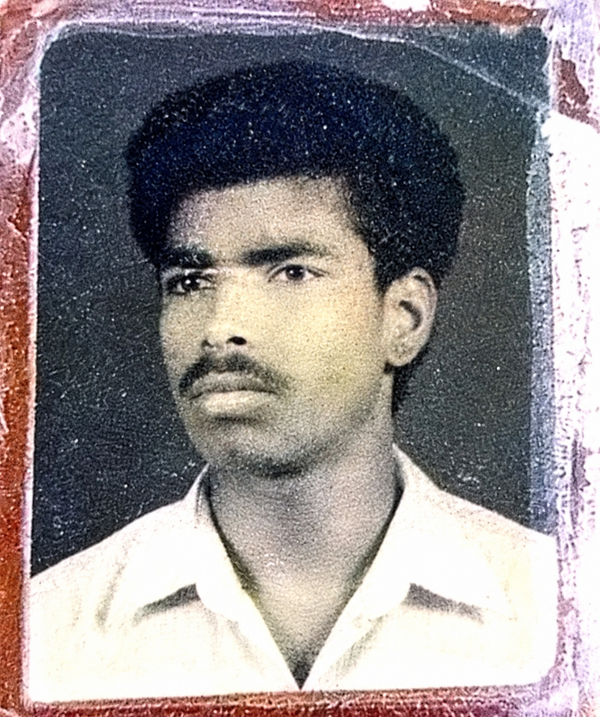
COLOMBO, Sri Lanka, Oct. 27 — A former member of the Liberation Tigers of Tamil Eelam who served seven years in an Indian prison for conspiring to revive the separatist group was detained by Sri Lankan counterterrorism police on Monday, hours after India deported him to Colombo.
Krishnakumar Kandasamy, 50, known within the organisation as Kanthan, was taken into custody by the Terrorism Investigation Division at Bandaranaike International Airport after arriving on a SriLankan Airlines flight on Oct. 26. Before his deportation, he had been held for more than four years in a high-security detention camp in Tiruchirappalli, in the southern Indian state of Tamil Nadu, after completing his prison sentence.
Krishnakumar was part of a second attempt by Nediyavan’s faction to rebuild the LTTE inside Sri Lanka, launched after the first attempt, led on the ground by Gopi and Thevihan, collapsed with their deaths in April 2014, according to former LTTE members interviewed by Jaffna Monitor. Nediyavan is the name by which Perinbanayagam Sivaparan, a Norway-based former LTTE official, is widely known. The sources said the second attempt was also backed by a wealthy Tamil businessman living in Denmark.
The former members spoke on condition of anonymity because of their past roles in the organisation and the legal risks they could face.
Indian court records establish that Krishnakumar was convicted of conspiring to revive the LTTE and that he was arrested in July 2015 on a road leading to the coast facing northern Sri Lanka, carrying cyanide capsules, GPS devices and Sri Lankan currency. The judgments do not name Nediyavan or any overseas financier.
The sources said Krishnakumar’s arrest was a serious setback for Nediyavan’s faction, which then set aside efforts to establish an operational presence inside Sri Lanka for several years.
The 2014 Network
After the LTTE’s military defeat in May 2009, remnants of its overseas leadership split into competing factions. One was led by Nediyavan.
In early 2014, Sri Lankan security forces launched a manhunt in the Northern Province for Ponniah Selvanayagam Kajeepan, known as Gopi, a former LTTE intelligence cadre. Officials said that on March 13, 2014, Gopi shot and wounded a police officer while escaping arrest. Wanted posters bearing his photograph appeared in Jaffna and Colombo, and the police offered a reward of one million rupees for information leading to him.
The authorities identified two other men as leaders of the network: Sundaralingam Kajeepan, known as Thevihan, an LTTE’S pilot whom the military accused of involvement in LTTE air raids on the Anuradhapura air base and the Kolonnawa oil storage facility in 2007, and Navaratnam Navaneethan, known as Appan.
Dozens of people were detained during the search, among them former LTTE members, a human rights activist and Gopi’s mother, who was later released on bail.
On April 11, 2014, the army said troops had killed all three men in the Nedunkerni area of Vavuniya District, near Padaviya, when they tried to break through a military cordon. Early accounts of the encounter differed, and human rights organisations raised concerns about the sweeping arrests that accompanied the operation.
Defence officials said at the time that the network had been operating under instructions from Nediyavan and Vinayagam in Europe. Former LTTE members told Jaffna Monitor that Thevihan had been sent to Tamil Nadu before the end of the civil war to maintain contacts with pro-LTTE figures there.
A Second Team in Tamil Nadu
According to the former LTTE members, the deaths of Gopi, Appan and Thevihan did not end the overseas factions’ ambitions. Nediyavan’s network turned instead to operatives already living in Tamil Nadu, among them Krishnakumar.
Indian police described Krishnakumar at the time of his arrest as a close associate of the LTTE leader Velupillai Prabhakaran and said he was believed to have served as one of Prabhakaran’s secretaries. They said they suspected he had entered India shortly after the LTTE’s defeat in 2009.
A Sri Lankan government designation list published in June 2024 identifies Kandasami Krishnakumar, also known as Kandan, Kaja and Kumar, as a member of the LTTE’s political and intelligence wings. Such designations, issued under United Nations counterterrorism regulations, allow the authorities to freeze assets.
The prosecution case set out in Indian court records closely tracks the account given by Jaffna Monitor’s sources. Police said they received information in May 2015 that Krishnakumar and several associates were meeting in Tiruchirappalli, including at a bakery in the city’s K.K. Nagar area, to plan the revival of the LTTE.
According to the prosecution, a man identified only as “Sri” handed Krishnakumar 75 cyanide capsules and chemicals used to make cyanide, with instructions to travel to Sri Lanka by boat and deliver them to a contact known as Kavi. Prosecutors said the materials were meant to help reorganise LTTE cadres and to eliminate rival Tamil leaders.
Two prosecution witnesses, both Sri Lankan refugees living in Tiruchirappalli, testified that Krishnakumar had shared a rented house with one of them, spoke openly about reviving the movement and described meetings at which associates discussed attacking people they blamed for the LTTE’s destruction.
The identity of the man who supplied the cyanide has never been established. In December 2021, Tamil Nadu police arrested a Sri Lankan refugee named Ranjan, saying he was “Sri,” and a trial court convicted him in 2024. On May 20, 2026, India’s Supreme Court acquitted him, ruling that he had been falsely implicated through mistaken identity, that the two key witnesses were unreliable, and that the police had made no real effort to find the actual suspect. The ruling did not address Krishnakumar’s own conviction, which the Madras High Court upheld in 2022.
Stopped on the Road to Rameswaram
At about 8:30 p.m. on July 20, 2015, officers from the Tamil Nadu police’s Q Branch, an intelligence unit that investigates extremist and security cases, stopped a Tata Indica car at the Uchipuli bus stand on the road between Ramanathapuram and Rameswaram. Rameswaram is the Indian town closest to the sea routes leading to northern Sri Lanka.
Krishnakumar was travelling with two other men, Sasikumar and Rajendran.
Officers recovered 75 cyanide capsules, a quantity of cyanide powder, four GPS devices, six mobile phones, 46,200 Indian rupees, 19,300 Sri Lankan rupees, a Sri Lankan identity card and other documents. LTTE fighters had traditionally worn cyanide capsules around their necks, with orders to bite into them rather than be captured.
Police said Krishnakumar had planned to cross the Palk Strait illegally by boat.
Five days later, police arrested a fourth suspect, Subaskaran, whom they accused of raising money from overseas LTTE supporters. Investigators said they recovered from him a route map, a list of names of Sri Lankan political leaders, a pen drive and a mobile phone, and later seized a hard disk from his home in Chennai. Another accused, Kumaran, was arrested in 2016 and was convicted in 2021 only of membership in an unlawful association.
In April 2018, a sessions court in Ramanathapuram convicted Krishnakumar and Subaskaran under India’s Unlawful Activities (Prevention) Act and provisions of the Poisons Act, the Foreigners Act and the Passports Act, and sentenced each to 10 years of rigorous imprisonment. Rajendran received five years.
In June 2022, Justice K. Murali Shankar of the Madras High Court’s Madurai Bench upheld the convictions but reduced the sentences of Krishnakumar and Subaskaran to seven years, noting that they had already spent nearly six years and 10 months in custody. The court recorded their undertakings to leave India after their release.
Four More Years Behind Walls
After completing his sentence in July 2022, Krishnakumar was transferred to the Special Camp in Tiruchirappalli, a facility for foreign nationals located within the city’s central prison complex. Although it is administered by civilian officials, it is guarded by police. Sri Lankan Tamil detainees there have staged repeated hunger strikes in recent years, and several attempted suicide in 2021 to protest their indefinite confinement.
In June 2024, the Chennai newspaper DT Next reported that Krishnakumar’s aunt, T. Nageswari, had petitioned the Madras High Court after officials rejected her request that he be allowed to live with her at a Sri Lankan Tamil refugee settlement in Uchapatti, near Madurai. The rejection was based on official records that listed Krishnakumar as dead. His aunt told the court he was alive.
His co-accused fared no better. In May 2025, India’s Supreme Court dismissed Subaskaran’s plea to remain in India with his wife and children, with Justice Dipankar Datta remarking that India was not a “dharamshala,” or shelter, for refugees from around the world. The court said that if Subaskaran feared for his life in Sri Lanka, he should seek refuge in another country.
A Tamil Nadu Politician’s Appeal
Krishnakumar’s case also drew the attention of T. Velmurugan, the leader of the Tamizhaga Vazhvurimai Katchi, a Tamil Nadu political party that campaigns on Sri Lankan Tamil issues, and a former member of the state assembly.
Former LTTE members familiar with the organisation’s overseas networks told Jaffna Monitor that Velmurugan was among the political figures who maintained close, longstanding ties with remnants of the LTTE who fled Sri Lanka during the final stages of the civil war in 2009 and subsequently settled abroad, particularly in France. According to the sources, some of these diaspora figures were involved in efforts to revive the organisation after its military defeat. The sources also said Velmurugan had supported Krishnakumar during his years of confinement in India. Jaffna Monitor could not independently establish whether Velmurugan had any involvement in, or knowledge of, the alleged revival operations.
His public advocacy on Krishnakumar’s behalf is documented. On Oct. 26, Velmurugan urged the Tamil Nadu government to halt the deportation of Krishnakumar and another Sri Lankan Tamil detainee, Rajarathinam Subaskaran. He warned that returning the men to Sri Lanka could put them at risk and called on the authorities to help them settle in a country where they would feel safe or, failing that, allow them to live with relatives in Tamil Nadu.
Earlier this month, Velmurugan led a protest near the Sri Lankan Deputy High Commission in Chennai, demanding that the Tamil Nadu Legislative Assembly call for an international investigation into atrocities committed against Sri Lankan Tamils.
Detained on Arrival
The Hindu reported that Tiruchirappalli city police obtained a deportation order and escorted Krishnakumar to the airport on Monday. His removal went ahead despite Velmurugan’s appeal. The available records do not show whether Krishnakumar challenged the final order.
On arrival in Colombo, he was taken into custody by the Terrorism Investigation Division. Information received by Jaffna Monitor indicates that a detention order may have been issued under the Prevention of Terrorism Act. The existence and terms of any such order have not been confirmed.
It is not known whether investigators intend to question him about the 2015 conspiracy, his alleged links to Nediyavan’s network or other matters. His Indian sentence does not prevent Sri Lanka from investigating offences under its own laws, but the authorities have not said what legal basis they are relying on or whether any new inquiry concerns the same conduct for which he was punished in India.
The Prevention of Terrorism Act allows suspects to be held for extended periods without charge, and human rights organisations have criticised it for decades. The current government has pledged to replace the law, which remains in force.
More than 17 years after the LTTE’s defeat, its rival overseas factions continue to appear in the security assessments of both Sri Lanka and India. Sri Lankan authorities had not announced any charges against Krishnakumar as of Tuesday evening.