

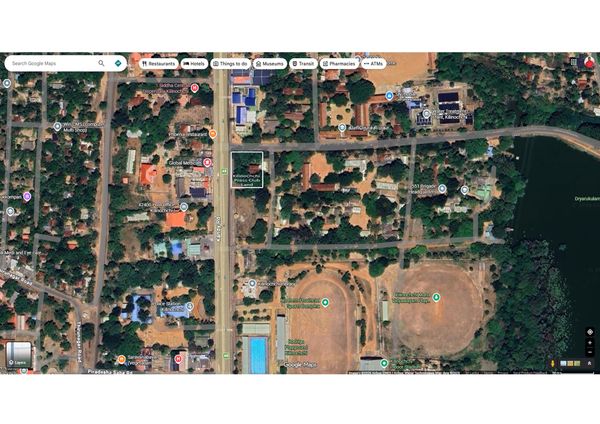
KILINOCHCHI, Sri Lanka — Sri Lanka's Defence Ministry has refused to return a state-owned property in Kilinochchi that housed a press club before the end of the civil war and has been under military control since, telling journalists only that security concerns made its release impossible.
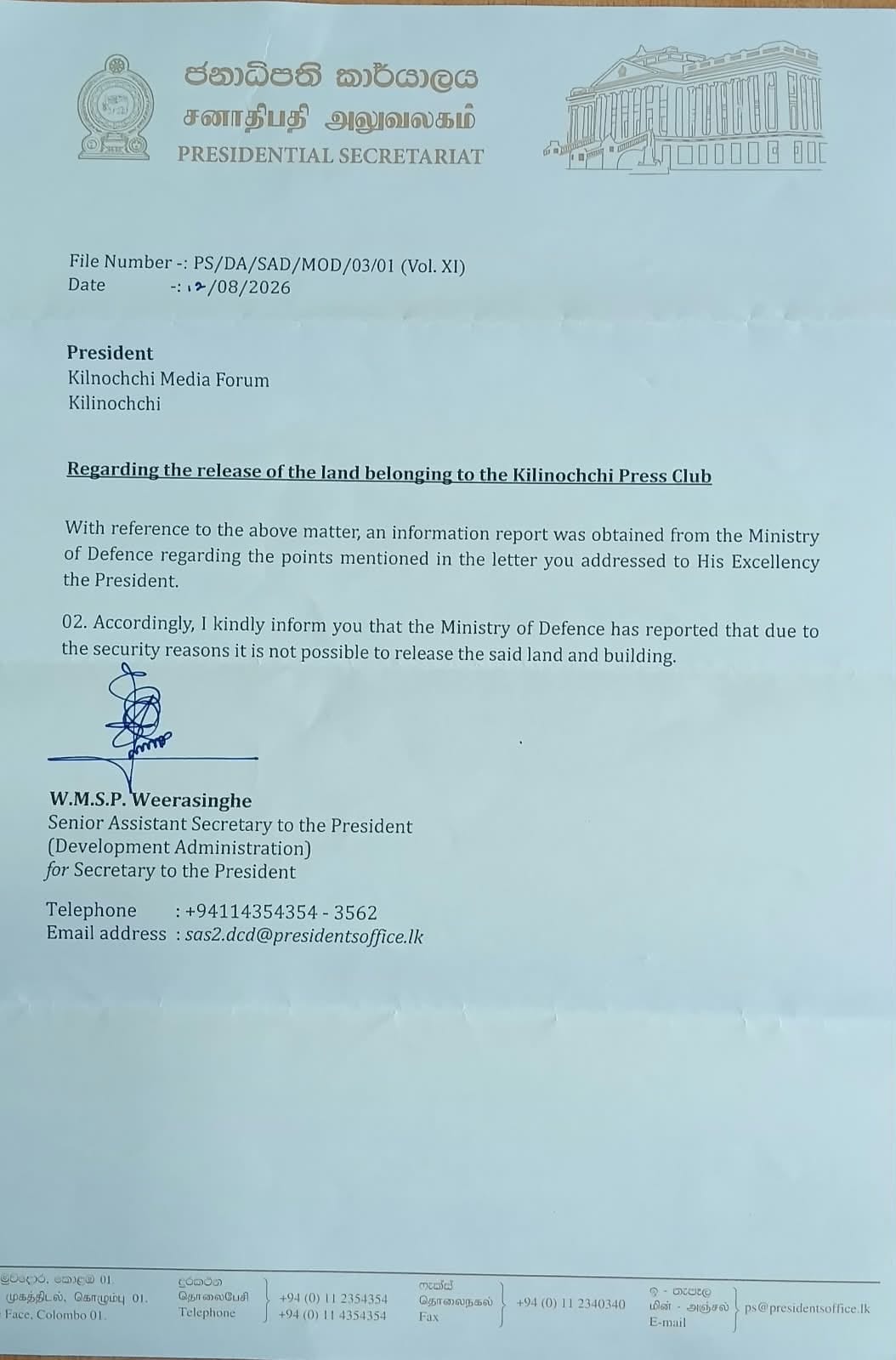
The decision was conveyed in an Aug. 12 letter from the Presidential Secretariat to the Kilinochchi Media Forum, nearly three months after the organisation appealed directly to President Anura Kumara Dissanayake.
The property consists of about a quarter-acre of land and an office building near Kaakka Kadai Junction on the A9 highway, the main road linking Jaffna to the south.
"Accordingly, I kindly inform you that the Ministry of Defence has reported that due to security reasons it is not possible to release the said land and building," wrote W.M.S.P. Weerasinghe, a senior assistant secretary to the president.
The letter, filed under number PS/DA/SAD/MOD/03/01 (Vol. XI), went no further. It did not identify the security concern, describe how the military is using the property, or indicate whether the decision could be reviewed.
Land on one side of the former Press Club has been released to Kilinochchi Maha Vidyalayam, and land on the other side to the Yogar Swami institution, according to people familiar with the arrangements. Neither institution held title to the state land it had been using. The Media Forum cited both releases in its appeal, telling the president that every property around its former premises had been returned while the Press Club alone remained shut out.
The Forum's claim rests on use rather than ownership. Although its correspondence describes the site as "our land," the plot is state property and the journalists hold no title deed. The site was made available to them while the Liberation Tigers of Tamil Eelam controlled the district and ran a de facto administration across much of the Vanni, with Kilinochchi as its principal centre, according to journalists familiar with its history. The Press Club operated there until 2008. Government forces retook Kilinochchi in January 2009, and the property has been in military hands ever since.
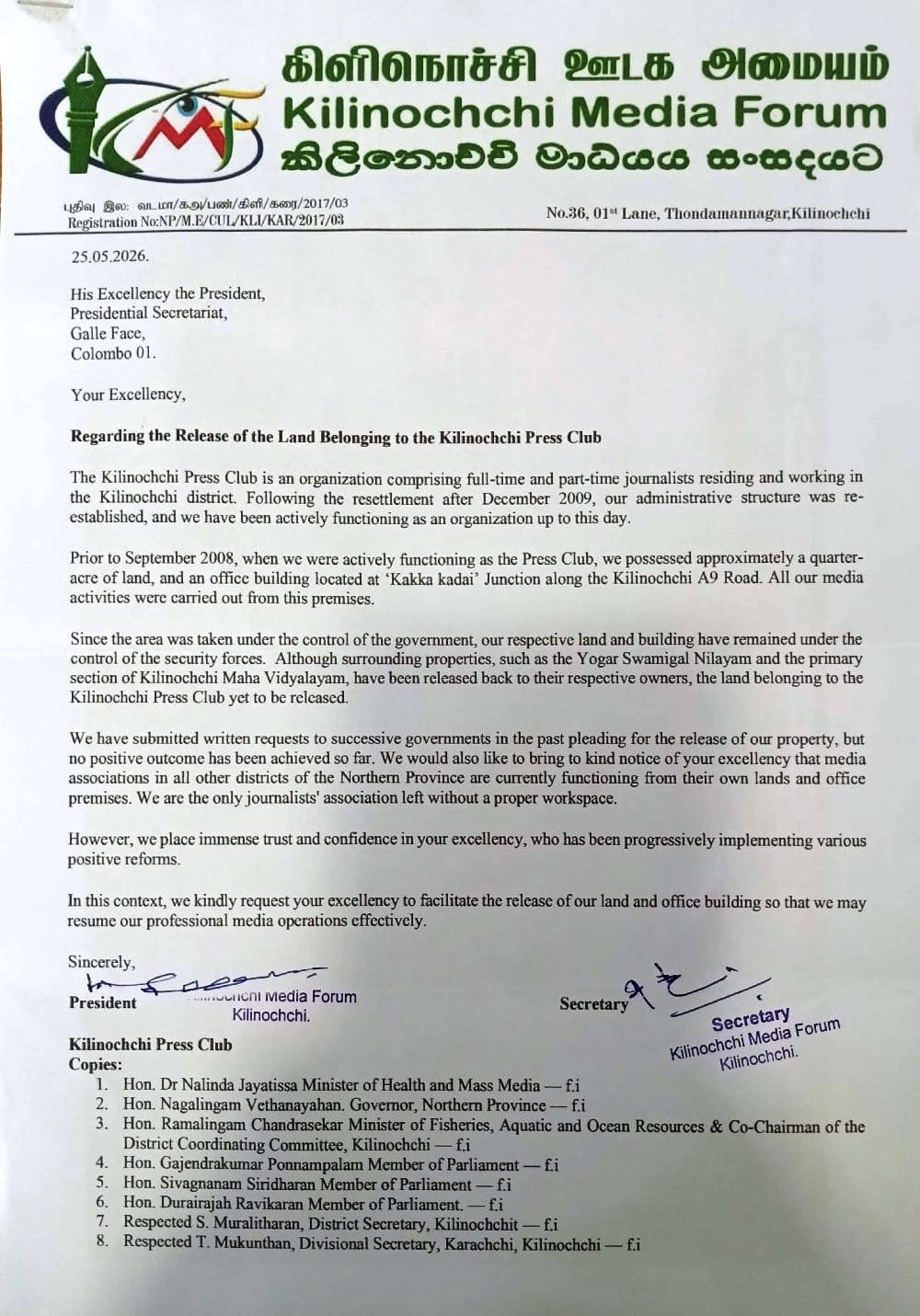
In its May 25 letter, the Media Forum said all of the Press Club's activities had once been run from the building. It said it had reorganised its administrative structure after residents began returning to the district in December 2009 and had continued to function as a journalists' organisation, and that repeated written appeals to successive governments had produced nothing.
One Kilinochchi journalist familiar with the dispute said journalists believe the military is reluctant to see the Press Club reopen at the site because it would draw attention to other land it holds nearby.
"If we come back and start using this land, they are afraid they may have to release the other lands they are holding around it without any clear reason," the journalist said.
Cases of this kind reflect an arrangement that existed under LTTE rule, when schools, religious bodies and community organisations were allotted state land for their use without acquiring legal title. Most of those occupants have since been allowed to resume their earlier use of the land despite holding no deeds.
The Forum told Mr. Dissanayake that journalists' associations elsewhere in the Northern Province operate from their own land and offices, and that the Kilinochchi organisation is the only one without a proper workspace.
Copies of the appeal went to Health and Mass Media Minister Nalinda Jayatissa; Northern Province Governor Nagalingam Vethanayahan; Fisheries Minister Ramalingam Chandrasekar, who co-chairs the Kilinochchi District Coordinating Committee; the lawmakers Gajendrakumar Ponnambalam, Sivagnanam Shritharan and Thurairasa Ravikaran; and senior district and divisional officials.
Seventeen years after the war ended, the military’s continued occupation of land remains a persistent source of friction in the north. Successive governments have released some areas, but significant tracts remain under military control, often with little public explanation of why they are still required so long after the defeat of the LTTE. In Kilinochchi, the release of the adjoining properties has sharpened that question: What continuing security need requires the military to retain the former Press Club site when the land on either side has been returned to civilian use?