

COLOMBO, Sri Lanka —Seventeen years after the end of Sri Lanka's civil war and the defeat of the Liberation Tigers of Tamil Eelam (LTTE), the government said Tuesday that it would retain military control over lands in Valikamam North it considers essential to national security, reaffirming that large sections of the Palaly High Security Zone will remain under military control.
The decision deepens the frustration of Tamil landowners, many of whom have spent decades seeking the return of properties acquired by the military during the war.
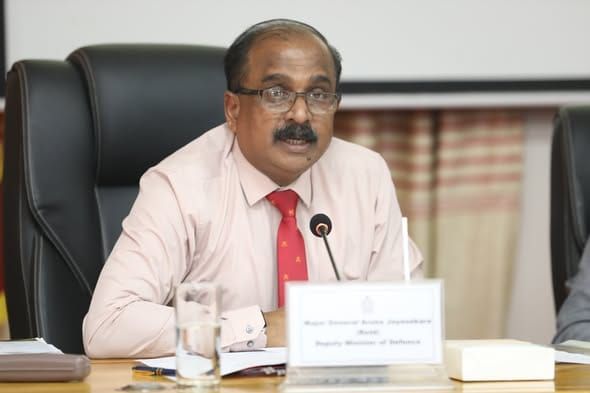
Responding to questions in Parliament from Batticaloa District lawmaker Shanakiyan Rasamanickam of the Illankai Tamil Arasu Kachchi, Deputy Defense Minister Aruna Jayasekara said lands currently used by the armed forces in 16 Grama Niladhari divisions of Valikamam North were of continuing strategic and operational importance and therefore could not be returned to their former owners.
Mr. Jayasekara said the lands occupied by the Sri Lanka Army were required for the area’s security and would remain under military use. He added that the government had legally acquired three Grama Niladhari divisions fully occupied by the Army for the Palaly High Security Zone under the Land Acquisition Act through an Extraordinary Gazette issued on April 26, 2013.
The Deputy Minister also said five land parcels currently occupied by the Sri Lanka Navy in Valikamam North would not be released, describing them as critical to maritime security operations. The Navy uses the sites to monitor Sri Lanka’s northern waters, prevent narcotics trafficking, arms smuggling, human trafficking, and the movement of prohibited goods across the maritime boundary with India, and to respond to illegal fishing by Indian vessels, he said.
Radar installations in the area provide continuous surveillance of coastal waters, while naval personnel conduct security patrols by boat, on foot,, and on motorcycles, according to the minister. He noted that the Navy had previously released six land parcels in Valikamam North for civilian administrative purposes, but said the remaining five sites were indispensable for national security.
Mr. Jayasekara also ruled out the release of 774.98 acres occupied by the Sri Lanka Air Force within the Palaly High Security Zone, which includes Palaly International Airport. Because the Air Force operates jointly with the Civil Aviation Authority and Airport and Aviation Services (Sri Lanka) Ltd. in managing airport operations, the land could not be released, he said.
He added that the Air Force did not possess detailed information identifying whether all of the lands it occupies fall within the 16 Grama Niladhari divisions and advised that such information be obtained from the Valikamam North Divisional Secretariat.
Addressing longstanding public requests to regain access to religious sites and schools in Mayiliddy and Palaly, Mr. Jayasekara said those properties had also been acquired for the High Security Zone under the 2013 gazette. He said worshippers are nevertheless permitted to enter the sites for religious observances with authorization from the Security Forces Headquarters–Jaffna and the military’s Directorate of Operations.
The Deputy Minister also outlined the government’s position on several disputed military-held properties elsewhere in the Northern Province.
In Kilinochchi District, he said, land sought for the expansion of the Iranamadu Kannakambikai Amman Temple remains in use by the Army’s 1st Battalion. The land, he said, could be released only after the government recovered Rs. 8.47 million spent by the Army on buildings and other infrastructure constructed there.
He said a separate parcel at Iranamadu Junction, previously used by the Army as a children’s park, was formally handed over to the Karachchi Divisional Secretariat on March 29, 2025. Another parcel belonging to the Department of Agriculture, which the Army’s 6th Sinha Regiment had used, was returned to the department on March 11, 2026.
On the disputed lands at Keppapilavu in Mullaitivu District, Mr. Jayasekara said that during the survey, 44 of 55 civilian landowners agreed to accept alternative land in place of their original properties.
According to the minister, those families received 40-perch allotments in the Keppapilavu Model Village, together with newly constructed houses and public facilities, including a preschool, school, Grama Niladhari office, and community hall.
The remaining 11 landowners declined the government’s offer of alternative land and housing, he said. Authorities subsequently explored whether they would instead accept financial compensation based on government valuations in exchange for transferring ownership of their original properties to the Army, but the proposal was rejected.
Mr. Jayasekara said the government had since informed the Puthukudiyiruppu Divisional Secretariat that the remaining claimants could still be allocated land of equivalent size from the unused portion of the Army camp and provided with houses financed by the government and constructed with Army assistance.