

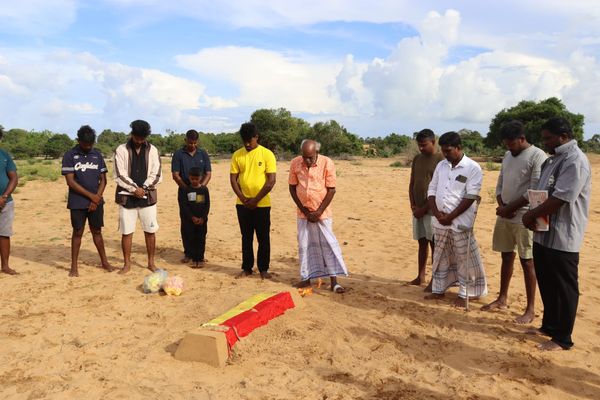
MULLAITIVU, Sri Lanka — On Friday evening, parents of fallen Tamil Tiger fighters gathered among the broken remains of a cemetery at Iraddaivaikkal, near Puthukkudiyiruppu, and paid tribute to their children. Then they began clearing the ground.
It was at least the fifth such gathering in northern Sri Lanka this month. In the Mullaitivu and Mannar districts, families, former fighters and residents have been returning to cemeteries that the Liberation Tigers of Tamil Eelam built for their dead. They are preparing the sites for Maaveerar Naal, or Great Heroes’ Day, on Nov. 27.
Many Tamils call November Maaveerar Maatham, the month of great heroes. The cleanups are usually among its first public events.
The Tigers fought the Sri Lankan state for more than a quarter century for a separate homeland for the island’s Tamil minority, until the military defeated them in May 2009. The group remains banned in Sri Lanka and has been designated a terrorist organization by several countries, including India and the United States. Maaveerar Naal marks the death of Lt. Shankar, whom the group regarded as its first fighter killed in combat, on Nov. 27, 1982. The Tigers held the first commemoration in 1989.
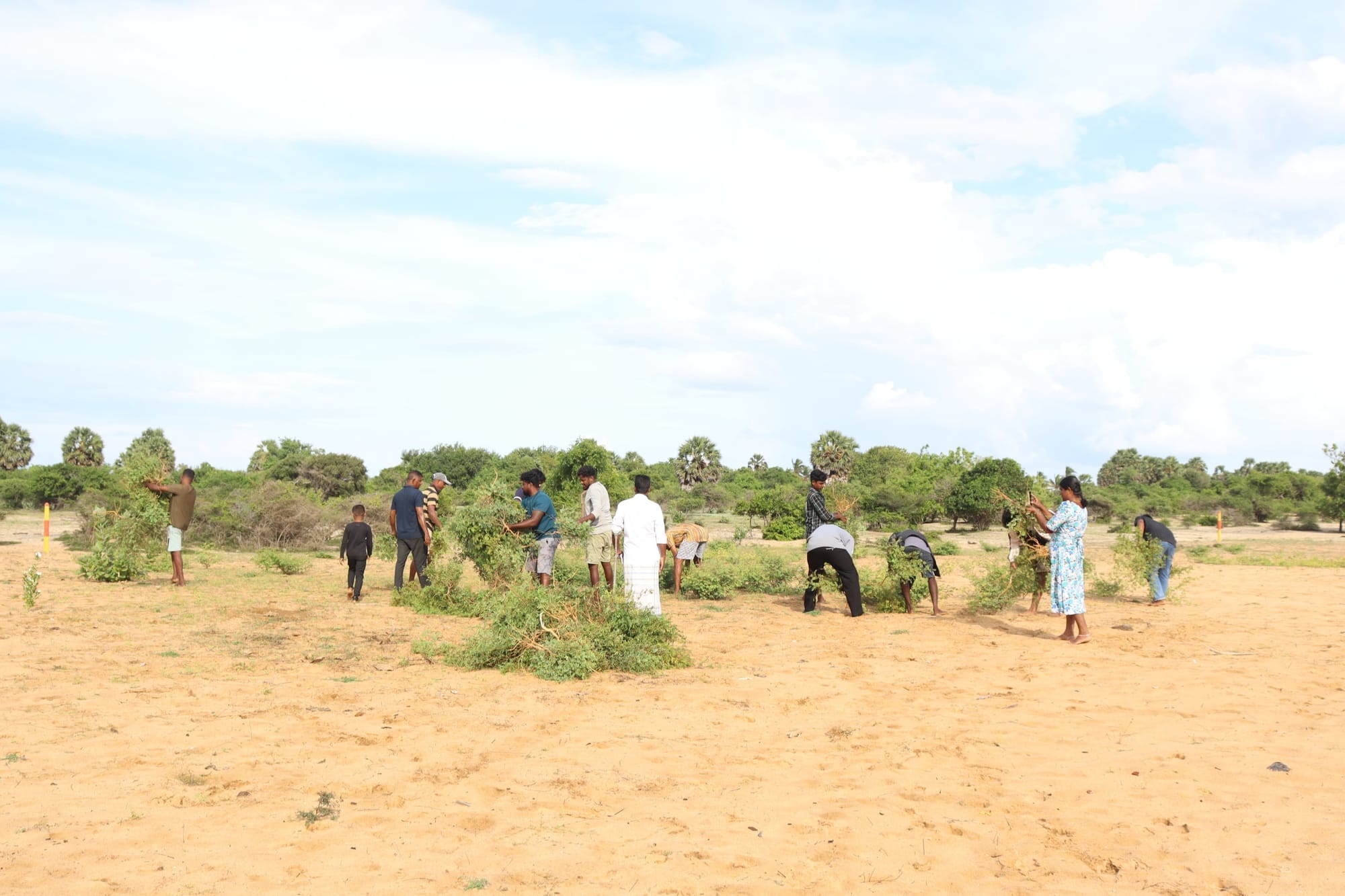
This year’s work began on Nov. 1 at three sites. At the Theravil cemetery in Visuvamadu, in Mullaitivu district, the cemetery’s working committee, parents of the dead and residents paid tribute before they started work. In Mannar district, the committee responsible for the Aatkattiveli cemetery opened the cleanup under its chairman, Saminathan. Committee members, relatives of the dead, supporters and former fighters joined in.
At Alankulam, in the Thunukkai area of Mullaitivu, organizers lit a memorial flame. The army still occupies the cemetery grounds there, so volunteers cleared a plot next to the site, where ceremonies have been held in recent years. The organizers said that on Nov. 27 a bell would be rung at 6:05 p.m., the time of Lt. Shankar’s death. A minute of silence would follow at 6:06, and at 6:07 flames would be lit for all the dead.
Work at Mulliyavalai, also in Mullaitivu, began on Tuesday evening, and the committee there has called for a larger volunteer effort on Saturday. Organizers say the Iraddaivaikkal cemetery was established during the final months of the war in 2009. Committees at several sites said the commemoration would be held as in past years, and they urged the public to join the preparations.
The Tigers called the cemeteries thuyilum illam, or resting places. The cemetery at Koppay, in Jaffna district, begun in 1987 and is widely regarded as the first. In the early years, funeral rites followed each fighter’s religion: Hindu fighters were cremated, and Christian fighters were buried. In 1991, the group decided to bury all its dead. An issue of the Tigers’ magazine from October and November of that year said the change reflected the wishes of most of its fighters. According to accounts drawn from the group’s publications, the first fighter buried under the new practice was Capt. Solai, who was laid to rest at Koppay on July 14, 1991.
The Tigers did not speak of the dead as buried. They used the word vithaithal, the sowing of a seed, to suggest that the fallen had taken root for future generations. The practice drew on the ancient Tamil custom of raising a memorial stone, the nadukal, for warriors who died in battle. The group eventually built about 35 such cemeteries across the north and east. Each Nov. 27, families gathered at the graves with flowers and food.
Some parents feared for the graves from the start. A former Tiger fighter told The Jaffna Monitor that when the group began burying its dead, many parents asked how it could be sure the army would not bulldoze or desecrate the graves if it ever captured the cemeteries. He said the Tigers assured them that the Sri Lankan military would not go so far as to destroy cemeteries, and that the group made the same argument in its official newspaper, Viduthalai Puligal. The Jaffna Monitor could not independently verify that the article was published.
The cemeteries have been destroyed more than once. When the military retook the Jaffna Peninsula in 1995, it razed the cemeteries there, including Koppay. The Tigers rebuilt several of them during the ceasefire that began in 2002. After the war ended in 2009, the military bulldozed the cemeteries across the north and east and smashed the headstones. At Koppay, where at least 2,000 fighters were buried, the graves were flattened in July 2010, and an army base now occupies the site. Families who go there to remember the dead hold their ceremony on a patch of land across from the camp.
Where the military has left the sites, families have gathered the broken headstones and stacked them into makeshift monuments. In past years, similar work has taken place at cemeteries in Kilinochchi, Jaffna, Vavuniya, Trincomalee and Batticaloa. The Kanagapuram cemetery in Kilinochchi has drawn the largest crowds since the war ended.
The governing National People’s Power took up the cemeteries as a campaign issue. Ahead of local elections in May 2025, the party circulated Tamil-language campaign songs in the north and east that promised, among other things, to rebuild and preserve the cemeteries.
In the days before Maaveerar Naal last year, Ramalingam Chandrasekaran, the fisheries minister and chairman of the government’s development committee in Jaffna, told reporters that President Anura Kumara Dissanayake had already instructed the Defense Ministry to release the cemeteries held by the security forces. He said some of them could be released by the end of that month, and he presented the pledge as an assurance from the president himself. He also said the government had placed no obstacle on Tamils remembering those who died in the war.
Like many of the government’s promises to Tamils, this one has not been kept. No cemetery was released. On Nov. 27 last year, families again held their ceremonies outside the cemeteries, and at Koppay the army’s 51st Division remained on the site. At a development committee meeting in Koppay in January, officials said the land there belongs to the Prisons Department and was handed to the security forces in 2014. The lawmaker chairing the meeting said the release would happen. This month, organizers at Alankulam said the army still holds the cemetery there.
Local politicians had raised the issue even before the minister’s pledge. In October last year, a former member of the Karachchi Divisional Council said 15 soldiers were still stationed on the Theravil cemetery land. He said that a year after Mr. Dissanayake took office, soldiers had not been withdrawn from any of the cemeteries.
The committees say the work at the cemeteries will continue through the month.