

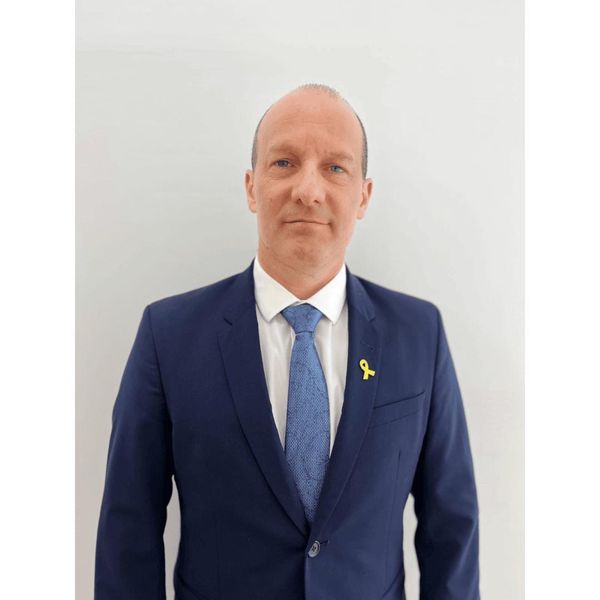
Ambassador Reuven Azar currently serves as Israel's Ambassador to India and Non-resident Ambassador to both Sri Lanka and Bhutan. A seasoned diplomat with over three decades of experience, he has played a pivotal role in shaping Israel's foreign policy across Asia, the Middle East, and Latin America. Reuven Azar has previously served as Deputy National Security Advisor for Foreign Policy at Israel's National Security Council and Foreign Policy Advisor to the Prime Minister of Israel.
His story resonates with many Sri Lankans familiar with the immigrant experience. Born in Argentina in 1967, he moved to Jerusalem at the age of 13, adapting to a new homeland much like countless Sri Lankans who have rebuilt their lives abroad.
What makes Ambassador Azar especially relevant for Sri Lanka is his expertise in economic diplomacy. Having served as Director of Middle East Economic Research and Head of Economic & Trade Department at the Embassy of Israel in Cairo, he brings valuable insight at a time when Sri Lanka is looking to Israel for collaboration in agriculture, technology, and water management—areas where Israel has turned arid land into productive landscapes.
In this exclusive conversation with Jaffna Monitor, Ambassador Azar speaks candidly about historical ties, shared challenges, and the untapped potential for deeper cooperation between Israel and Sri Lanka.
I would like to begin with a question that has long lingered in the minds of many when reflecting on both Jaffna and Jewish history: There have been a few thoughtful observations drawing parallels between the Jewish people and the Jaffna Tamil community. From your perspective, do you see any intellectual or cultural affinities between the two?
That is a thoughtful and meaningful observation. Indeed, there are certain intellectual and cultural affinities between the Jewish people and the Jaffna Tamil community that are both striking and deeply admirable.
Both communities have demonstrated remarkable resilience in the face of adversity, a strong emphasis on education as a means of empowerment, and a long-standing tradition of excellence in fields such as medicine, law, engineering, and academia. These shared values - of perseverance, learning, and contribution to society - create a natural sense of mutual respect.
From our perspective, such parallels reflect the universal power of community strength and cultural identity, and they provide a beautiful foundation for deeper people-to-people understanding. These commonalities not only enrich our diplomatic engagement but also offer opportunities for cultural dialogue and collaboration.
There are historical records of significant Jewish communities in Sri Lanka, including evidence of synagogues in Colombo and Jaffna. Could you shed light on the history of the Jewish presence in the country and the factors that led to its gradual disappearance?
The Jewish presence in Sri Lanka is a little-known but fascinating chapter in both our histories. Historical accounts, such as those by the 9th-century Persian traveler Abu Zeid al-Hasan and the 12th-century Jewish explorer Rabbi Benjamin of Tudela, indeed refer to thriving Jewish communities in what was then known as Serendib, with estimates of thousands of Jews living in cities like Colombo and Jaffna.
These early Jewish settlers likely arrived as part of ancient trade routes that connected West Asia with South and Southeast Asia. Sri Lanka's strategic position in the Indian Ocean made it a key point of contact for merchants, including Jews from Persia, Yemen, and other parts of the diaspora. Archaeological and historical references suggest the existence of synagogues and a well-established community life.
Over time, however, a combination of colonial influence, religious assimilation, intermarriage, and migration contributed to the fading of this distinct Jewish identity. Some Jewish families may have integrated into other local communities, such as the Portuguese or Dutch Burghers or quietly practiced their faith without formal communal structures, especially during periods of foreign rule or religious restriction.
While the physical traces may have diminished, the historical presence of Jews in Sri Lanka is a testament to the deep interconnectedness of our cultures and civilizations. It is a heritage worth remembering and, where possible, rediscovering - one that adds yet another layer to the shared human story between our peoples.
In many of Sri Lanka’s prominent tourist destinations—particularly Arugam Bay and Ella—it’s common to see Israeli travelers, with some establishments even displaying signage in Hebrew. From your perspective, what factors make Sri Lanka especially appealing to Israeli tourists compared to other South Asian destinations?
Sri Lanka holds a special place in the hearts of many Israeli travelers, thanks to its breathtaking landscapes, from pristine coastlines to mist-shrouded hills, and its rich tapestry of cultural heritage.
Many young Israelis seek destinations that are safe, affordable, and spiritually enriching. Sri Lanka fits that profile perfectly. The welcoming nature of the local communities, the vibrant backpacker culture, and even the presence of Hebrew signage, as you mentioned, make our travelers feel at home.
Moreover, the shared values of resilience and community, as well as the mutual appreciation for nature and history, strengthen this connection. Israelis often describe their time in Sri Lanka as deeply memorable, not just for the scenery, but for the warmth of the people. That emotional connection keeps bringing them back.
Could you provide recent data or estimates on Israeli tourist arrivals to Sri Lanka, along with an assessment of their economic impact?
In recent years, we've seen a steady increase in the number of Israeli tourists visiting Sri Lanka, from 19,500 in 2023 to 25,000 in 2024. Many of them, particularly young travelers and young families, are drawn to the country's natural beauty, warm hospitality, and rich cultural heritage.
The contribution of Israeli visitors goes beyond tourism revenue. Their presence supports local businesses, promotes employment, and helps build people-to-people connections that deepen mutual understanding.
Over time, these experiences lead to repeat visits and lasting friendships, which strengthen the broader relationship between our two countries in a meaningful and sustainable way.
Beyond tourism, what specific sectors does Israel see as having the greatest potential for expanded economic cooperation with Sri Lanka, particularly given Sri Lanka's ongoing economic recovery efforts?
Israel sees strong potential for expanded cooperation with Sri Lanka in several key sectors that align with the country's development and recovery goals. Agriculture and water management are top priorities - Israel is a global leader in drip irrigation, desalination, and agri-tech innovation. Application of these technologies enhances food security, improves yields, and assists in managing water more efficiently, especially in drought-prone areas.
We also see promise in healthcare, cybersecurity, clean energy, and education - areas where Israeli innovation can offer practical, scalable solutions. For example, digital health tools, renewable energy systems, and vocational training partnerships could support Sri Lanka's human capital and infrastructure development.
Israel is committed to being a partner in Sri Lanka's recovery journey - not just through trade, but through knowledge-sharing and sustainable collaboration that benefits both our peoples.

Have any of these technologies—be it water management, drip irrigation, or related practices—been shared with Sri Lanka through bilateral cooperation or development initiatives?
Over the years, Sri Lankan professionals have participated in Israeli-run capacity-building programs, particularly through MASHAV - Israel's Agency for International Development Cooperation. These programs focus on drip irrigation, greenhouse farming, and efficient water use, offering hands-on experience with Israeli agricultural models.
Looking ahead, Israeli innovation can play a transformative role in addressing some of Sri Lanka's most pressing challenges. In regions like the Northern and Eastern provinces, where climate vulnerability and water scarcity affect agricultural productivity, Israeli technologies can help maximize output with minimal water use, improve soil health, and reduce dependency on unpredictable rainfall. Some of this work is already done by Israeli private sector companies represented by local agents.
The goal is not just to introduce advanced tools, but to create locally adapted, sustainable solutions through partnerships with government bodies, agritech startups, and farming communities. Modernizing irrigation and crop management can help Sri Lanka move closer to food security, rural development, and climate resilience.
What role does India play as a facilitating partner in Israel-Sri Lanka cooperation, given the Ambassador's base in Delhi?
India can play a constructive role in facilitating Israel–Sri Lanka cooperation. We are exploring triangular cooperation opportunities, especially in areas where Israel and India have shared expertise, such as agriculture, water management, innovation, and capacity building.
India's deep cultural, economic, and geographic ties with Sri Lanka make it a natural bridge for regional collaboration. We see growing potential in leveraging India's connectivity, regional presence, and development experience to complement Israeli technology and know-how in projects that benefit Sri Lanka's recovery and growth.
What is Israel's assessment of China's growing influence in Sri Lanka through projects like the Hambantota Port, and how does this affect regional balance?
Israel respects Sri Lanka's sovereign right to engage with various global partners as it sees fit. Israel offers cooperation that supports security, resilience, and economic recovery unconditionally. Our interest lies in promoting regional stability, sustainable development, and mutual respect among all nations.
There have been instances of opposition or criticism within certain segments of Sri Lankan society regarding the presence of Israeli tourists. In your view, what are the root causes of such sentiments?
Clearly, there is a small minority trying to import foreign conflicts to Sri Lanka for political purposes. Radicalism is being promoted through agitation and campaigns of disinformation. We are thankful to the local authorities for keeping a safe environment for Israelis and believe that dialogue, cultural exchange, and mutual respect serve the common interest. Tourism reminds us that beyond politics, we all share common human values.
Despite having no resident embassy in Colombo at the moment, how does the Israeli mission in Delhi ensure continued engagement with Sri Lankan authorities and civil society? Are there plans to reopen the embassy in Colombo in the near future?
Despite not having a resident embassy in Colombo at present, Israel maintains active and continuous engagement with the Government of Sri Lanka, its civil society, and the private sector through our mission in New Delhi, which is accredited to Sri Lanka.
We conduct official meetings, media engagements, trade activities, and development programs to ensure strong bilateral ties. Our diplomatic team travels to Sri Lanka frequently to engage directly with stakeholders across sectors, and we maintain close coordination with Sri Lankan counterparts in both Colombo and New Delhi.
We value our relationship with Sri Lanka and are always looking for ways to deepen our cooperation. Establishing a resident mission is certainly a possibility in the future, depending on diplomatic priorities and practical considerations.
The ongoing conflict in Gaza has caused immense human suffering and drawn global concern. From a humanitarian standpoint, many are wondering—when can we realistically hope to see an end to the conflict, and a pathway toward lasting peace for both Palestinians and Israelis?
Israel has been applying a combination of military pressure and negotiations to achieve our stated goals: to remove the military capabilities of the terrorist organizations, make sure they won’t be able to rearm and regroup, and bring back our hostages.
Hamas is defeated militarily, however, refuses to surrender. It continues to use its own population as human shields and refuses to release the remaining hostages. Hamas continues to prolong the conflict and prevent much-needed humanitarian relief from reaching those who need it most.
The suffering in Gaza is heartbreaking. Every innocent life lost—Israeli or Palestinian—is a tragedy. However, lasting peace can only come when the radical forces that oppose our very existence are gone. That can be achieved either through a renewed, non-belligerent self-rule by Palestinians in Gaza or through permanent Israeli military control. We prefer the former; however, Hamas’s rejection of internationally mediated solutions may lead to the latter. Israel wants to end this war and will have to make a decision soon.