
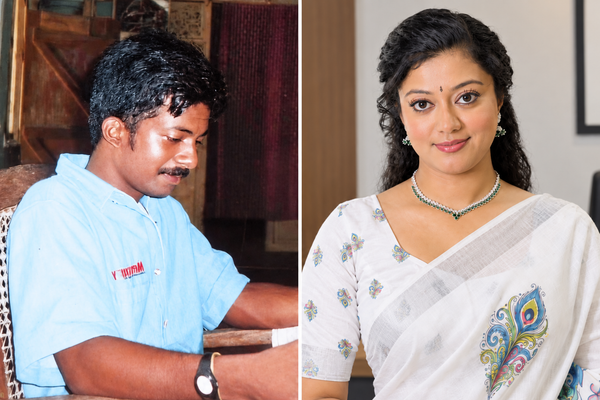
JAFFNA, Sri Lanka — Nineteen years after Sahathevan Nilakshan, a 22-year-old journalism student and magazine editor, was shot dead at his family's home during a military curfew, the University of Jaffna on Wednesday awarded a gold medal bearing his name to the top student in its Media Studies program.
The Sahathevan Nilakshan Memorial Gold Medal went to Thanushka Sanjeewa, a graduate from Trincomalee who finished first in her batch. It was presented on Oct. 7, the second day of the university's 41st general convocation, held in nine sessions from Oct. 6 to 8.
The award is supported by the Nila Fund, established by Mr. Nilakshan’s schoolmates from the 2004 Advanced Level batch at Jaffna Hindu College to keep his memory alive. For the past eight years, the fund has sponsored the university medal in his name, honoring outstanding students pursuing the field to which he had hoped to devote his own life.
Mr. Nilakshan was killed before dawn on Aug. 1, 2007, shortly after he returned to Jaffna from a two-week journalism training program in Colombo.
Newspaper reports at the time described testimony given at the inquest by his father, Rasaratnam Sahathevan, then 59. Mr. Sahathevan said three armed men came to the family's home in Kokkuvil before dawn and demanded that the door be opened. When the family refused, the men broke it down and entered.
The men asked for the names of the couple's two sons. After the parents answered, the men said they wanted to speak to the younger son, Nilakshan, and took him toward the entrance of the house. The parents were ordered to stay inside.
Mr. Sahathevan testified that he heard his son talking with the men near the entrance and, a short time later, heard gunfire. His son was found shot at the house. Mr. Sahathevan told the inquest that one of the men wore long trousers and a shirt, and the other two wore shorts and shirts.
At the time, the Jaffna Peninsula was under a strict military curfew, with civilian movement severely restricted and government security forces maintaining extensive checkpoints and controls. International press freedom groups reported that the gunmen reached the house by motorcycle during curfew hours, in an area heavily guarded by the military.
No one has been prosecuted for the killing. There has been no public explanation of how armed men were able to move through the peninsula before dawn, enter the house, kill Mr. Nilakshan and leave, and no court has identified who ordered or carried out the attack.
An Editor in Wartime Jaffna
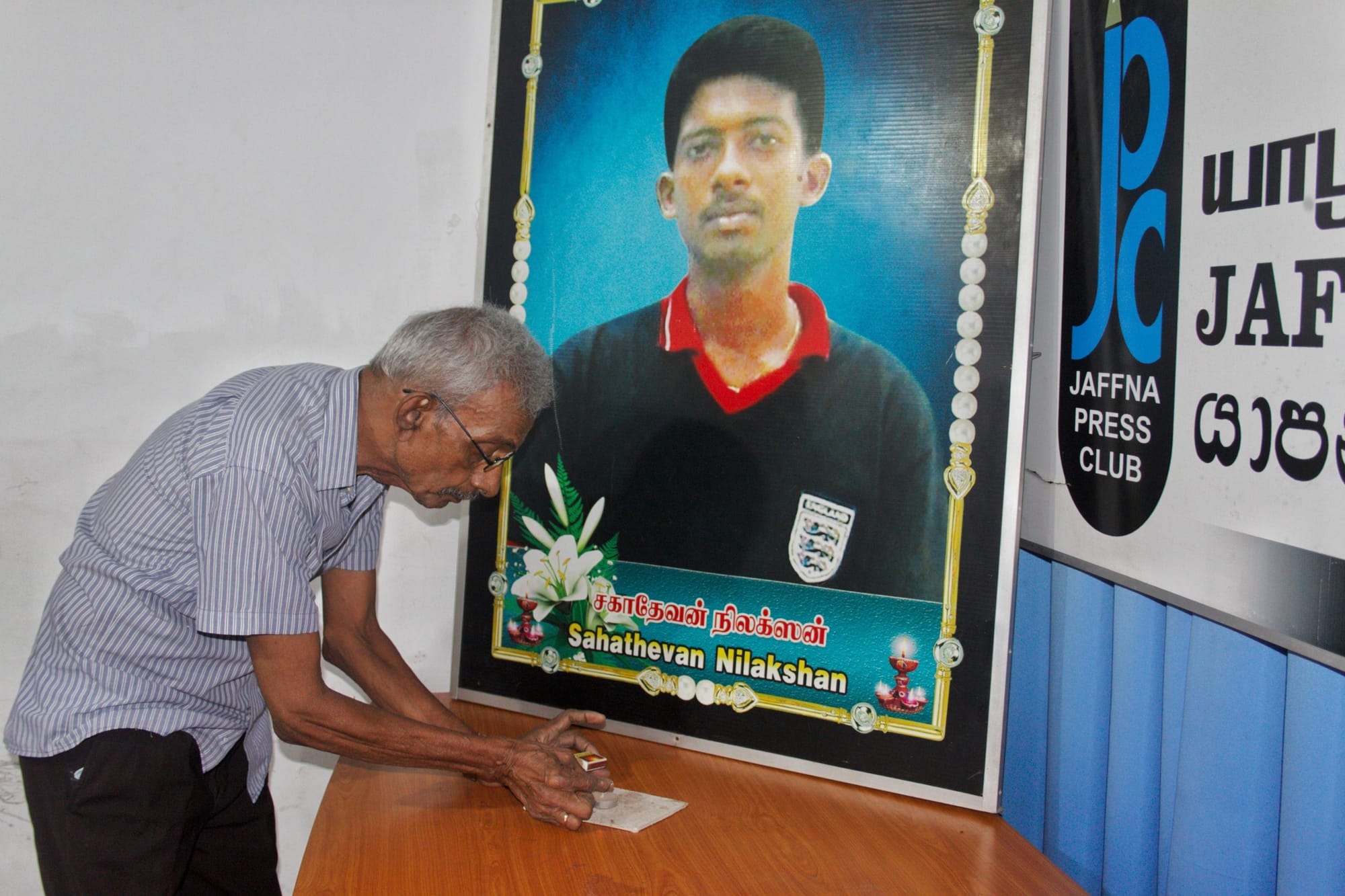
People familiar with events surrounding the killing told Jaffna Monitor they believe Mr. Nilakshan was targeted because of his journalism.
In addition to his studies, he edited Saaralam, “Window” in literary Tamil, a student publication associated with the Jaffna District student movement.
The Committee to Protect Journalists identified him as the editor of the student-run magazine and recorded his death as the killing of a journalist. The Free Media Movement said he also reported for Tamil diaspora media.
A United Nations human rights report later said Saaralam was linked to the Federation of Jaffna District Students, which it described as supporting Tamil nationalism. The report also noted accounts that students selling the magazine at the University of Jaffna had received death threats in May 2007, less than three months before Mr. Nilakshan was killed.
No judicial finding has established why he was killed.
His death came during an especially violent period for Tamil media. Reporters Without Borders described Jaffna's press at the time as being in the "grip of terror," documenting killings and intimidation of journalists and the restrictions under which newspapers operated.
Mr. Nilakshan was also active in Tamil student politics. He was a founder and former president of the Jaffna District Tamil Students’ Union and later served as its patron. The student movement operated in the intensely politicized environment of wartime Jaffna and was closely aligned with Tamil nationalist politics and the Liberation Tigers of Tamil Eelam.
One of the student leaders who succeeded him, Panchadcharam Gunendran, later joined the LTTE and took the nom de guerre Captain Ellalan. He was shot dead by armed men inside the University of Jaffna premises on Jan. 21, 2008.
A day after Mr. Nilakshan's killing, Thanikasalam Sasiroopan, another young man from Jaffna, was also shot dead. Reporters Without Borders reported at the time that he was a trainee journalist with the Daily Mirror and was killed by gunmen on a motorcycle as he returned home on Aug. 2, 2007. People who knew him locally said he was a former student of Jaffna Hindu College and was studying for a Higher National Diploma in Accountancy. Mr. Sasiroopan edited Thulir (துளிர்), a small magazine whose name means “Tender Shoot” in Tamil.
The two killings were later included in a proposed 2009 U.S. genocide indictment prepared by Tamils Against Genocide against Gotabaya Rajapaksa, then Sri Lanka’s defense secretary, and Sarath Fonseka, then commander of the Sri Lankan Army. The document, submitted to the U.S. Department of Justice, catalogued alleged wartime killings and disappearances in Sri Lanka and proposed genocide and torture charges against both men, as well as war-crimes charges against Mr. Rajapaksa.
A United Nations report examining killings from that period found that many followed a similar pattern: shootings in government-controlled territory, sometimes during curfew, followed by investigations that failed to identify those responsible.
A Killing Still Without Accountability
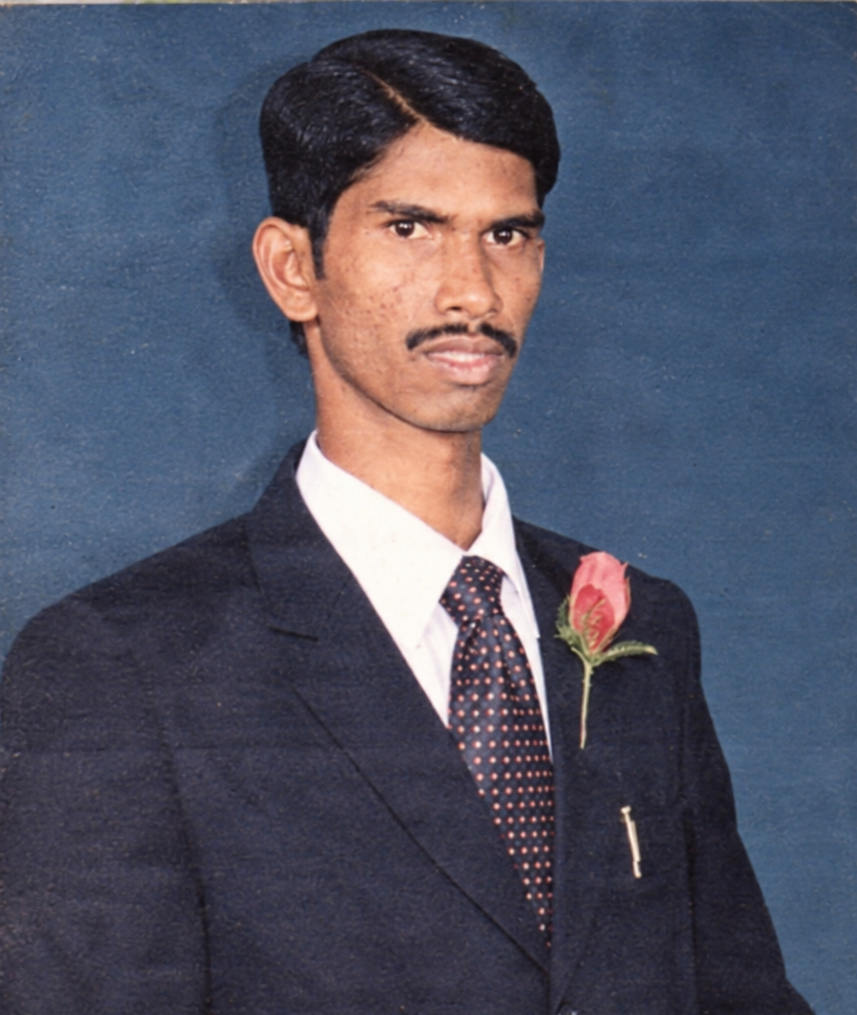
Several people with direct knowledge of events at the time told Jaffna Monitor they believe the group that killed Mr. Nilakshan was led by Gunaratnam Sugantheepan, a former medical student at the University of Jaffna. According to those accounts, Mr. Sugantheepan worked with the LTTE during the 2002-06 ceasefire, later fell out with the group and aligned himself with the Sri Lankan military.
Mr. Sugantheepan was himself shot dead near his home in Kokkuvil on April 29, 2008. The LTTE claimed responsibility for the killing. Its official radio station, Pulikalin Kural (Voice of Tigers), announced that the LTTE had killed a man it branded a “traitor” in Jaffna, referring to Mr. Sugantheepan.
The allegations carried particular weight for Mr. Nilakshan’s family. His mother, who was then the principal of Kokkuvil Hindu Primary School, remained deeply troubled by the belief that her son had been killed by the son of a fellow educationist from the same school.
Several of Mr. Nilakshan’s batchmates told Jaffna Monitor that she spoke repeatedly during her lifetime of that painful connection. Former students and others recalled her words again at her funeral.
Her belief was never tested in court. She spent more than 15 years seeking justice for her son but died without seeing anyone held accountable for his killing.
'Nila Anna'
Friends and former classmates describe Mr. Nilakshan, a student at the university's Media Resources Training Centre, as a capable organizer and mentor whose leadership first became evident at Jaffna Hindu College. Many younger students still call him "Nila Anna," or Brother Nila, and recall a senior student who helped and encouraged them and had a talent for bringing people together.
Many of his friends and juniors told Jaffna Monitor they believe he could have become an important leader in the Tamil community had he lived. His former classmates say they set up the fund so that his name would be associated with the profession he chose as well as with the circumstances of his death.
This Year's Recipient
Ms. Sanjeewa is a graduate of St. Mary's College in Trincomalee. She placed 10th in the Trincomalee District in the 2019 Advanced Level examination before entering the University of Jaffna, where she specialized in Media Studies and finished first in the department's 43rd batch.
As a student, she produced an in-depth documentary on human-elephant conflict and its effects on farming communities in Trincomalee. She also worked in the news and program divisions of the Sri Lanka Broadcasting Corporation. Her academic record later earned her a post as a temporary assistant lecturer in the university's Department of Media Studies.
Ms. Sanjeewa said the department had taught her to see the media as "a mirror of society" and "the voice of the people." She credited her lecturers, and media professionals who shared their experience with students for broadening her understanding of journalism.
She thanked her parents and husband for supporting her education, along with the head and lecturers of the Media Studies department. She also thanked the Nila Fund for establishing the award in Mr. Nilakshan's memory and for recognizing successive generations of students entering journalism.