

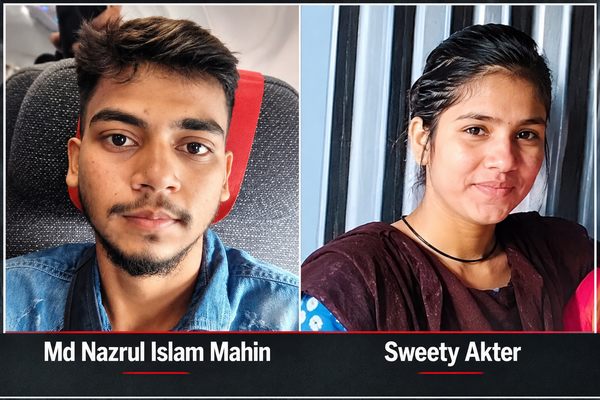
In early October, Sweety Akter called her parents in Tangail from a prison in Saudi Arabia. It was one of her monthly calls. She said nothing about a sentence. In one of those last calls, her father later told The Daily Star, she had said she might be released within two months.
On Sunday, 11 October, Nazrul Islam made his weekly call to his parents in Brahmanbaria. It lasted two to two and a half minutes. His father says Nazrul told him he was in some trouble. His mother says he gave no sign of danger.
Three days later, on Wednesday, 3 Jumada al-Ula 1448 AH, which corresponds to 14 October 2026, the Saudi Press Agency published a statement from the Interior Ministry announcing that both had been put to death in the Makkah region that day. The agency’s timestamp reads 3.58 pm Makkah time. The statement said the two had committed fahisha, an Arabic term for sexual indecency, inside “one of the mosques in the Holy Capital.” It did not name the mosque, describe the act or say when it took place.
Six days after the executions, the government of Bangladesh has not officially confirmed that the two people executed were its citizens. An official at the Bangladesh mission in Jeddah told The Daily Star that Saudi authorities had supplied only names and offences, which made it hard to establish whether the people in Saudi records were the people who had been executed.
Those records include a list. On 30 September, the Saudi Foreign Ministry sent the Bangladesh consulate in Jeddah the names of about 2,500 Bangladeshi prisoners. Nazrul and Sweety were on it. Neither entry mentioned a death sentence.
Over three years, several parties knew something about these two prisoners. Their families knew they were in prison. A Saudi court tried them, and an appeal panel of 13 judges upheld their sentences. According to unnamed sources quoted by Prothom Alo, two Bangladeshi residents interpreted at the trial. The consulate had their names on paper. Bangladeshi officials say no one told them the two faced execution.
Jaffna Monitor has reviewed Bengali and English reporting from Bangladesh, the Saudi statement in its original Arabic, government records cited by Bangladeshi newspapers, Nazrul’s public Facebook posts, and a reply from one of several people we contacted through Facebook. This account is arranged around one question: who knew what about Nazrul Islam and Sweety Akter, and when.
Nazrul

Nazrul was the eldest of four children of Abdul Basir, a farmer, and Rahima Begum, in Birampur village. His father had spent years as a migrant worker in Saudi Arabia and came home in 2020 no better off, Prothom Alo reported. That year Nazrul passed the dakhil examination at a madrasa and enrolled in a college in Brahmanbaria Sadar. Most Bangladeshi outlets give his age at death as 22; two give 25.
The family borrowed about Tk 700,000 to send him abroad through a recruitment broker. He left on 10 November 2022. Three days later, he posted on Facebook: “Good Bye Bangladesh. I miss everyone a lot. Everyone, please pray for me.” Before the month was out, he wrote that putting on airs did not suit him, “because I am middle class.”
He found work as a cleaner, and his family says he worked at the Grand Mosque in Makkah. A photograph on his Facebook account shows him sitting cross-legged on the white marble around the Kaaba. He wears teal coveralls and a cap with the Saudi Vision 2030 emblem, among men in the same uniform, with long-handled floor-cleaning tools lying beside them. In his first seven or eight months abroad, he sent home about Tk 150,000, Bangla Tribune reported. When he was arrested, about Tk 450,000 of the loan was still owed.
His last public post, on 3 May 2023, shows him on a stone step in a Saudi street, chin resting on his hand. The Bengali caption says that middle-class children have to worry even to reduce their worries.
Bangladeshi government documents reviewed by Prothom Alo record that he was detained on 1 August 2023. His family heard nothing for about a month. Then he called from prison to say he was being held, without saying why. His relatives say he never told them. His mother told BBC Bangla that in the early months he could not explain anything to anyone because of the language. A friend, Mahfuz, told The Daily Observer that Nazrul could not speak Arabic fluently.
On the evening of 14 October, someone called the family from Saudi Arabia to say Nazrul had been executed, according to Prothom Alo and Bangla Tribune. Other outlets reported that the family learned from the news. That night his aunt, Abeda Begum, 65, collapsed; relatives say she died of a heart attack. “If my son was sentenced to death without cause, I want justice,” his father told Jago News.
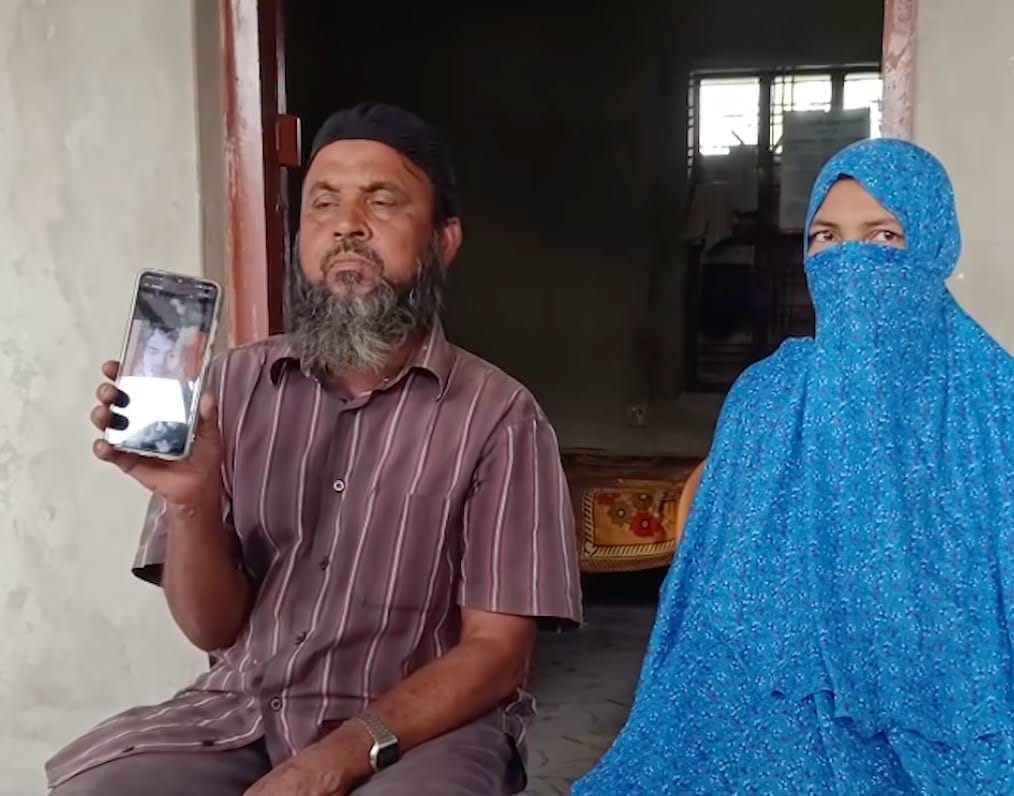
On the woman executed with him, his family’s accounts diverge. Relatives told BBC Bangla that during his prison calls, Nazrul said he had been in a romantic relationship with her. His father told Jago News that the two were not married, that the family did not know her, and that he had heard they worked at the same place. Relatives and friends who spoke to Bangla Tribune described Nazrul as polite and gentle and said they suspected a conspiracy against him.
Sweety
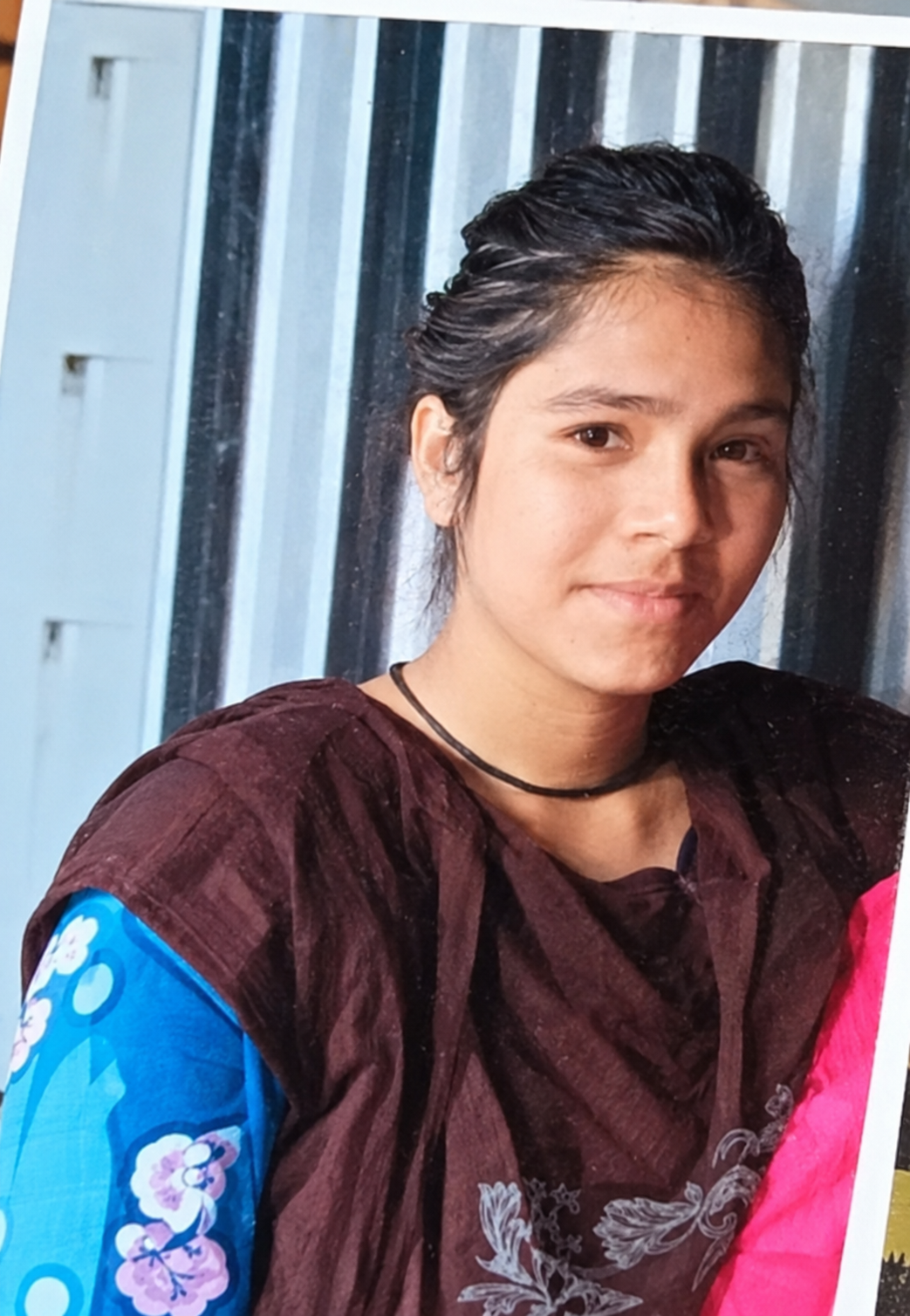
Sweety Akter was the youngest of five daughters of Fazal Mia, a day labourer in Nagar Chhawali village in Mirzapur upazila, Tangail. Bangladesh’s identity and emigration clearance records, as reported by Daily Bangla Post, give her date of birth as 11 August 2001. Her mother, Johura, told The Daily Star that Sweety was divorced and had a four-year-old daughter, whom Sweety’s elder sister, Beauty, has raised since Sweety went abroad.
Her father borrowed Tk 1.5 lakh through a broker to send her to Saudi Arabia. Citing Foreign Ministry sources and government documents, Prothom Alo reported that she arrived in late 2022 and, like Nazrul, took a job as a cleaner with a company called Al Majal, where the two were colleagues. One person Jaffna Monitor contacted through Facebook, who asked not to be named, separately said Sweety worked as a cleaner.
She sent money home for five months, her father said. Then she called to say she was in jail. According to the documents cited by Prothom Alo, she was detained on 2 August 2023, the day after Nazrul. Her father told The Daily Star that Sweety said she had been framed and jailed after an argument with other female workers. The family then lost contact with her for about a year. When she began calling again, roughly once a month, she never mentioned a trial or a sentence.
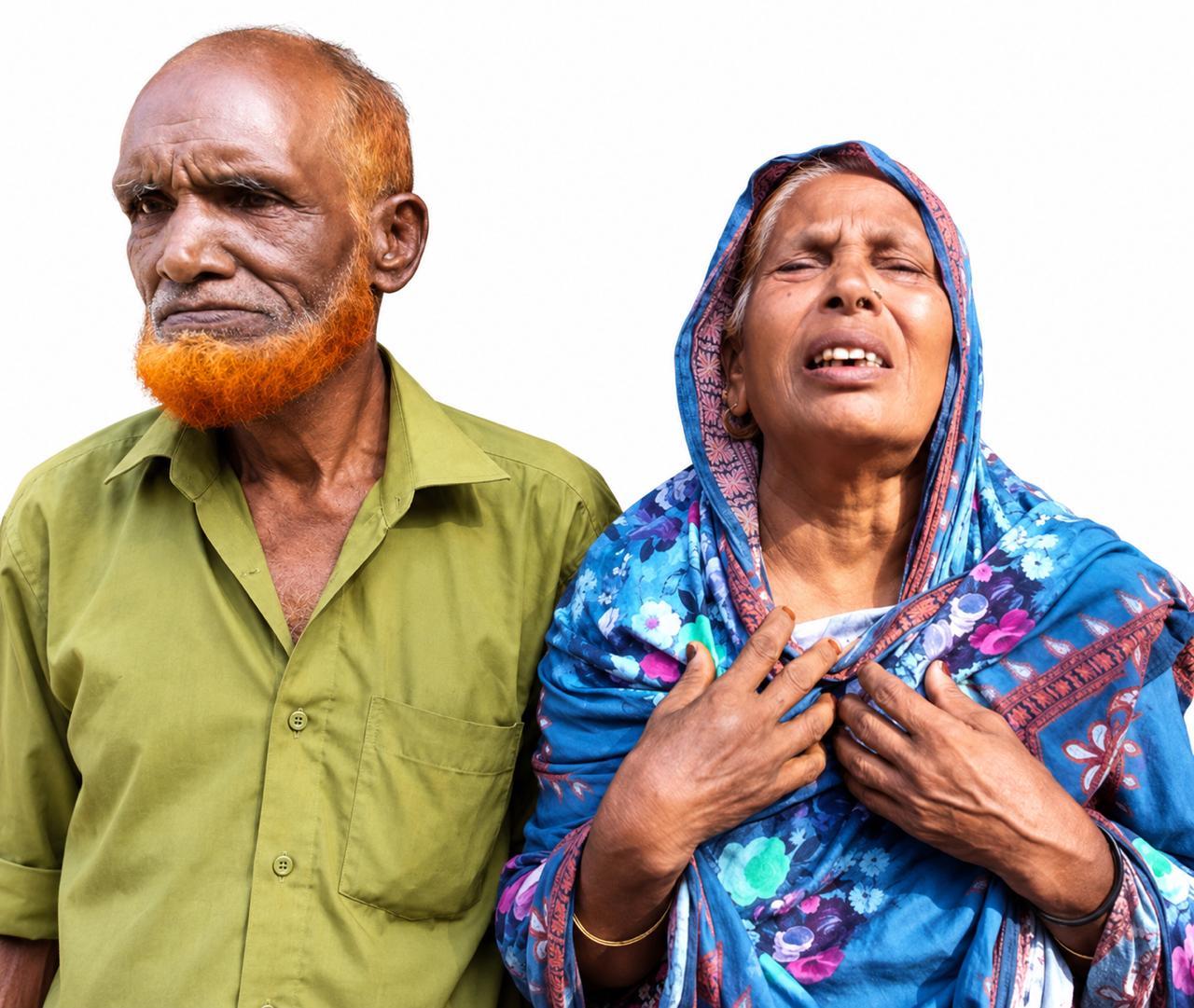
Her family learned on about 18 October, four days after the executions, through other people, that she had reportedly been executed. As of 20 October, her father said, the government had not contacted them. Local officials in Mahera union and Mirzapur told The Daily Star they had received no information either. “Whether she is alive or dead, I just want my daughter back,” Johura said.
Four Verses and a Royal Order
Saudi Arabia’s only public account of the case is the Interior Ministry statement the Saudi Press Agency carried on 14 October. The full text, translated from the Arabic by Jaffna Monitor, reads:
Jeddah, 3 Jumada al-Ula 1448 AH, corresponding to 14 October 2026, SPA
The Ministry of Interior today issued a statement regarding the carrying out of the sentence of killing by ta’zir against two offenders in the Makkah region. Its text is as follows:
God Almighty said: “And do not cause corruption on the earth after it has been set right.” And God Almighty said: “And do not seek corruption on the earth. Indeed, God does not love the corrupters.” And God Almighty said: “And God does not love corruption.” And God Almighty said: “The recompense of those who wage war against God and His Messenger and strive to spread corruption on the earth is only that they be killed, or crucified, or that their hands and feet be cut off on opposite sides, or that they be banished from the land. That is a disgrace for them in this world, and in the Hereafter they will have a great punishment.”
Nazr al-Islam Abd al-Basir and the woman Siti Akhtar, both of Bangladeshi nationality, committed fahisha inside one of the mosques in the Holy Capital. By the grace of God, the security authorities were able to arrest the two named. The investigation with them resulted in their being charged with committing the crime. Upon their referral to the competent court, a ruling was issued against them establishing what was attributed to them and sentencing them to be killed by ta’zir, owing to the seriousness and enormity of what they had done in violating the sanctity of the time and the place. The ruling became final after being upheld by the reviewing authority, and a royal order was issued to enforce what had been decided by Sharia against the two named.
The sentence of killing by ta’zir was carried out against Nazr al-Islam Abd al-Basir and Siti Akhtar, both of Bangladeshi nationality, on Wednesday, 3/5/1448 AH, corresponding to 14/10/2026, in the Makkah region.
In announcing this, the Ministry of Interior affirms to all the commitment of the Government of the Kingdom of Saudi Arabia to maintaining security, achieving justice, and implementing the rulings of Islamic Sharia against anyone who transgresses the sanctity of mosques and violates honour. At the same time, it warns anyone whose soul tempts them to undertake such an act that the Sharia punishment will be their fate.
And God is the Guide to the Straight Path.
The statement uses the Arabic word al-qatl, killing, both for the sentence and for its execution. It opens with four Quranic verses. The last, Al-Ma’idah 33, sets out death, crucifixion, amputation, or exile as the punishment for those who wage war against God and His Messenger. The statement does not say the two were charged under that provision. The sentence it announces was imposed under ta’zir, the category of punishment that Islamic law leaves to a judge’s discretion for offences with no fixed penalty. It credits the arrest to the grace of God. It closes with a warning to anyone tempted to commit such an act.
The statement gives no date for the alleged act or the arrest. It does not name the mosque or the court, and it gives no dates for the judgment or the appeal. It does not say which “time” was violated, or how the two were executed. Fahisha denotes sexual indecency and covers a wide range of conduct, from acts short of intercourse to adultery. The statement does not say which was alleged.
The Saudi courts
Further details came out only after Bangladesh asked. At a meeting in Jeddah on 19 October, Saudi officials told Bangladesh’s consul general that the two had been arrested in August 2023 and sentenced by a lower court after due process. A panel of 13 appeal judges had upheld the death sentences, and the executions were carried out in separate cells for the man and the woman, Prothom Alo reported. No dates were given for either judgment. Several Bangladeshi outlets reported that the two were beheaded.
On 17 October, Prothom Alo reported that private sources in Saudi Arabia said the trial had run for several months at a court in Jeddah, with two prominent Bangladeshi residents acting as interpreters. Jaffna Monitor could not identify them. There is no public information on whether either defendant had a lawyer.
The public record does not establish which mosque was involved, what the two were accused of doing, what evidence the court heard, or whether they admitted or contested the charge. Citing BBC Bangla, Views Bangladesh reported that Nazrul worked at the mosque where the act was alleged to have occurred. Detailed and conflicting accounts of the incident are circulating on social media. Jaffna Monitor has not been able to verify any of them and is not repeating them. Nazrul’s family says he was never allowed to defend himself, and Sweety told her family she had been framed. Neither claim can be tested until the court record is released. Bangladesh says it has not received a copy of the verdict.
The consulate
In September, the Bangladesh consulate general in Jeddah asked Saudi authorities for information on Bangladeshi prisoners in the region, The Daily Star reported. The Saudi Foreign Ministry replied on 30 September.
According to Prothom Alo, which cited Bangladeshi diplomats and government documents, Nazrul’s entry placed him in the Jeddah correctional facility and gave his offence as a cybercrime or information technology offence. Sweety’s entry placed her in the Jeddah women’s prison and gave her offence as adultery. Neither entry gave a sentence or the date of a verdict. “It was impossible to link the entries to the executions based on that list alone,” a consular official told The Daily Star. No public document explains why Nazrul was listed under a cyber offence when the execution announcement described an act in a mosque.
At the 19 October meeting, Consul General Md Sakhawat Hossain asked Farid bin Saad Al Sehri, a director general at the Saudi Foreign Ministry, why the list had left out the sentences if the trial had followed due process. He said that had the mission known of the death sentences, it could have acted to protect the two. Dhaka officials told Prothom Alo that the Saudi official gave no satisfactory answer. Bangladesh sent a further diplomatic note that day, asking for the case record, the steps taken at trial and whether the two had been able to defend themselves.
A message the mission sent to Dhaka on 18 October, also reported by Prothom Alo, said no Bangladeshi had previously been executed in Saudi Arabia for a cyber or adultery offence. It counted 306 Bangladeshis held in western Saudi prisons on morality-related charges, of whom 147 had been sentenced to terms of one month to 15 years.
Both countries are parties to the Vienna Convention on Consular Relations, Bangladesh since 1978 and Saudi Arabia since 1988. Article 36 requires a detaining state to tell a foreign detainee without delay of the right to have the consulate informed, and to inform the consulate if the detainee asks. It does not oblige the detaining state to report sentences on its own initiative. It is not known whether either prisoner was told of this right or asked for it. Several Foreign Ministry officials told Prothom Alo they found it puzzling that no one acting for the two had contacted the mission. It is also not known whether either family, both of which knew of the imprisonment, ever approached the consulate or the ministry.
A lapse somewhere in the process
In Dhaka, the government’s public statements have mixed regret with caution. “There is definitely a gap here, a lapse somewhere in the process,” State Minister for Foreign Affairs Humaiun Kobir told reporters on 19 October. He added that Bangladesh would inform Riyadh if it detained a Saudi national and expected the same in return. Two days earlier, State Minister Shama Obaed Islam had called the executions a major lesson for Bangladesh and advised citizens abroad to obey their host countries’ laws. On 18 October, the Foreign Secretary raised the case with the Saudi ambassador. A ministry official said this was not a summons, and Dhaka said it expected no harm to relations.
What is still missing
Bangladesh has asked Saudi Arabia for the court record, the dates of the judgments and an account of whether the two could defend themselves. Several questions remain open. Did either defendant have a lawyer? Were the interpreters present throughout the trial? Were the two told of their right to consular notification? Why was Nazrul listed under a cyber offence? Who called his family on the evening of 14 October?
The bodies remain in Saudi Arabia. Shama Obaed Islam said Bangladesh would know whether they could be returned once Riyadh answered its letters. In Birampur, Nazrul’s parents have asked for his body to be brought home at state expense. When reporters visited this week, Rahima Begum held up a photograph of her son and a copy of his passport, The Daily Observer reported. In Nagar Chhawali, Sweety’s parents are still waiting for the government to tell them whether their daughter is alive.