
COLOMBO — Sri Lanka’s government has decided to replace Dr. Ganesanathan Geathiswaran, the country’s Deputy High Commissioner for Southern India in Chennai, after losing confidence in his conduct in one of Sri Lanka’s most sensitive diplomatic postings, senior government and Foreign Ministry sources told Jaffna Monitor.
Dr. Ganesanathan Geathiswaran, a political appointee who is not a career diplomat, is expected to be removed once Colombo identifies a successor, sources said. A government minister separately confirmed to Jaffna Monitor that the administration was searching for a replacement.
The officials spoke on condition of anonymity because they were not authorised to discuss diplomatic appointments before a formal announcement.
Officials said the government had concluded that Ketheeswaran failed to grasp the political gravity of the Chennai assignment, cultivated relationships that raised questions about the boundary between diplomacy and private business interests, and repeatedly pursued personal visibility they considered inappropriate for the head of the mission.
“He did not understand the gravity of the posting,” one government source familiar with the discussions told Jaffna Monitor.
The move follows the public controversy that engulfed Ketheeswaran in Puducherry in April, but officials said the loss of confidence was broader.
Photographs and Film Stars
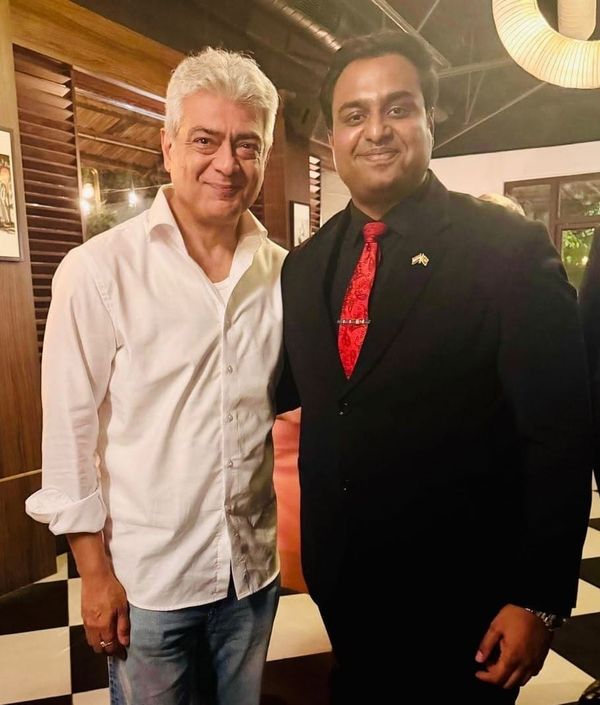
Officials pointed to his frequent appearances and photographs with film stars, celebrities and other prominent personalities in South India. They said his conduct at times resembled that of a “fanboy” rather than a diplomat representing his country.
Taken together, government sources said, the appearances created an impression in Colombo that the Deputy High Commissioner was more interested in cultivating his own profile than in exercising the discretion expected of Sri Lanka’s senior representative in southern India.
Questions Over Business Relationships
Senior government sources alleged that Geathiswaran developed close relationships with businessmen in Tamil Nadu and facilitated visits by some of them to Sri Lanka, including introductions and meetings with government figures.
Sources said the scale and character of those relationships led officials to question whether the activity amounted to conventional economic diplomacy. One official said the impression inside the government was that Geathiswaran was building “his own business empire” around relationships made possible by his diplomatic position.
Jaffna Monitor has not independently established that Geathiswaran personally profited from any business relationship or held a financial interest in companies connected to people he dealt with.
The allegations are awkward for the National People’s Power administration, which came to power promising a break with corruption and political patronage. Officials said the government regards even the perception that a diplomat is using public office to build a commercial network as incompatible with the standards it claims to have brought to government.
A Political Appointment
Ketheeswaran is not an officer of the career Sri Lanka Foreign Service and had no conventional diplomatic career before being sent to Chennai.
Government and Foreign Ministry sources said his appointment rested on his political connections to the new administration and his association with President Anura Kumara Dissanayake. The precise role that relationship played in securing the posting has not been publicly explained.
Officials said the selection caused unease from the beginning among professional diplomats who questioned why a political appointee without substantial diplomatic experience had been placed in Chennai.
Sri Lankan governments have for decades been accused of treating ambassadorships and other diplomatic appointments as rewards for political loyalists, relatives and associates. The NPP was among the fiercest critics of that practice before taking office.
The Puducherry Controversy
In April, Geathiswaran attended a gathering with fishermen in Puducherry, where prominent political figures were present during an Indian election period.
Among them were Jose Charles Martin, leader of the Latchiya Jananayaga Katchi, and V.P. Ramalingam, the Bharatiya Janata Party’s Puducherry president and a candidate in the Raj Bhavan constituency.
Pawan Khera, a senior spokesman for India’s opposition Congress party, accused the Sri Lankan diplomat of participating in a politically linked event and called it a “gross violation” of the Vienna Convention on Diplomatic Relations.
Geathiswaran rejected the accusation. “I’m not here to do politics,” he told The Hindu at the time, saying he had gone as part of his regular engagement with fishing communities and that the meeting had taken place openly.
Indian authorities subsequently registered a case against Ramalingam and Martin following a complaint by the Returning Officer, who said the event could be construed as an attempt to influence voters and sought an investigation.
One of Colombo’s Most Difficult Missions
Tamil Nadu is home to more than 80 million people and has deep historical, cultural and political connections with Sri Lankan Tamils. Developments in Sri Lanka’s North and East routinely enter Tamil Nadu politics.
The mission deals simultaneously with New Delhi, the Tamil Nadu government, competing political parties, fishing communities, refugees, investors and civil society. The fishermen dispute alone has repeatedly produced tensions between the two countries, and questions involving the treatment of Tamils, wartime accountability and refugees can become politically volatile within hours.
Foreign Ministry sources raised the same concern when Jaffna Monitor first reported on the Puducherry controversy in April.
Searching for a Successor
Officials said Colombo has begun considering potential replacements and that Ketheeswaran’s departure is expected once a suitable candidate is found. He remains Deputy High Commissioner.
The government has made no public announcement of his removal, and the Foreign Ministry has not publicly detailed any disciplinary findings against him.
Editor’s Note
Following publication of this article, Thushara Rodrigo, Director General of Public Diplomacy and spokesperson for Sri Lanka’s Ministry of Foreign Affairs, contacted Jaffna Monitor to deny that the government had decided to replace Dr. Ganesanathan Geathiswaran as Sri Lanka’s Deputy High Commissioner in Chennai.
Rodrigo said there was “no such development whatsoever” regarding Geathiswaran’s removal or the search for a successor. He said the information contained in the report was incorrect and could mislead the public.
The article was reported by two Jaffna Monitor journalists and published under the collective byline “Our Reporter.” Following the ministry’s response, the journalists reviewed their reporting and reconfirmed the information with their sources. They continue to stand by the central finding of the report and remain confident in the reliability of the government and Foreign Ministry sources on which it was based.