
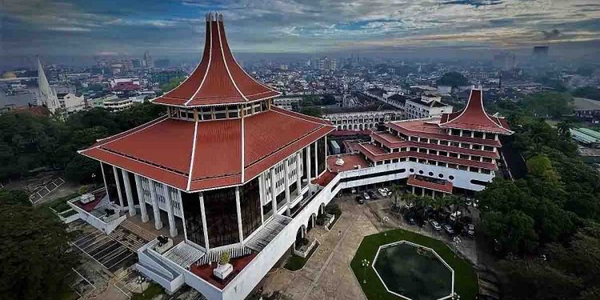
COLOMBO, Sri Lanka — Sri Lanka’s Supreme Court on Tuesday rejected a request for all of its judges to hear challenges to a proposed constitutional amendment that would extend the retirement ages of judges, deciding that the proceedings would continue before a five-member bench headed by the chief justice.
The ruling disposed of an unusual preliminary dispute in a closely watched constitutional case: who should sit in judgment on legislation that, if enacted, could extend the tenure of members of the court considering it.
President’s Counsel M.A. Sumanthiran made the application for a fuller bench when the petitions were taken up Tuesday before Chief Justice Preethi Padman Surasena and four other Supreme Court judges.
The request was supported by several other President’s Counsel appearing for petitioners, including Saliya Pieris, Ali Sabry, Geoffrey Alagaratnam, Eraj de Silva, Srinath Perera, Anura Meddegoda and Maithri Gunaratne.
After considering the submissions, Chief Justice Surasena announced that the request had been rejected and that the petitions would proceed before the five judges already nominated to hear them.
Solicitor General Viraj Dayaratne, appearing for the attorney general, opposed the application and relied on Article 132(3) of the Constitution, which provides for the Chief Justice, in specified circumstances, to direct that an appeal, proceeding or matter be heard by a bench comprising five or more Supreme Court judges.
The bench consists of Chief Justice Surasena and Justices Achala Wengappuli, Arjuna Obeyesekere, Sampath Abeykoon and Gihan Kulatunga.
The four judges immediately below the chief justice in seniority were not included on the panel, with more junior judges nominated instead.
The composition of the bench has attracted particular attention because the proposed 22nd Amendment would alter Article 107(5) of the Constitution to raise the mandatory retirement age of Supreme Court judges to 67 from 65 and that of Court of Appeal judges to 65 from 63.
The bill would also introduce a separate limit for the tenure of the chief justice: retirement would occur upon reaching 67 or completing six years from the date of appointment as chief justice, whichever came first.
Harshana Nanayakkara, the minister of justice and national integration, presented the constitutional amendment Bill to Parliament on Aug. 18 after it was published in the government Gazette on Aug. 7. A related Bill proposes amendments to the Judicature Act.
Sixty-seven petitions have been filed in relation to the 22nd Amendment Bill, while another five petitions challenge the Judicature Bill.
The challenges to the constitutional amendment raise fundamental questions about judicial independence and the constitutional consequences of Parliament changing the tenure of judges who were appointed under an existing retirement-age regime.
Petitioners have argued, among other grounds, that extending the tenure of sitting judges would affect the independence of the judiciary and, through it, the sovereignty of the people protected by Article 3 of the Constitution.
Under Sri Lanka’s constitutional framework, Article 3 declares that sovereignty is in the people and is inalienable, while Article 4 provides for the manner in which that sovereignty is exercised, including through the judicial power of the people.
Because the measure before the court is a Bill expressly seeking to amend the Constitution, the Supreme Court’s pre-enactment jurisdiction is circumscribed by Article 120. The central legal question is whether any provision of the proposed amendment requires approval by the people at a referendum under Article 83, in addition to the special parliamentary majority required for a constitutional amendment.
The Bar Association of Sri Lanka, one of the petitioners, had sought a full bench, citing the exceptional circumstances created by judges being called upon to consider legislation capable of affecting judicial tenure.
Last week, the association also filed a motion asking the chief justice to consider recusing himself and requested that, if he did so, a bench comprising all the remaining Supreme Court judges be constituted to hear the challenges.
Chief Justice Surasena instead nominated the five-member bench on Monday.
Tuesday’s ruling concerned only that preliminary question of bench composition. It did not determine the substantive constitutional objections to the proposed 22nd Amendment.
The five judges will now proceed to hear submissions on the Bill and determine whether its provisions trigger the referendum requirement under the Constitution.
The proceedings have drawn an unusually large number of lawyers. More than 100 lawyers were expected to record appearances in connection with the Bar Association’s petition alone, according to people familiar with preparations for the case, including lawyers associated with regional bar associations seeking to place their opposition to the proposed amendment on the record.
The Supreme Court’s scrutiny takes place under Sri Lanka’s system of pre-enactment judicial review, under which a Bill may be challenged within the constitutionally prescribed period after it is placed on Parliament’s Order Paper.
Once the Supreme Court’s jurisdiction has been invoked, parliamentary proceedings on the Bill are suspended until the court makes its determination or the constitutional period expires. The court is required to communicate its determination to the president and the speaker of Parliament within three weeks of the reference or petition.
The eventual determination will establish what constitutional procedure Parliament must follow if the government wishes to enact the proposed amendment, including whether approval by voters at a nationwide referendum is required.