

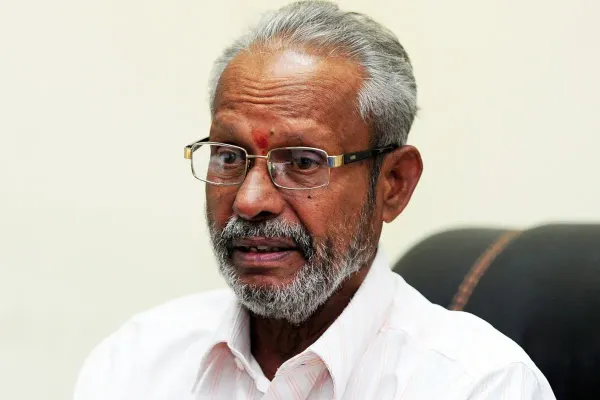
JAFFNA, Sri Lanka — A senior Tamil political leader has urged European diplomats to press for a separate scientific investigation into the Chemmani mass grave, arguing that establishing when the victims were buried could help determine who was in authority at the time and ultimately identify those responsible.
C.V.K. Sivagnanam, acting president of the Ilankai Tamil Arasu Kachchi, or ITAK, said he made the request during a meeting in Jaffna with a high-level European delegation that included the European Union’s ambassador to Sri Lanka and the ambassadors of Germany, France, Italy, and the Netherlands.
“If we can determine the period during which the victims were buried, it would be possible to identify who was in authority at that time and, through that, identify those responsible and take action against them,” Mr. Sivagnanam told reporters after the meeting at the Jetwing Jaffna hotel.
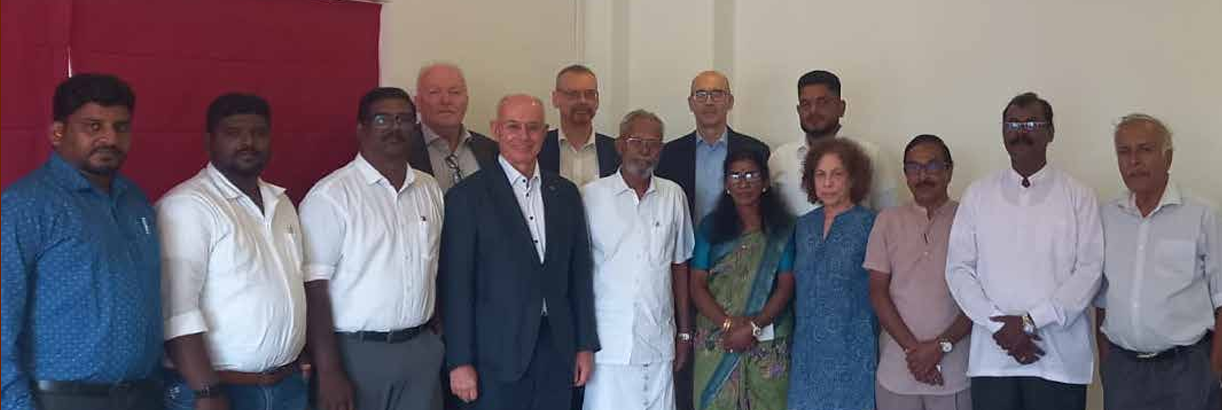
The eight-member delegation includes Carmen Moreno, the European Union ambassador; Dr. Felix Neumann, the German ambassador; Rémi Lambert, the French ambassador; Damiano Francovigh, the Italian ambassador; and Wiebe de Boer, the Dutch ambassador. Senior European Union officials are also part of the delegation.
The Jaffna Magistrate’s Court granted permission for the diplomats to visit the excavation site after an application was filed last week through a lawyer for the Office on Missing Persons.
The diplomatic visit comes as archaeologists continue to uncover human remains at Chemmani. During the 37th day of the third phase of excavations, investigators identified a skeletal assemblage in an unusual position, with the legs folded and the body apparently seated upright. The jaw was also found fractured.
The archaeologist Raj Somadeva examined the remains before they were exhumed. No associated artifacts or other evidentiary material were found with the skeleton, according to information from the excavation.
Two additional skeletal assemblages have also been identified behind the remains and are expected to be examined in the coming days.
Researchers are now expected to compare the discovery with skeletal remains found in a similar position during an earlier phase of the excavation. Assistance from the University of Jaffna’s Faculty of Hindu Studies is also expected to be sought for the study.
The continuing excavation has intensified demands from families of the disappeared and Tamil civil society groups for international involvement in the investigation.
The Association of Relatives of the Enforced Disappeared of the North and East called for a demonstration near the Chemmani Arch on Wednesday to coincide with the European delegation’s visit.
The group said an international investigation was necessary both into the mass grave and the broader issue of enforced disappearances, accusing successive Sri Lankan governments of failing to deliver justice years after the end of the civil war.
Mr. Sivagnanam, meanwhile, urged the European diplomats to press the government to hold Provincial Council elections under the previous electoral system, noting that the Northern Provincial Council has been without an elected administration for years.
He also sought European assistance to attract diaspora investment, develop the agriculture and fisheries sectors, and address longstanding infrastructure problems in the North, including solid-waste disposal and drainage.
But it was Chemmani that loomed over the diplomats’ visit.
The mass grave has become an increasingly significant test of Sri Lanka’s ability to conduct a credible investigation into allegations surrounding its violent past.