
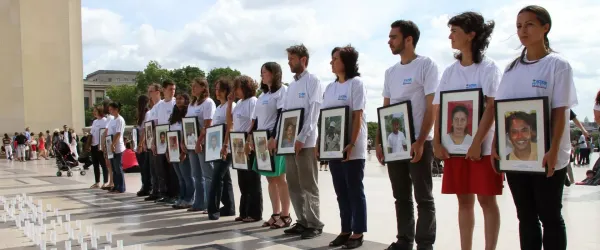
COLOMBO, Sri Lanka — Twenty years after the execution-style killing of 17 humanitarian workers from the French aid organization Action Against Hunger (ACF) in the eastern town of Muttur, a broad coalition of international governments, United Nations agencies and human rights organizations has renewed calls for Sri Lanka to deliver justice, warning that the failure to prosecute those responsible continues to fuel impunity for attacks on humanitarian personnel worldwide.
The appeals, issued around the 20th anniversary of the Aug. 4, 2006, massacre, come as no one has been criminally convicted for one of the deadliest attacks ever carried out against humanitarian workers.
The French Embassy in Sri Lanka and the Maldives, the United Nations Office for the Coordination of Humanitarian Affairs (OCHA), Action Against Hunger, Human Rights Watch, Amnesty International, and Legal Action Worldwide have all called for renewed accountability, while previous investigations by the United Nations Office of the High Commissioner for Human Rights (OHCHR) and the Sri Lanka Monitoring Mission (SLMM) remain central to the case against the backdrop of longstanding denials by successive Sri Lankan governments.
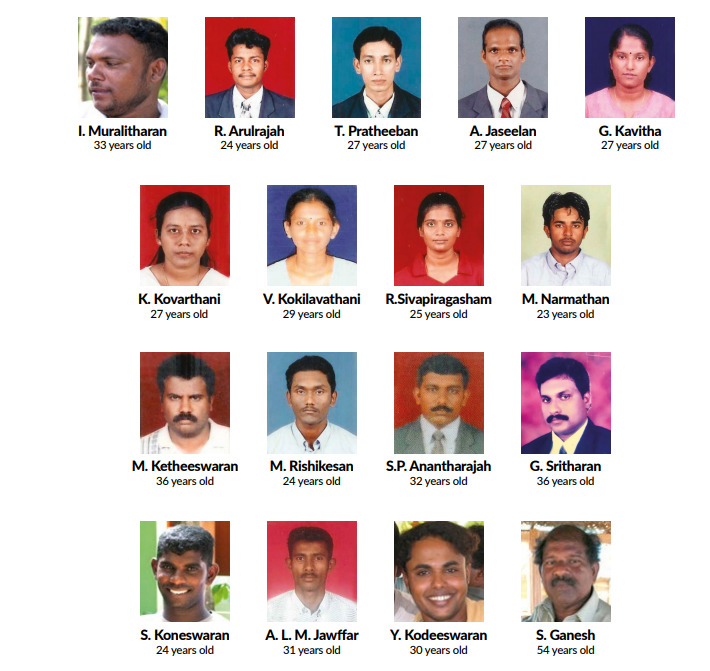
The victims — 17 Sri Lankan employees of Action Against Hunger, 16 of them Tamils and one Muslim — had spent the previous two years helping communities recover from both the 2004 Indian Ocean tsunami and Sri Lanka's escalating civil war, providing clean water and sanitation assistance to more than 116,000 people across the country.
On Aug. 1, 2006, a team working on water supply projects in Muttur became trapped after heavy fighting erupted between government forces and the Liberation Tigers of Tamil Eelam (LTTE). Seeking to emphasize their civilian status, the aid workers remained inside Action Against Hunger's compound, displayed additional signs identifying the premises as a humanitarian facility and wore the organization's T-shirts and vests, clearly marking themselves as humanitarian personnel.
According to Action Against Hunger, the organization and the International Committee of the Red Cross made repeated attempts over the following days to evacuate the team by both road and sea, but neither side in the conflict could guarantee safe passage. The organization said it had also provided the Sri Lankan Army, Navy and Police with the compound's GPS coordinates to reduce the risk of accidental shelling. As civilians fled Muttur, more than 150 people were reportedly killed in the surrounding area during the fighting.
Radio contact with the team was lost on the morning of Aug. 4, only hours before the Sri Lankan military announced it had recaptured Muttur.
Humanitarian workers were able to reach the compound only after access was secured on Aug. 7, when staff from Action Against Hunger and other aid agencies discovered the bodies of all 17 victims. Fifteen lay in front of the main office building with gunshot wounds to the head, suggesting they had been lined up and executed at close range. Two others were found behind a vehicle, apparently after attempting to flee. Florence Daunis, then Action Against Hunger's Director of Human Resources, who attended some of the post-mortem examinations, later said the trajectory of the bullets indicated that many of the victims had been forced to kneel before being shot.
The massacre drew worldwide condemnation and has since become one of the most emblematic unresolved atrocity cases of Sri Lanka's civil war.
France renews call for justice
Marking the anniversary, the French Embassy in Colombo paid tribute to the 17 victims and renewed France’s call for accountability.
“The French Embassy in Sri Lanka and the Maldives pays tribute to the 17 humanitarian workers from Action Against Hunger who were found dead on August 4, 2006, in Muttur, Sri Lanka,” the embassy said.
The embassy expressed solidarity with the victims’ families and “all those mourning this tragedy,” while reaffirming France’s commitment to international humanitarian law and the protection of humanitarian personnel.
U.N.: A warning for the present
United Nations humanitarian chief Tom Fletcher, the Under-Secretary-General for Humanitarian Affairs and Emergency Relief Coordinator, said the Muttur killings remain relevant today as violence against aid workers reaches unprecedented levels.
“The Muttur massacre is not simply a tragic event of the past. It is also a warning for the present,” Fletcher said.
He noted that more than 1,000 humanitarian workers have been killed worldwide over the past three years, many while carrying out their duties, and stressed that attacks against humanitarian personnel must be properly investigated and those responsible held accountable.
“When humanitarian workers are killed, communities lose far more than aid,” he said. “They lose hope.”
Action Against Hunger seeks a fresh investigation
In June, Action Against Hunger formally called on Sri Lanka to open a new independent investigation into the massacre, arguing that previous inquiries had failed to deliver justice.
The organization said any renewed investigation should comply with international standards, particularly regarding transparency and witness protection, and urged the international community to support efforts to establish the truth.
“Twenty years on, we continue to fight for justice for the brutal murder of our 17 colleagues, who were killed while delivering life-saving aid,” said Perrine Benoist, Co-Director of Action Against Hunger France.
“We cannot accept that the perpetrators of this crime will remain unpunished.”
Ms. Benoist warned that the continued lack of accountability had repercussions far beyond Sri Lanka.
“For years, the lack of justice for this crime has had repercussions on the protection of humanitarians everywhere. Muttur sends a signal that such attacks can go unpunished. Today, we are witnessing a rise in attacks against humanitarians on an unprecedented scale. It is imperative that Sri Lankan authorities provide answers and that justice is finally served.”
Human Rights Watch urges action
Human Rights Watch said the Muttur massacre remains one of Sri Lanka’s emblematic wartime atrocity cases that successive governments have failed to prosecute despite repeated promises.
The organization urged President Anura Kumara Dissanayake’s administration to fulfill its pledge to establish an independent prosecutor capable of pursuing serious wartime crimes, including the Muttur killings.
Amnesty: Justice cannot wait
Amnesty International likewise renewed its call for accountability, saying justice for the victims “cannot wait after two decades of impunity.”
The organization said ending impunity was essential not only for the victims’ families but also for restoring confidence in Sri Lanka’s justice system, recalling that previous investigations had failed to identify and prosecute those responsible.
Legal Action Worldwide
Legal Action Worldwide (LAW), an implementing partner of the Declaration for the Protection of Humanitarian Personnel, said Sri Lanka’s recent decision to join the international declaration presented an opportunity to revisit unresolved atrocity cases.
Executive Director Antonia Mulvey said that although accountability processes are often lengthy, “the passage of time does not diminish the obligation to investigate serious violations, or the rights of victims and their families to truth, justice and reparation.”
“With the recent change of government, Sri Lanka now has the opportunity to ensure accountability and justice for the families of the victims,” she said.
International investigations
The massacre has been examined by several international investigations over the past two decades.
The Sri Lanka Monitoring Mission (SLMM), the Nordic ceasefire monitoring mission operating under the 2002 Ceasefire Agreement, concluded shortly after the killings that there were strong indications the perpetrators were government security forces because the area was under military control at the time.
In 2015, the United Nations Office of the High Commissioner for Human Rights, through its investigation on Sri Lanka, found there were reasonable grounds to believe that members of the Sri Lankan security forces committed the extrajudicial executions of the Action Against Hunger staff. The report also documented allegations that witnesses and officials connected with the investigation had faced intimidation and harassment.
Successive Sri Lankan governments have rejected allegations that state forces were responsible, and no one has been convicted over the killings.
Families still waiting
Speaking to The Guardian, Amuthan Sivajnanam, whose sister Kovarthani, 27, was among those killed, said years of fear had silenced many relatives.
“I refuse to remain anonymous because fear has already taken too much from us,” he said. “I want the world to know my name, my sister’s name, and the names of the 16 others who died with her.”