

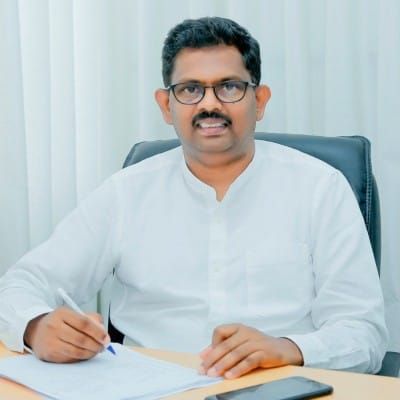
NUWARA ELIYA, Sri Lanka — A former Sri Lankan lawmaker has called on Britain to help secure land rights for the descendants of Indian labourers brought to the island to work on colonial plantations, arguing that generations of workers have been denied the opportunity to own the land on which their livelihoods depend.
Mayilvaganam Thilakarajah, a former member of Parliament for Nuwara Eliya District, said Britain bore a historical responsibility for the future of the Malaiyaha Tamils, whose ancestors were recruited from southern India to work on coffee and tea estates under British rule.
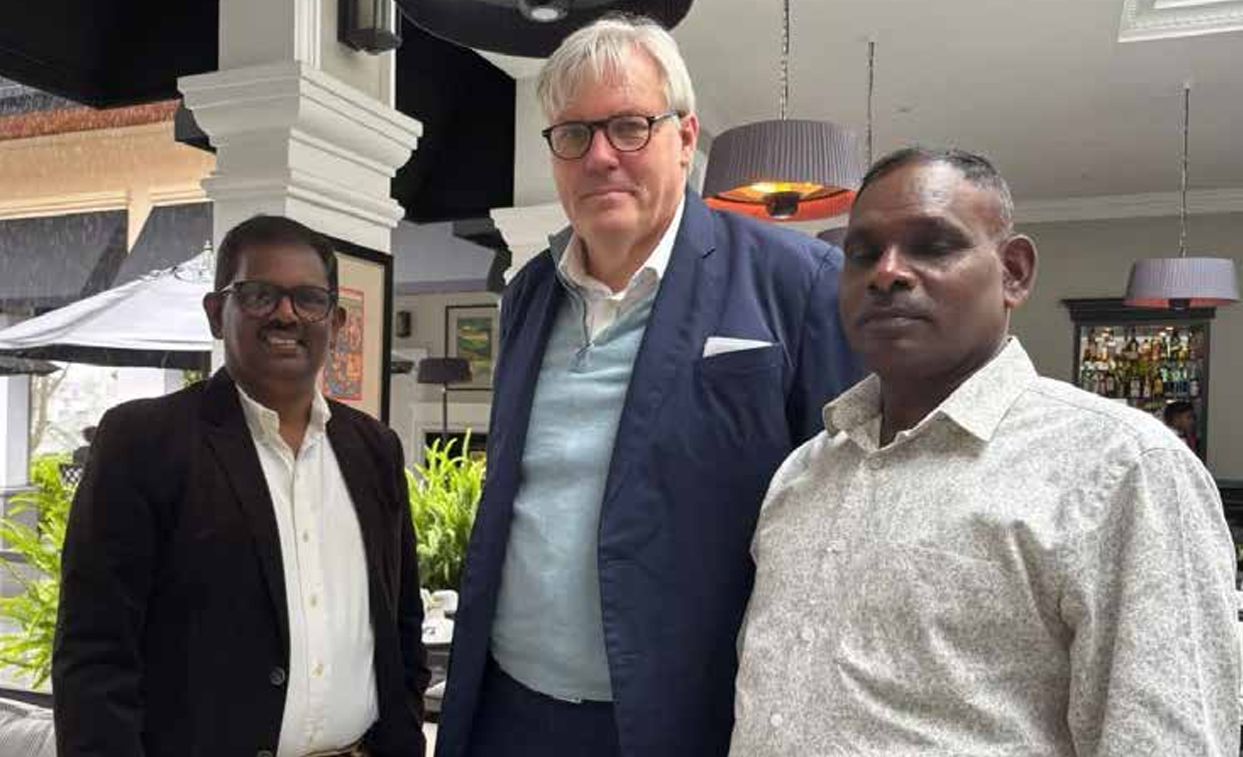
Mr. Thilakarajah, secretary-general of the Malaiyaha Political Arena, made the appeal during a meeting with Andrew Patrick, the British high commissioner to Sri Lanka, who was on an official visit to the district. The organization outlined its concerns in a statement issued after the meeting.
As Sri Lanka’s plantation industry undergoes changes, large estates are increasingly giving way to smallholdings, particularly among Sinhalese communities in the south, the statement said. Malaiyaha Tamils, whose families have worked on the estates for generations, have largely been excluded from that transition.
Mr. Thilakarajah argued that giving plantation Tamil families ownership of small plots of land was essential to protecting their livelihoods and ensuring their continued presence in Sri Lanka’s central highlands.
Britain, he said, had an obligation to help bring about that change because of its role in establishing the plantation economy and bringing Indian labourers to the island.
The Malaiyaha Tamils trace their origins to workers recruited from southern India beginning in the 1820s, initially for coffee plantations and later for tea estates after a disease devastated the coffee industry in the 1870s. Their descendants remain an important part of the workforce on Sri Lanka’s tea estates, many living in cramped rows of housing known as “line rooms,” built on land owned or controlled by plantation companies.
The community marked 200 years of its presence in Sri Lanka in 2023.
Mr. Thilakarajah said the community had lost rights after Sri Lanka gained independence in 1948, most notably citizenship.
The Ceylon Citizenship Act of 1948 and subsequent legislation left large numbers of Indian-origin Tamils stateless and disenfranchised. Under a 1964 agreement between the governments of Sirimavo Bandaranaike and Lal Bahadur Shastri, India agreed to grant citizenship to 525,000 people of Indian origin, while Sri Lanka agreed to grant citizenship to 300,000. A further agreement in 1974 addressed the status of another 150,000 people.
Many were subsequently repatriated to India, a process Mr. Thilakarajah’s organization described as deportation. The citizenship question for those who remained in Sri Lanka was not fully addressed until legislation enacted in 2003.
The plantation industry itself underwent major changes after independence. Large estates were nationalized during land reforms in the 1970s, before their management was transferred to private regional plantation companies under long-term leases in 1992.
Yet, Mr. Thilakarajah said, Malaiyaha Tamils had remained excluded from efforts to transform the plantation economy into one based on smallholder ownership throughout the 78 years since independence.
He said that exclusion threatened not only the community’s income but also its long-term future in the country.
Although housing is frequently identified as the most pressing problem facing plantation communities, Mr. Thilakarajah argued that the underlying issue was the government’s failure to grant land ownership rights.
Countries including India had committed financial assistance to housing projects more than a decade ago, he said, but the absence of land rights continued to obstruct efforts to provide permanent homes.
During a visit to Sri Lanka’s hill country in 2017, Prime Minister Narendra Modi announced an additional 10,000 houses for the plantation community, building on earlier Indian housing assistance.
Mr. Thilakarajah also criticised President Anura Kumara Dissanayake’s National People’s Power government, saying it had promised land rights to plantation communities in its Hatton Declaration before coming to power.
He questioned why the government was now asking where land could be found to fulfil that commitment.
The former lawmaker warned that efforts to replace plantation agriculture with tourism could further threaten communities whose livelihoods have depended on the estates for generations.
Despite decades of discrimination, he said, Malaiyaha Tamils had developed a distinct identity through their language, literature, arts and cultural traditions.
The organization also expressed concern that the Indian Tamil or Malaiyaha Tamil category could disappear from the 2034 population census, although its statement did not explain the basis for that prediction.
The Malaiyaha Political Arena said it had documented and publicly identified 10 instances of discrimination against the community over the past two years. It did not provide details of those cases in the statement.
Mr. Thilakarajah urged Britain to recognize its historical responsibility and help ensure that the descendants of plantation workers could live as citizens with dignity and secure livelihoods.
The statement did not say how Mr. Patrick responded to the appeal or whether the British government had made any commitments.