

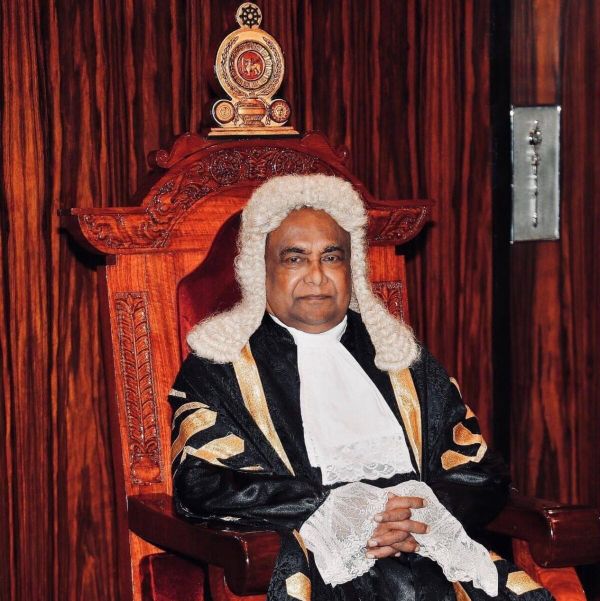
COLOMBO, Sri Lanka — Sri Lanka’s former Speaker and deputy speaker have rejected the findings of a special government audit that raised questions about millions of rupees spent on fuel and the use of multiple vehicles during their time in office.
Mahinda Yapa Abeywardena, the former Speaker, and Ajith Rajapakse, the former deputy speaker, said they had committed no wrongdoing and called for a formal investigation, saying they were prepared to answer questions about the expenditure.
Their denials followed the release of a special audit examining financial management during the Eighth and Ninth Parliaments, covering September 2015 to November 2024. The report scrutinized fuel allocations, vehicle privileges and other expenditure involving the Speaker, Deputy Speaker and other senior parliamentary officials.
Among its findings, the audit said there had been no effective ceiling on fuel provided to the speaker’s office. It recorded average monthly fuel consumption of 3,994 liters in 2023 and 6,122 liters in 2024, with annual fuel expenditure reaching about 19.4 million rupees in 2023 and 26 million rupees in 2024.
The audit also questioned benefits provided to the deputy speaker. It found that 21,299 liters of fuel, valued at about 8.55 million rupees, had been provided for a private vehicle used by the deputy speaker during 2023 and 2024, in addition to three official vehicles assigned to the office. It also reported that fuel consumption by the official vehicles exceeded applicable limits by 6,980 liters in 2023 and 1,515 liters in 2024.
Mr. Abeywardena disputed how the figures were presented.
He said the fuel consumption attributed to him represented the combined use of several vehicles assigned to the Speaker rather than the consumption of a single vehicle. He said he had been provided with five vehicles as well as a bulletproof security vehicle, which consumed substantially more fuel than an ordinary vehicle.
The audit, he argued, should have presented each vehicle's consumption separately rather than combining the figures, which he said created a misleading impression of the amount of fuel he personally used.
Mr. Abeywardena also said that a police security vehicle traveling with him obtained its fuel through Parliament and that this consumption had been included in the overall figures.
“All of that was handled by the drivers,” he told, adding that he had not personally signed fuel orders except on one or two occasions in Matara. He said approvals were ordinarily handled by parliamentary officials.
He said questions about his fuel use had first been raised roughly a year and a half ago but that no investigation or legal proceedings had followed.
The controversy dates at least to February and March 2025, when Bimal Rathnayake, the leader of the House, publicly questioned the fuel expenditure of former parliamentary officials. He later asked the Speaker to examine whether action could be taken against Mr. Abeywardena, Mr. Rajapakse and former Deputy Chairman of Committees Angajan Ramanathan.
Mr. Rajapakse also rejected the latest audit findings, saying that expenditure during his tenure had been incurred in accordance with the law and administered through parliamentary officials.
“Nothing was done outside the law,” he told, arguing that Parliament’s own officials were responsible for administering vehicle and fuel arrangements.
Mr. Rajapakse said he believed the publication of the figures was part of an effort to create a damaging public narrative about him and the former Speaker.
The audit’s findings extend beyond the two former officials. It also questioned unrestricted fuel and vehicle benefits provided to other senior parliamentary officeholders and officials, including the Deputy Chairman of Committees and the Secretary-General of Parliament. The Auditor General recommended stronger controls over such benefits and changes to the legal and administrative framework governing Parliament’s finances.
The dispute now centers on whether the spending was covered by the benefits available to the two offices or whether Parliament failed to properly control the use of public money.
Both men say they want a formal investigation to determine what happened.