

By: Sun Jin, Zhang Yu
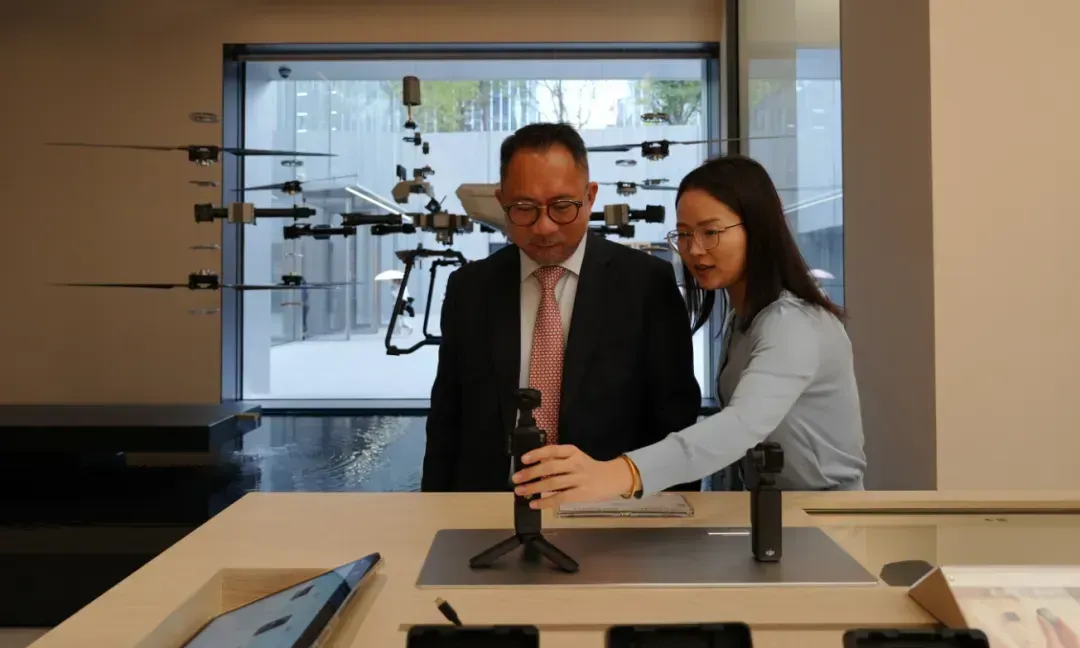
SHENZHEN — The drone hovered a moment above his open palm, then settled onto it. “Wow,” said Eduardo Pedrosa. The reaction was not on the schedule.
The executive director of the APEC Secretariat was at Shenzhen Bay Culture Square on May 5, midway through the first of two working visits to the city that will host the 33rd APEC Economic Leaders’ Meeting in November. The following day, onstage at the “Tech for People” Nanshan Day event, he waved his spectacles at the audience and asked for help finding a tracker to attach to them.
A drone that reads a hand and a wish for eyewear that can be located sit close to the argument Pedrosa has spent the year making: technology earns its value only when it solves a problem an ordinary person actually has.
Interoperability, not harmonization
Pedrosa returns often to a distinction he considers foundational — that economic expansion is a means rather than the object of development. Innovation worth pursuing, in his framing, widens access to opportunity, raises living standards and supports inclusive green growth across every population group in the Asia-Pacific.
He is unpersuaded by the idea that the region’s 21 member economies should converge on a single regulatory rulebook. What he wants instead is interoperability: each economy retains its own rules, while digital, industrial and trade platforms continue to function across borders.
“One of the things that APEC really looks at is not harmonization, but interoperability,” he said. “To make sure our systems can work together.”
That distinction matters more as protectionist pressures build and cross-border digital divides persist. APEC’s function, on Pedrosa’s account, is to hold open a neutral channel where governments can align innovation agendas without surrendering regulatory autonomy. He points to industrial coordination across the Guangdong-Hong Kong-Macao Greater Bay Area as an existing model of the kind.
Three kinds of connectivity
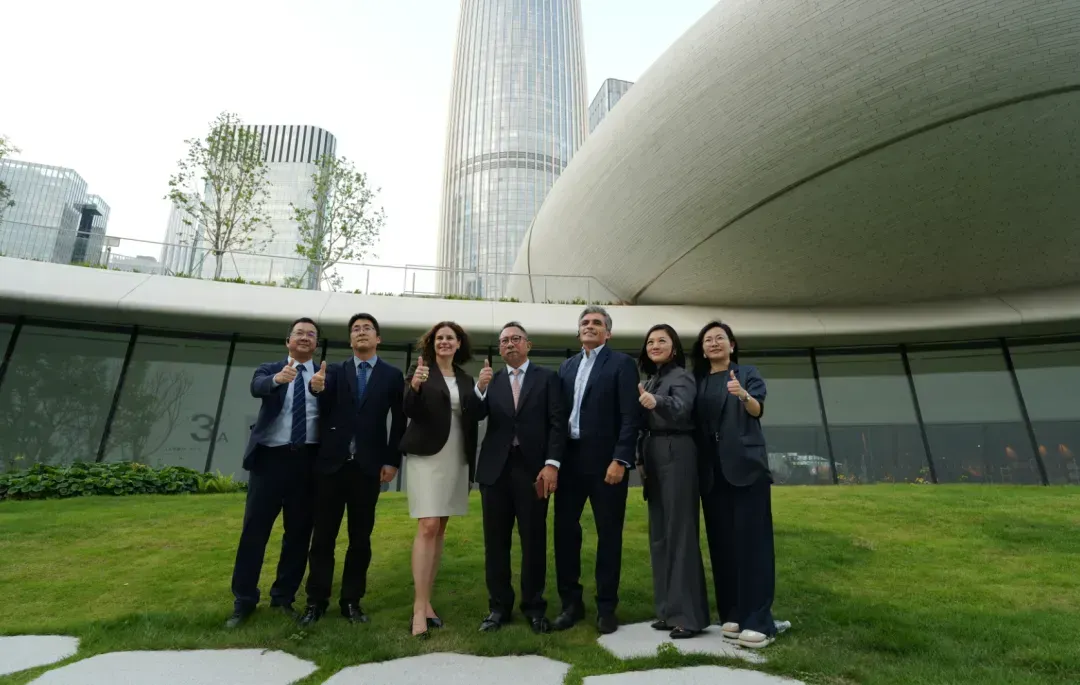
Pedrosa first visited Shenzhen more than two decades ago. “Shenzhen is unrecognizable,” he said. “Nothing I see today resembles the quiet town I first visited.” He noted the thickening of links to Hong Kong in particular — ferries, bridges, and high-speed rail — as evidence of regional integration in physical form.
APEC’s working definition of connectivity has three dimensions: physical infrastructure, institutional coordination, and people-to-people exchange. A May tour of Qianhai, the Shenzhen-Hong Kong cooperation zone established to pilot cross-border opening policies, left Pedrosa arguing for the third.
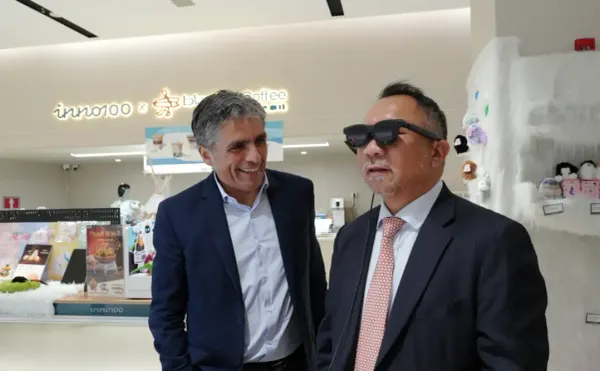
On the fifth floor of Qianhai Block V, his delegation put on AI simultaneous-interpretation headsets and talked with local guides. There were immersive AI glasses and naked-eye 3D displays. The equipment that produced the most conversation, however, was considerably less advanced. Every member of the group tried the adjustable ergonomic office chairs. “This chair is far more comfortable than the one in my office,” Pedrosa said. Fernando Salas, the Secretariat’s communications director, offered that it was comfortable enough to make work difficult. Later, playing SenseTime’s Chinese chess robot, Pedrosa suggested developers turn their attention to mahjong.
The unscripted stretches of the visit fed directly into his reading of the zone.
“Physical connectivity refers to infrastructure, while institutional connectivity focuses on regulatory coordination,” he said. “But today’s visit drove home a clearer truth: human connectivity matters most. Engineers, designers, architects, and all kinds of talented minds converge in this innovation hub to exchange ideas and spark inspiration. This flow of people is what generates lasting momentum for collaborative breakthroughs.”
What he singled out was the density of Qianhai’s ecosystem — researchers, financiers, and policymakers working in proximity, with laboratory results moving into consumer products. “I’m blown away by how this whole system generates real, on-the-ground impact,” he said.
Returning in July for the APEC Ministerial Meeting on Forestry, Pedrosa turned to the city’s environmental record. “It’s fascinating to see skyscrapers rise alongside extensive greenery and protected mangroves,” he said. “Geospatial planning and zoning are crucial to ensure we urbanize without losing sustainability. Green spaces absorb heat and act as firebreaks.” Cities elsewhere in the region, he suggested, face the same trade-off between industrial growth and environmental protection, and could learn from how Shenzhen has managed it.
A shifting agenda
China has hosted APEC three times, and Pedrosa reads the sequence as a record of changing priorities. The 2001 meeting in Shanghai concentrated on trade and investment liberalization. The 2014 meeting in Beijing broadened the agenda toward cross-border connectivity. This November, in Shenzhen, technological innovation and long-term sustainability move to the centre.
The choice of city follows from that shift. Shenzhen’s advantage lies in the completeness of its industrial chain, which shortens the distance between the research institution and manufacturer. Its output ranges from AI chips and smart home appliances to cleaning robots and AR glasses; some of it has found markets well beyond China, including at the most recent FIFA World Cup.
Pedrosa flagged the convergence of artificial intelligence and renewable energy as the direction he considers most promising, and one that carries particular weight with younger researchers. He encouraged APEC delegations to examine Shenzhen’s innovation ecosystem before the November meeting.
He also situates the agenda change within the APEC Putrajaya Vision 2040, the region’s stated goal of an open, dynamic, and resilient Asia-Pacific. Speaking at the APEC Study Centers Consortium Youth Scholars Forum in May, he argued that young researchers do something economic ties alone cannot: build a regional community held together by mutual understanding. The Greater Bay Area’s complementary industrial strengths, he added, offer a cooperation model that could be applied at larger scale.
What November will show
Looking out over the Shenzhen skyline, Pedrosa offered a preview of what he expects visiting leaders to take away. The construction record will impress them, he said. The more consequential thing on display will be a particular relationship between people and the machines they use.
“Technology ultimately belongs to people,” he said. “It exists to serve humanity, earn their trust, and win their affection.”
About the Authors
Sun Jin is the Editor-in-Chief of Shenzhen Daily.
Zhang Yu is the Chief Reporter of Shenzhen Daily.