

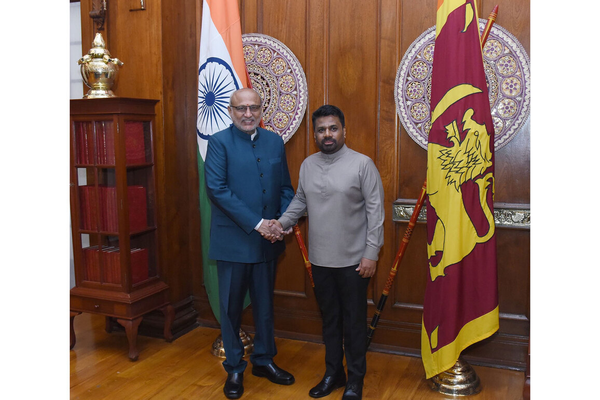
COLOMBO, Sri Lanka — India’s Vice President, C. P. Radhakrishnan, said he had personally urged Sri Lankan President Anura Kumara Dissanayake to hold long-delayed provincial council elections without further postponement, during a meeting between the two leaders on Sunday.
Mr. Radhakrishnan disclosed this during a subsequent discussion with representatives of Tamil political parties at the Taj Samudra in Colombo on Monday afternoon, a source who participated in the meeting told Jaffna Monitor.
The meeting brought together key figures from Tamil political parties, including C. V. K. Sivagnanam, acting president of the Illankai Tamil Arasu Kachchi (ITAK); M. A. Sumanthiran, its acting general secretary; R. Shanakiyan, the party’s parliamentary group leader; and Sivagnanam Sritharan. Also in attendance were Dharmalingam Siddharthan of the People's Liberation Organisation of Tamil Eelam, Selvam Adaikalanathan of the Tamil Eelam Liberation Organization, and Selvarajah Gajendran of the Tamil National People's Front.
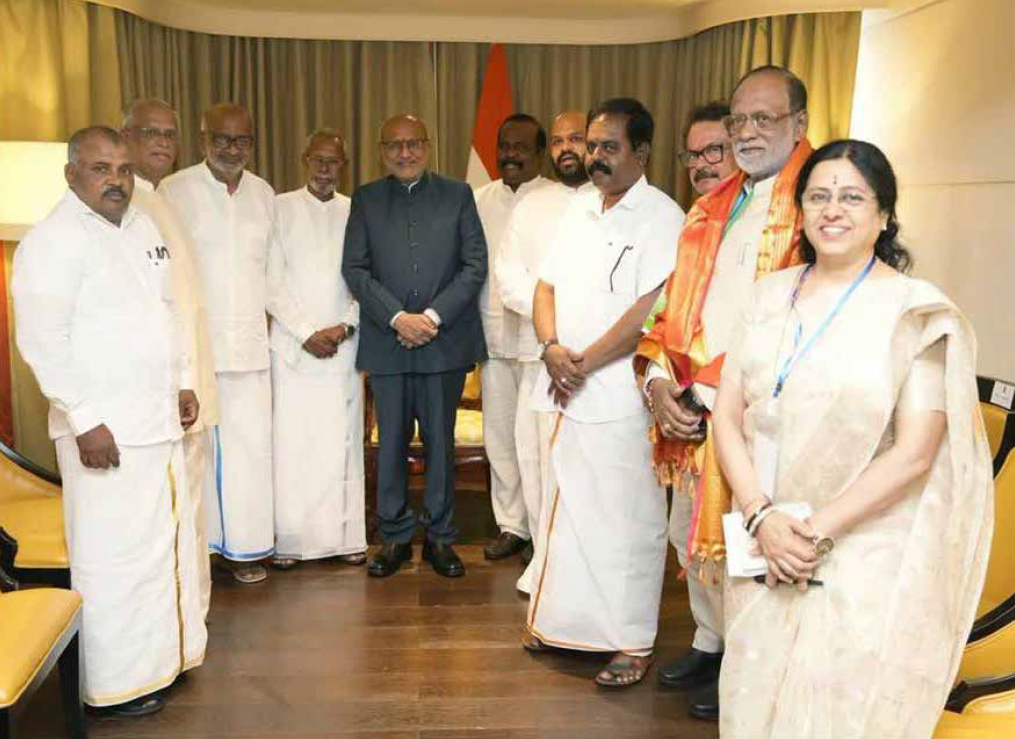
Notably, four of the seven participants were from ITAK, underscoring the party’s dominant representation. The composition of the delegation is also likely to reinforce ITAK’s position as a principal interlocutor for Sri Lankan Tamil political concerns in India’s engagement.
However, despite ITAK having five Members of Parliament from the Eastern Province, only Mr. Shanakiyan was included in the delegation representing the region. Notably, just three of the seven participants were elected Members of Parliament.
According to a source familiar with the discussion, the Vice President, noting the delegation’s strong Northern representation, at one point asked Mr. Shanakiyan whether he was the only Tamil Member of Parliament from the East.
For reasons that were not immediately clear, the Eelam People's Revolutionary Liberation Front — which is part of the re-emerging Tamil National Alliance — was not invited to the meeting.
During the talks, Tamil representatives reiterated that a federal arrangement would offer the most just, durable, and sustainable solution to Sri Lanka’s long-standing ethnic conflict.
Mr. Radhakrishnan also held detailed discussions with the Tamil leaders on the possible return of Sri Lankan Tamil refugees currently residing in India’s Tamil Nadu state, should they choose to repatriate. Officials said the discussions explored practical steps that could facilitate a voluntary and safe return process.
The Indian vice president further reviewed ongoing and proposed development initiatives in Sri Lanka — particularly in the Northern and Eastern provinces — under India-funded assistance programs.
Both sides also discussed issues related to the implementation of the Indo–Sri Lanka Accord, under which the provincial council system was established.
Tamil party representatives raised concerns about the continued delay in holding provincial council elections, arguing that the prolonged absence of elected bodies has weakened democratic governance in the regions.
Mr. Radhakrishnan said he had directly conveyed these concerns during his earlier meeting with President Dissanayake.
However, according to participants, the Sri Lankan side did not provide a clear response — either for or against the request — in what has become a recurring feature of such engagements.