

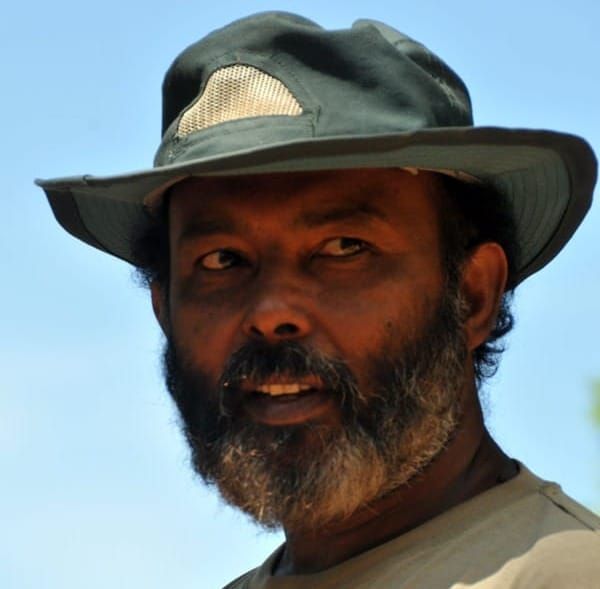
JAFFNA, Sri Lanka, Oct. 23, 2026 — Lawyers representing families of the disappeared have asked the Jaffna Magistrate’s Court to examine whether the archaeologist leading the Chemmani excavation deliberately removed the term “mass grave” from his latest report on the site.
The motion, filed on Thursday, concerns the third interim report by Professor Raj Somadeva of the University of Kelaniya and his colleague Anusha Wanninayake. The report, titled “Forensic Archaeological Excavation in Chemmani, Jaffna (2025/2026): A summary report on findings,” covers the human remains recovered from the Hindu cemetery at Chemmani, on the outskirts of Jaffna. Professor Somadeva signed it on Oct. 10 and sent it to Dr. S. Pranavan, the judicial medical officer, on Oct. 15. It was submitted to the court on Oct. 19.
The lawyers have appeared throughout the proceedings for those recognised as affected parties. They said the term appeared in reports Professor Somadeva submitted earlier and that its absence from the new report must be regarded as deliberate. They said the omission raised serious suspicion.
A review of the report by Jaffna Monitor found that its text does not describe the Chemmani site as a mass grave. It refers to the site as the Sittupatti cemetery and to the remains as burials. The phrase appears in two places, neither of them in the report’s own description of Chemmani. The first is a caption to an illustration of the Phaleron Captives, an ancient mass grave near Athens, which the report uses as an example of a clandestine burial. The second is a place label, “Chemmani Mass Graves,” printed on the satellite map that shows the location of the two excavation trenches.
In June 2025, Professor Somadeva told Al Jazeera that his first interim report had stated the site “can be identified as a mass grave and further investigation is needed.” The court formally recognised the site as a mass grave that month. His second interim report, submitted in July 2025, pointed to signs of criminal activity and said the bodies had not been buried in a conventional manner.
The lawyers said that if there is a basis for treating the site as an ordinary burial ground, the report should set it out using cemetery records, the history of the land’s use, applicable legal provisions and other credible evidence. They said the depth and distribution of the remains, their position in the soil layers and their condition are central to forensic and archaeological investigation. The report, they said, should explain whether those factors are consistent with ordinary burial. They also asked that the report identify the scientific observations and comparative evidence on which its conclusions rest.
The motion rejects the report’s suggestion that an epidemic or natural disaster could explain the burials. The lawyers said there was not enough evidence to support that explanation and asked Professor Somadeva to state its factual and scientific basis. The motion also says the report ignores evidence including clothing and coins from the 1990s.
The report records at least 574 individuals and 51 separate accumulations of loose bones. It classifies 41 percent of the individuals as children and 22 percent as infants. It records the skeletons at depths between 0.24 and 1.52 metres and says several adults and sub-adults in the western part of the trench lay less than a metre below the surface. It says the horizontal arrangement of the skeletons shows no discernible pattern. It says overlapping skeletons and possible coffin materials suggest the burials “may represent successive episodes of interment rather than a single, simultaneous depositional event.”
In its conclusion, the report says the evidence “is insufficient, in isolation, to support a definitive conclusion regarding the nature and character of the burials investigated.” It adds, in an underlined sentence, that the site “exhibits greater similarities to contexts characterized by formal burial practices than to clandestine burial sites documented in other parts of the world.” It then says that if the burials resulted from an epidemic or natural catastrophe, the small number of objects found with the dead “would not necessarily be unexpected.” The report names no epidemic or disaster.
The report was raised in Parliament on Thursday. Gajendrakumar Ponnambalam, leader of the Tamil National People’s Front, called it a deliberate attempt to conceal the truth and urged the government to allow an international criminal investigation with foreign experts. Bimal Rathnayake, the Leader of the House, said the government was committed to justice in the north and east and would consider international mechanisms only if national ones failed, according to the Tamil daily Thinakaran.
In September 2025, the Human Rights Commission of Sri Lanka found that more than 90 percent of the remains had no clothing. It said there was a reasonable likelihood that the burials followed extrajudicial killings. The Criminal Investigation Department told the court in July that it had not yet established whether a crime had taken place. It has asked that samples be sent abroad for carbon dating, a test not available in Sri Lanka that can date remains from after 1950.
Human remains surfaced at the cemetery in February 2025 during construction of a crematorium. Chemmani has been linked to wartime killings since 1998. That year Lance Corporal Somaratne Rajapakse told a court that hundreds more bodies were buried there. Rajapakse had been convicted over the 1996 rape and murder of the schoolgirl Krishanthi Kumaraswamy and the killing of three people who went looking for her. Excavations in 1999 recovered 15 bodies, two of them men who had disappeared in 1996.
The court is due to review the excavation, Professor Somadeva’s report, and the C.I.D.’s request for carbon dating on Nov. 19.