

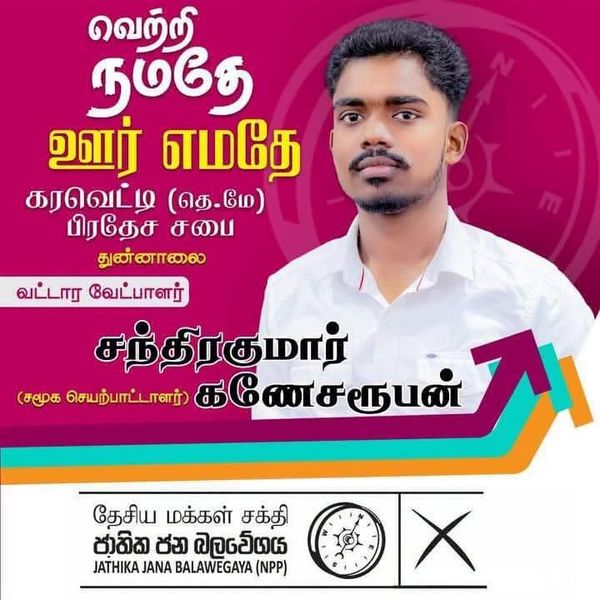
JAFFNA, Sri Lanka — A local councillor from Sri Lanka’s governing National People’s Power was arrested early Sunday after allegedly entering the home of a retired government official in Nelliady with a group of associates while intoxicated, damaging property and threatening those inside. Roughly six hours later, he was released on police bail, prompting allegations that political pressure helped secure his release.
Santhirakumar Kanesaruban, an NPP member of the Vadamaradchi South West Pradeshiya Sabha, was arrested by Nelliady police at about 12:45 a.m. on Aug. 30 after the occupants called Sri Lanka’s 119 police emergency service, according to people familiar with the incident.
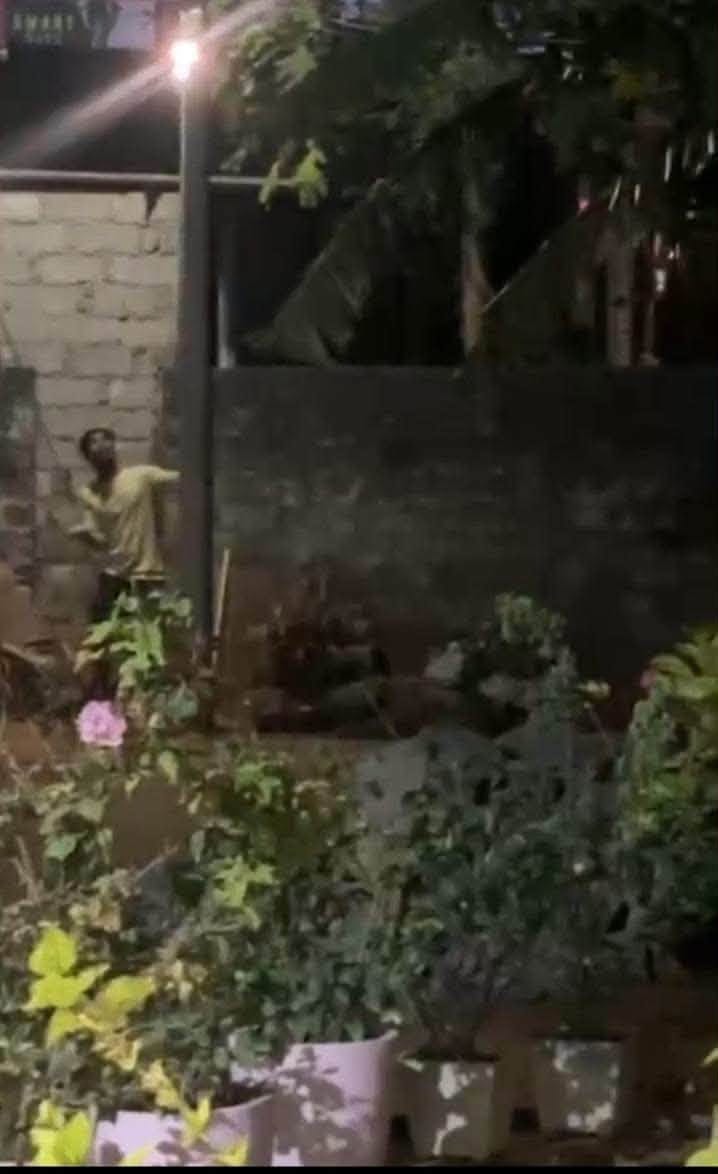
Kanesaruban and several associates are accused of arriving at the property while intoxicated, entering the premises without permission and damaging property, including CCTV cameras. They are also accused of threatening the occupants.
Police responding to the emergency call arrested Kanesaruban. But by about 7 a.m., he had been released on police bail.
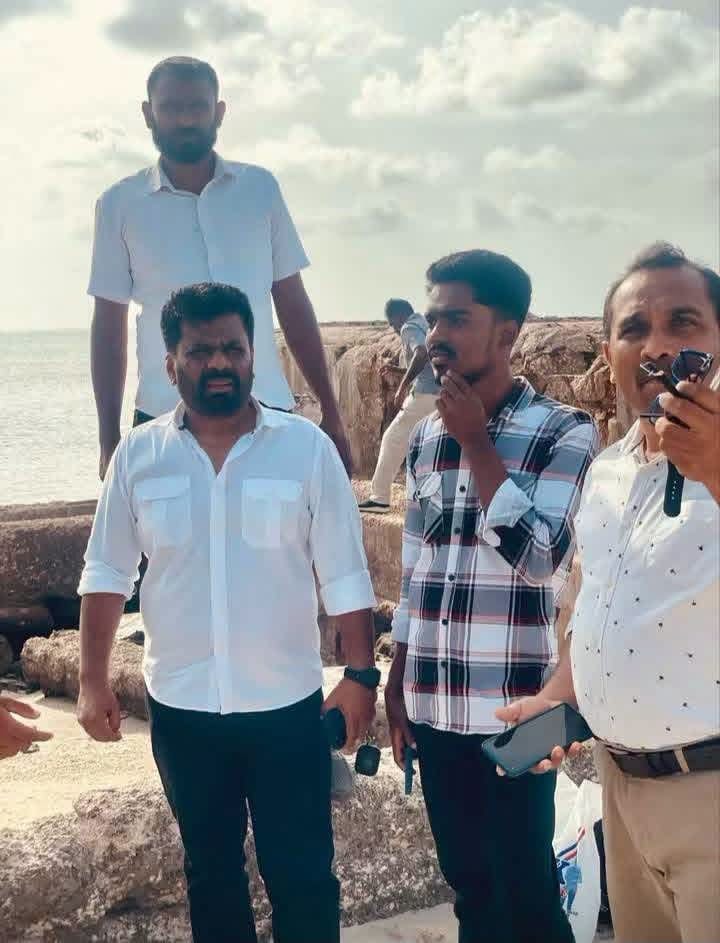
A police officer who spoke to Jaffna Monitor on condition of anonymity said Kanesaruban was released on the condition that he appear in court on Sept. 1.
The officer questioned how police bail had been granted given the allegations of unlawful entry, threats and property damage, and alleged that political pressure had played a role in the decision.
The arrest has drawn particular attention in Vadamaradchi because residents say Sunday’s episode did not come out of nowhere. They say concerns about Kanesaruban’s conduct had been raised before, without meaningful intervention from the party that ultimately put him in elected office.
Several residents who spoke with Jaffna Monitor described Kanesaruban as a local troublemaker with a reputation for intimidation and confrontational behaviour.
From Local ‘Rough’ to Governing-Party Councillor
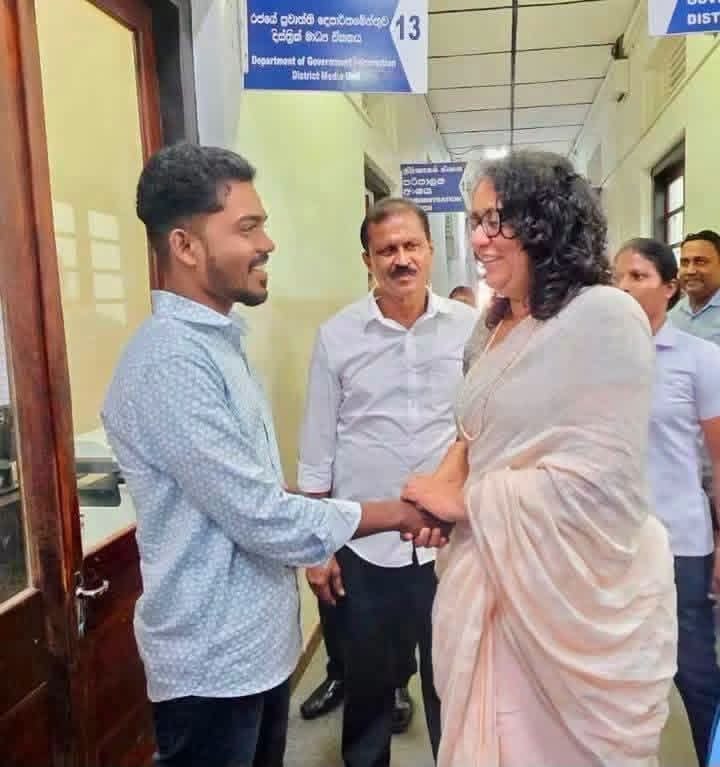
People familiar with local politics in Vadamaradchi told Jaffna Monitor that Kanesaruban was a newcomer to the JVP who gravitated toward the NPP as its electoral prospects improved. Before that, he was known locally as a “rough,” one resident said.
“The NPP and its parent party, the JVP, have historically been weak in Tamil-majority areas,” the resident said. “In the north, they needed people, so they accepted almost anyone who came their way — a thief, a local rough, you name it. They accumulated all sorts of people without even an iota of background checking.”
The JVP spent decades with little electoral or organisational presence in much of the Tamil-majority north. As the NPP suddenly emerged as a serious national electoral force, it also needed candidates, organisers and people capable of building a political operation in areas where the party had little established machinery.
Critics in Jaffna say that rush came at a price: people who appeared when the NPP’s political fortunes were rising were welcomed without enough scrutiny of who they were or how they behaved.
Several local sources told Jaffna Monitor that party leaders had been warned about the behaviour of some of these recruits but failed to intervene decisively.
Kanesaruban, they say, was not a problem the party discovered on Sunday morning.
One local commentator said there had been several earlier opportunities for the NPP to rein him in.
The commentator alleged that Kanesaruban had previously telephoned and intimidated Nelliady police officers. If the allegation was known to the party, the commentator said, that should have been enough to trigger disciplinary action.
The commentator also pointed to Kanesaruban’s conduct at District Coordinating Committee meetings, where he was accused of contributing to disruptions, and to an earlier controversy in which he used an altered image of Lord Murugan to glorify President Anura Kumara Dissanayake.
“If action had been taken when these things happened, they would not now have had to go to the police station to secure bail after CCTV cameras were smashed with stones,” the commentator said.
An Earlier Controversy Over Lord Murugan
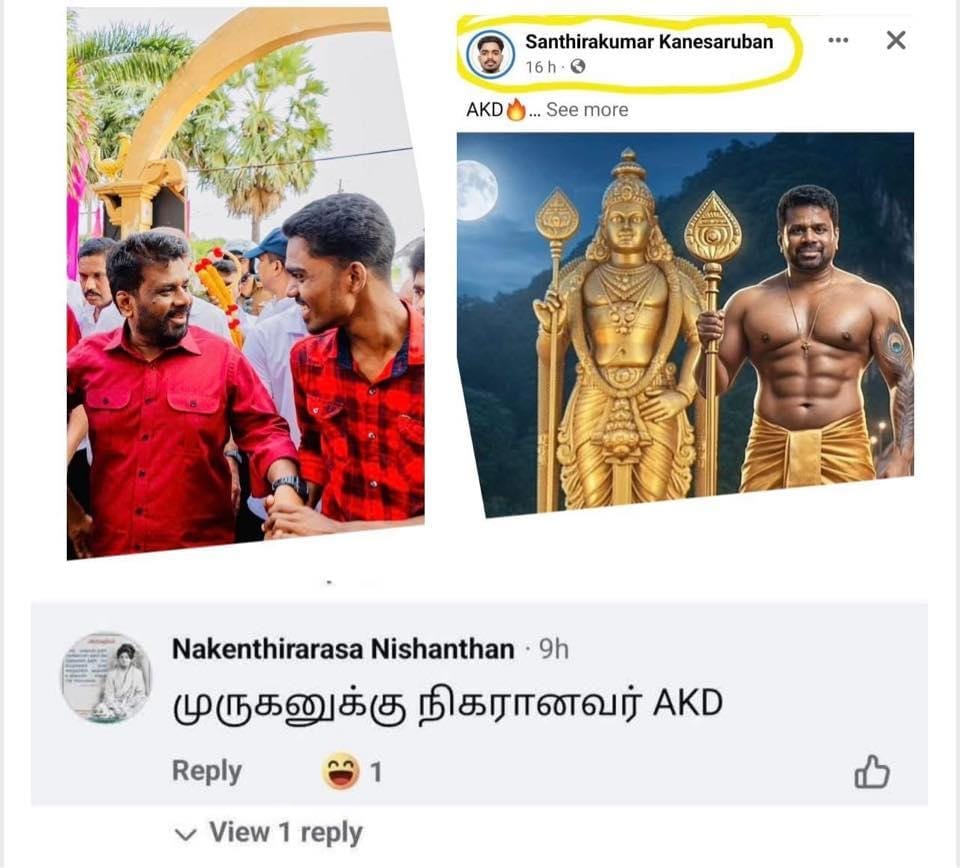
Kanesaruban had already drawn widespread attention earlier this year after posting an AI-generated image depicting President Dissanayake holding a vel, the sacred spear associated with the Hindu deity Lord Murugan.
He accompanied the image with the Tamil declaration, “AKD முருகனுக்கு நிகரானவர்” — “AKD is equal to Lord Murugan.”
The post provoked anger among some Tamils in Jaffna, who regarded the comparison as an inappropriate use of a revered Hindu deity for political glorification. At the time, the episode could be dismissed as crude political flattery from an overenthusiastic local supporter. Sunday’s arrest makes the questions surrounding Kanesaruban considerably more serious.
A Test of the NPP’s Own Promise
President Dissanayake and the JVP built much of their appeal by attacking precisely this kind of political culture.
For decades, they argued, Sri Lanka’s established parties had created networks of local political power in which councillors, organisers and loyalists could throw their weight around, interfere with officials and expect their political connections to protect them when trouble reached the police station.
The NPP promised to end that.
In Jaffna, critics say, it is now in danger of reproducing the very system it condemned.