

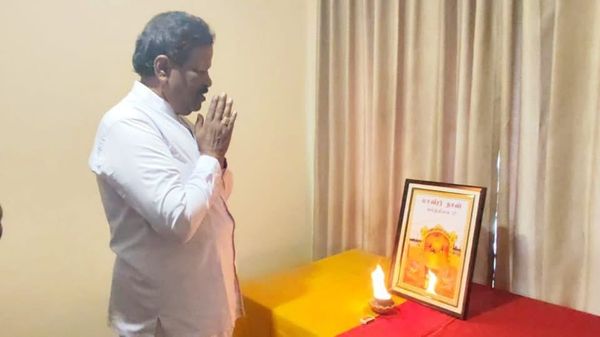
COLOMBO: A Tamil member of Parliament paid tribute in Colombo on Saturday to fighters of the Liberation Tigers of Tamil Eelam who died in the war. He chose to honour the rebel group's dead in the capital of the Sinhala-majority south on the first day of Maaveerar week, the annual period of Tamil remembrance.
Thurairasa Ravikaran, who represents the Vanni district for the Ilankai Tamil Arasu Kachchi, lit a lamp and scattered flowers before a picture of a Maaveerar cemetery, according to a post on his Facebook page. The ceremony was small. In the post, Mr. Ravikaran said he was in Colombo for the parliamentary sittings on the 2027 budget, and he described the tribute as heartfelt.
The gesture was modest, but where he made it gave it weight. The Tigers fought the Sri Lankan state for more than a quarter of a century, until their defeat in May 2009. During those years they carried out bombings and assassinations in Colombo. The group remains banned in Sri Lanka. Tributes to its fighters have been held for years in the Tamil-majority North and East. In the south, they have almost never been held in public.
Maaveerar week runs from Nov. 21 to Nov. 27, the date the Tigers set aside to honour their fallen. Families and communities across the Northern and Eastern Provinces and in the diaspora hold remembrance events throughout the week.
For years, the police monitored these gatherings. Mr. Ravikaran was himself questioned by the police over his part in Maaveerar Naal when he was a member of the Northern Provincial Council. He has long maintained that remembering the war dead is a right of the Tamil people and part of Tamil tradition.
Under the National People's Power government, Maaveerar events in the North and East have gone ahead without obstruction, and neither the government nor the opposition has objected. The main party in the governing coalition, the Janatha Vimukthi Peramuna, holds its own November remembrance in Colombo for members killed in the two armed uprisings it led in the south.
Critics who spoke to Jaffna Monitor said that Tamils marking their dead in the North and East is now broadly accepted, and that this acceptance came after years of struggle. What they questioned was the choice of Colombo. Many people in the city still know the Tigers mainly through the attacks the group carried out there.
The critics said a tribute in the south risked provoking the Sinhala majority and handing material to nationalist groups that have long opposed any Tamil remembrance. They said it could also put at risk the space Tamils now have to mourn at home. They asked what a tribute in Colombo achieves for Tamils that the same tribute in Mullaitivu or Kilinochchi would not.