

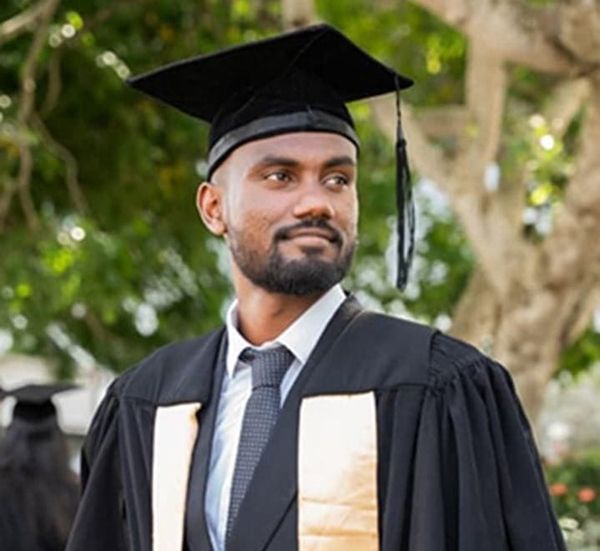
COLOMBO, Sri Lanka, Oct. 15 – Saudi Arabia’s Supreme Court has overturned the death sentence of a Sri Lankan migrant worker convicted of insulting the Prophet Muhammad in a Facebook comment and has ordered his case to be heard again, according to a Sri Lankan lawmaker who worked on the appeal.
The ruling, issued on Wednesday, also set aside the five-year prison sentence that a trial court had originally imposed on the worker, Anojan Sivarasa, 27, a Tamil from Sri Lanka’s Eastern Province. It came two days after his lawyers filed their appeal.
Mohamed Faiszer Musthapha, a member of Parliament and President’s Counsel who was part of the legal team, told that the Supreme Court had annulled both the appellate court’s death sentence and the original prison term, and that the case would return to the trial court.
The decision is not an acquittal. Mr. Sivarasa remains in Saudi custody, and the charges against him have not been dropped.
The court has not made its reasoning public. Before the ruling, Mr. Musthapha said the defense’s main argument was that the appellate court had wrongly classified Mr. Sivarasa’s comment as a hadd offense, a category of crimes under Islamic law that carry fixed punishments.
“The purpose of going to the Supreme Court is to get the case sent back to the Court of Appeal on the basis that it is not a hadd offence,” he told The Morning on Oct. 11.
It is not known whether the court accepted that argument or ruled on other grounds.
Mr. Sivarasa was arrested in July after an argument on Facebook over religion. The dispute began in late June, when a video circulated showing a young Muslim man kicking a dog that had been following a group of Hindu pilgrims. After another user posted derogatory remarks about a Hindu deity, Mr. Sivarasa replied in Tamil with a comment insulting the Prophet Muhammad.
He later deleted the comment and posted a video apology. A screenshot of the comment reached his employer and the Saudi authorities, and he was arrested.
The Al-Ahsa Criminal Court sentenced him to five years in prison and fined him three million Saudi riyals, about $800,000, in proceedings that drew on Saudi Arabia’s cybercrime law and on religious law.
His family appealed for a lighter sentence. In September, the appellate court instead sentenced him to death, treating the offense as one that warranted capital punishment.
The Sri Lankan government then sent a delegation of lawyers to Saudi Arabia to challenge the sentence. It included Mr. Musthapha; Hafeez Azard Navavi, an additional solicitor general; Upul Kumarapperuma, a President’s Counsel; and Farisz Fazal Abdul Hafeel Mohomed, a lawyer. Sri Lanka’s consul general in Jeddah, M.T. Mohamed Laffar, also took part. Working with Saudi lawyers, the team filed the appeal to the Supreme Court on Oct. 11.
Sri Lanka’s deputy foreign minister, Arun Hemachandra, announced the ruling on Wednesday in a Facebook post. “On October 13, 2026, the Supreme Court of Saudi Arabia set aside the judgment imposing the death penalty on Anojan Sivarasa,” he wrote. He credited diplomatic and legal efforts by Sri Lanka and thanked the Saudi government, Sri Lankan diplomats and lawyers from both countries.
President Anura Kumara Dissanayake said the decision had brought great relief to Mr. Sivarasa’s family and pledged continued government support until the case is resolved. “No Sri Lankan who leaves our shores in search of a livelihood should ever feel that they stand alone,” he said.
Amnesty International had called for Mr. Sivarasa’s unconditional release, saying no one should be imprisoned or executed for expressing views others find offensive. Human Rights Watch has criticized Saudi Arabia’s use of severe punishments for speech offenses, particularly against foreign workers who have limited legal protection.
It is not clear when the trial court will rehear the case, whether prosecutors will again seek the death penalty or how long Mr. Sivarasa will remain in detention.