

By Jaffna Monitor Staff
Colombo, 14 November 2026
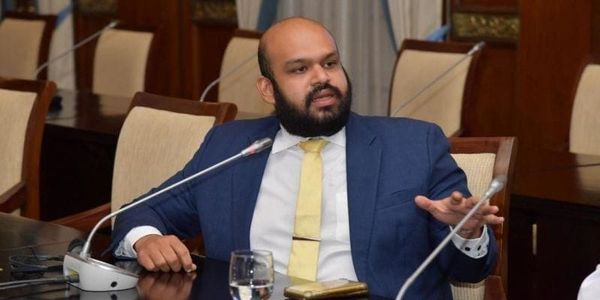
Shanakiyan Rasamanickam, the parliamentary group leader of the Ilankai Tamil Arasu Kachchi, told Parliament on Friday that the government was celebrating higher reserves while ordinary families struggled with rising prices. He said the 2027 budget did not address the Tamil national question at all.
Mr. Rasamanickam, a member of Parliament for Batticaloa, spoke on the first day of the budget debate. He said a budget speech should do more than set out financial allocations. “It is a policy statement that reflects the Government’s broader vision, priorities and commitments to the people,” he said. Former Presidents Maithripala Sirisena and Ranil Wickremesinghe had addressed Tamil national issues in their budget speeches, he said, even though neither delivered a lasting solution. “However, the current President failed to mention the Tamil national question even once.”
President Anura Kumara Dissanayake, who is also the finance minister, presented the budget on Thursday. The second-reading vote is scheduled for 20 November.
The cost of living
Mr. Rasamanickam referred to the Prime Minister’s argument that the government had inherited an economy in serious difficulty. Since then, he said, the rupee had fallen from about Rs. 283 to the dollar to about Rs. 330, though he acknowledged that external factors had played a part.
He said the President had pointed to higher Treasury balances and foreign exchange reserves, but the Treasury had been built up through taxation. “Where are the new investments entering the country?” he asked. He called on the government to disclose how much of the money allocated in the 2026 budget had actually been spent.
The budget, he said, contained no measures to bring down food prices and no immediate pay rise for public- or private-sector workers. He asked whether the government was holding back relief until the elections expected in 2028 and 2029. “Does the Government believe that providing relief now would affect its political standing?” he asked. “If the Government intends to delay relief for electoral advantage, it will ultimately have to face the consequences.”
He said the income tax changes mainly helped people earning more than Rs. 100,000 a month, and asked what the budget offered families earning less. He also said the new subsidy for household rooftop solar systems would reach only about 14,000 people. The budget sets aside Rs. 3.5 billion for the subsidy, at up to Rs. 250,000 per household.
Many of the increases in public-sector allowances announced in the budget will not take effect until July 2027. Mr. Rasamanickam compared this to a father who has Rs. 50,000 in his hand but tells his hungry son to wait until next year for food. “That is exactly what we are witnessing in this Budget,” he said. “If the Treasury has sufficient funds, why can the Government not provide immediate relief to people who are facing economic hardship?”
He said several proposals from last year’s budget had been repeated. “Merely allocating funds in a Budget is not enough,” he said. “The Government must ensure that the allocated funds are properly utilised.”
Accountability and devolution
Mr. Rasamanickam said the budget made no clear commitment on accountability, truth-seeking, justice for victims of the war or a political solution, and set out no policy on repealing the Prevention of Terrorism Act. He acknowledged that allocations for the Office on Missing Persons and the Office for Reparations had doubled. But he said more money would not answer the concerns of affected families. “Victims have rejected domestic accountability mechanisms, yet the Government continues to present those same mechanisms to the international community,” he said.
He criticised the President for not mentioning provincial council elections, which have been delayed for years. He also opposed the budget’s proposal to move six district general hospitals from the provincial councils to the central government. Four of the hospitals are in the Northern Province. “While Provincial Council elections remain delayed, the Government is proposing to centralise powers that have already been devolved to the provinces,” he said.
The speech, he said, made no commitment to a new constitution, to abolishing the executive presidency or to releasing Tamil land in the North and East. “These are fundamental political questions that cannot be ignored in a national policy statement.”
Land
Mr. Rasamanickam said the government planned to spend Rs. 14 billion on the Kivul Oya reservoir project in Vavuniya over three years. The money would be spent as Rs. 2 billion in 2027, Rs. 7.4 billion in 2028, and Rs. 4.6 billion in 2029. “The Kivul Oya project is being developed in a manner that threatens the lands and agricultural livelihoods of Tamil communities while providing irrigation benefits to other communities,” he said.
He also raised the long-running dispute over grazing land at Mayilathamadu and Mathavanai in Batticaloa. Tamil dairy farmers there say their traditional pastures have been lost to illegal settlement. He asked why Tamil communities still had difficulty getting access to land administered by the Mahaweli Authority. “Unfortunately, the present Government appears to be continuing many of the same policies pursued by previous administrations,” he said.
Plantation workers
Mr. Rasamanickam said plantation workers had placed considerable trust in the President. But he said the budget did nothing about long-standing problems with their Employees’ Provident Fund and Employees’ Trust Fund contributions, even though the President had opposed those injustices in the past. He also raised deductions of 14 percent from workers’ pay, which he said many workers did not understand.
He said the government was proposing to extend the leases held by the plantation companies. “Instead of terminating these agreements and creating a pathway towards land ownership for plantation workers, the Government is proposing to extend the existing arrangements,” he said. “If these agreements are extended, the longstanding demand of plantation workers for land ownership may never be fulfilled.”
The budget speech says the leases are due to expire in 2045 and that the Cabinet has appointed a committee of officials to review them.