

By Niranjan Nadarajah
A Life of Substance Over Spectacle
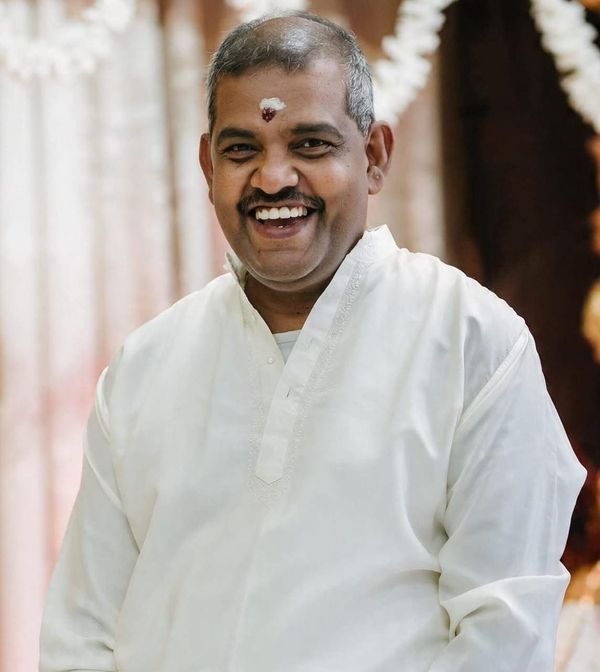
The world lost a man of quiet strength, steady optimism and deep humanity when Shanmugam Sathananthan died peacefully on August 22, 2026, after a brief illness. He was 72. Known to his closest friends as “Satha,” and to colleagues, community members and younger people as “Satha Anna,” the Tamil term of respect for an elder brother, he lived a life that spanned four continents, touched thousands of lives and left a quiet legacy that will endure for generations.
I first met Satha in 1985 in Zambia, when we were both young bachelors trying to build careers in a new country. Over the next forty-one years, across different countries, provinces, and stages of life, our friendship never wavered.
In a world that rewards the loudest voices and the largest egos, Satha was a rare exception. He had a large heart and a small ego. He did not need an audience; he did not seek applause, and he never required a thank-you note to feel that his generosity had been worthwhile. Seeing a need and quietly filling it came to him as naturally as breathing. His life proved that true strength does not need to roar. It is steady, silent, and completely reliable. He taught us that you do not have to shout to make a difference in this world. You have to show up, do the right thing, and leave the world a little lighter than you found it.
Early Roots: Kuppilan
Satha was born on June 16, 1954, in the village of Kuppilan, in the Northern Province of Sri Lanka. His career and his philanthropic work would eventually take him to cities across the world, but he never stopped thinking of himself as a boy from Kuppilan who had been blessed with an opportunity. That humility shaped his worldview and drove his lifelong effort to recreate those same opportunities for children and families left behind.
From our many conversations over the decades, it was clear that his early life was happy and deeply grounded. Both his parents were teachers, and he grew up in a home built on understanding and trust. That freedom let him map out his own future and follow his calling.
He completed his early schooling at Tellippalai Mahajana College and his higher studies at Jaffna Central College, joining the long line of distinguished citizens produced by both institutions.
As a boy in Sri Lanka, he was energetic and sociable. He loved sport and found real joy on the field playing cricket and football with his friends. He excelled academically as well. Mathematics was his favourite subject, a discipline that suited his structured, logical mind, and his early mastery of it led him to his first job, teaching mathematics in Jaffna.
In 1975, seeking to broaden his horizons and extend his technical education, Satha travelled to the United Kingdom to study civil engineering. The training grounded him. It gave him an eye for detail, a respect for structural integrity and a practical, problem-solving habit of mind that he would apply to his professional, personal and charitable work for the rest of his life.
The Zambian Chapter
In 1981, Satha took his engineering career to Zambia. It was there, in 1985, that the two of us met, both bachelors far from home. He stood out at once in a room full of new faces. He had a warmth that drew people in; he was friendly and cheerful, and he had a quick, light sense of humour that could lift the heaviest room.
Our friendship deepened quickly over shared experience. Weekends in Kitwe were built around it. We cooked together, experimented with recipes, swapped stories of home, and hosted long, lively gatherings.
Those evenings were full of genuine laughter and real conversation. Satha brought an energy to them that no one else matched. He had an instinct for finding happiness in the present moment and for sharing it generously with everyone around him. Whether we were working through the early difficulties of building engineering careers in a foreign country or setting off on an adventure, such as an unforgettable trip to Livingstone to see Victoria Falls, he lived with an enthusiasm that stayed with everyone who met him.
Transition to Canada
After several years of putting down roots in Zambia, Satha decided on his next move: Canada. We both went there with our wives at around the same time, and helped each other settle in.
Our professional paths then pulled us apart. His expertise as a civil engineer made him highly adaptable, and his career took him across four provinces. I moved a good deal too, to New Brunswick and to India. However many miles lay between us, and however many months passed without our meeting, the friendship held. Satha remained an anchor in my life. We were always a phone call away from each other.
Across more than four decades, his character was untouched by time or success. He lived by a simple philosophy: show up, have fun, enjoy life to the fullest. He celebrated victories large and small with real enthusiasm.
He handled adversity in the same spirit. When setbacks came, he did not linger in disappointment, complain, or dwell on what had gone wrong. He moved forward with grace and an unbroken optimism.
Deep personal tragedy struck early in his life in Canada, when his wife, Kethees, died. He faced that grief with the quiet perseverance and dignity that marked everything else he did, supported by a close circle of family and friends.
In time, happiness returned to his life. He married Usha, and I still remember the pleasure of going “thali” shopping with him before the wedding, choosing the gold marriage pendant that a Tamil bridegroom ties around his bride’s neck. Together, Satha and Usha built a home centred on love, hospitality and tradition, and raised two children, Gajan and Meera.
A Lesson in Grassroots Accountability
Satha did well in his engineering career, but his real passion was his charitable work. A single episode, in 2004, changed the way he approached it.
When Gajan and Meera were young, he sponsored a little girl in Sri Lanka through World Vision. On a family trip in 2004, he went to visit her and found a reality that the official school photographs had concealed. The family of five lived in a small mud hut. The mother was blind, the other children had dropped out of school, and the daughters slept exposed to the cold and the rain.
When the girl’s father fell at his feet, Satha refused the credit. Troubled that conditions like these were being hidden from sponsors, he went straight to the charity’s office and demanded that they rebuild the house. He followed up persistently until the work was finished, and paid for the girl’s education himself until she graduated.
The experience changed him. He cut his ties with large institutions and turned instead to low-overhead grassroots charities with a direct connection to the ground. He had no interest in glossy corporate brochures or abstract statistics. He wanted to see how people actually lived, and he used his engineer’s mind to get things done.
Architect and Pillar of the Eekai Foundation
Guided by that philosophy of direct grassroots aid, Satha helped establish the Eekai Foundation in 2019, together with Dr. V. Santhakumar. He spent long hours with lawyers working through corporate structures, drafting bylaws and securing registration with the Canada Revenue Agency. It was demanding work that required patience and meticulous care. Once registration came through, he made certain that the paperwork and the regulatory requirements were followed to the letter. He was the foundation’s procedural conscience.
It was Satha who introduced me to Dr. Santhakumar and drew me into the core group building Eekai’s presence. Before that, the two of us had worked to establish God’s Own Children Foundation in Canada. We were always looking for ways to get direct relief to the homeland.
Within Eekai, Satha was a fierce opponent of expensive concepts and performative events that consumed resources. He believed that every dollar raised belonged to the underprivileged people back home in Sri Lanka, and should be spent where it made a measurable difference. He championed practical, grassroots-level projects designed to restore dignity, provide a good education, and lift families out of poverty. He had a hand in nearly everything the foundation has done.
A Silent Guardian: The Partnership with SJC87
Satha’s philanthropic footprint extended to other grassroots organisations that shared his standards, most notably the SJC87 group (an education charity founded in 2009 by alumni of St. John's College, Jaffna, from the batch of 1987). Through it he acted as a silent guardian for vulnerable young people in the rural, war-affected areas of northern and eastern Sri Lanka. SJC87 supports about 1,100 students, including 600 at university, many of them from remote villages where total household income is below US$80 a month.
A couple of years ago, a sponsored university student missed a compulsory meeting because of difficult circumstances, and her funding was put in jeopardy. Satha heard about it at once and called the SJC87 leadership to ask that she be given one last chance. He quietly offered her guidance, and she never missed another session. When she heard that he had died, she contacted his family to thank them.
He also went around the bureaucracy to launch a joint project between Eekai and SJC87, releasing funds by simple text message to distribute more than 100 bicycles to underprivileged children in the Vanni.
Satha volunteered for and supported a number of other organisations, among them Anpu Neri and Nivaranam. He gave so quietly that we will never know the full extent of what he did.
A Retirement Given to Hidden Service
Retirement from engineering did not slow Satha down. His dedication to service only intensified. Rather than take his leisure, he gave his mornings to a quiet mission.
From his home in Canada, he would wake early to teach mathematics and other school subjects remotely to underprivileged children in rural Sri Lanka. He did this through the Ezhuthani Organization, a Canada-based not-for-profit that supports communities in Sri Lanka and Canada by widening access to education, strengthening cultural ties and helping vulnerable groups. He took it on to close the gap for children with no access to good tutoring, and he kept the morning sessions going systematically until his final days.
The Final Call
I last saw him on August 11, 2026, shortly before I left the country. True to form, we sat together and talked, warmly and at length. Even then, his mind was on his charitable duties. He mentioned a donation he was in the middle of transferring to the foundation, and reminded me to make sure the receipt was issued correctly to the donor. Two days before he died, he sent me a last WhatsApp message, jovial to the end.
Shanmugam Sathananthan died as he had lived, quietly and without drawing attention to himself, leaving a deep and permanent impression on everyone who had the privilege of knowing him. There were no billboards, no trophies, and no plaques at his memorial service. His monument was the people who gathered there: families lifted out of poverty, schoolchildren doing well in their examinations, and young men and women holding university degrees that Satha had quietly helped them earn.
He is survived by the family who meant the world to him: his devoted wife, Usha; his children, Gajan and Meera; their spouses, Vaishna and Andrew; and his cherished grandchildren, Nila and Kieran. He is also survived by his older sisters, Ratha and Ruby, and his younger brothers, Sivanesan and Jeevahan. He was predeceased by his first wife, Kethees.
To Usha, Gajan, Meera, and the whole family: my wife, Jayanthi, and I know how hard this is. Please accept our deepest and most heartfelt condolences. We share in your grief. Satha was a brother, a father, a mentor, and an irreplaceable friend. He has left this earth, but his silent rescues, the invisible safety nets he wove around the vulnerable, and the humble example he set every single day mean that his light will never be extinguished.
Satha, my brother, thank you for forty-one years of an incredible friendship. Jayanthi and I will love you, honour you, and miss you always. If I hold one lasting image of you, it is the way you faced adversity, always with a quiet, subtle smile. As your soul rests in peace, we send you off with that same smile.
Niranjan Nadarajah is a Sri Lankan-born Canadian Certified Public Accountant, entrepreneur and author of The Balanced Journey: Creating Wealth, Health and Legacy. His career has spanned Zambia, Canada and India. He is also involved in charitable initiatives and mentors young professionals.