
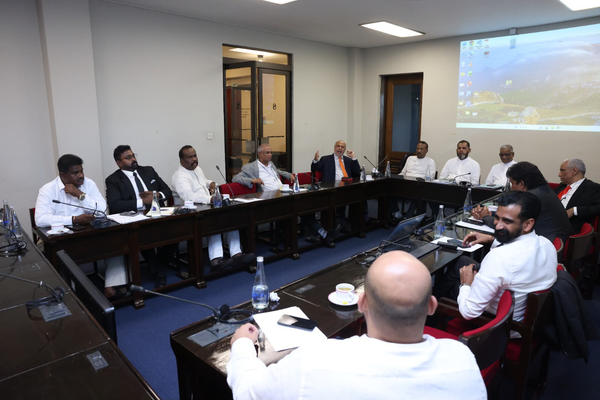
COLOMBO, Sri Lanka — A coalition of six Tamil-speaking political parties has formally requested a meeting with President Anura Kumara Dissanayake, in what could be the first coordinated political initiative since the parties agreed earlier this month to work together on issues affecting Sri Lanka's Tamil-speaking communities despite their longstanding political differences.
The request, made in a letter to the president following a meeting on Friday at the Parliament complex, comes as the government faces growing calls from Tamil and Muslim political representatives to address unresolved issues including power-sharing, land disputes, accountability for alleged wartime abuses, the release of detainees held under the Prevention of Terrorism Act (PTA), and economic disparities in the country's Northern and Eastern provinces.
The alliance said it wished to discuss "matters of national importance affecting the Tamil-speaking communities," though it did not publicly specify the issues it intended to raise with the president.
The six parties — the Ilankai Tamil Arasu Katchchi (ITAK), Sri Lanka Muslim Congress (SLMC), All Ceylon Makkal Congress (ACMC), Ceylon Workers' Congress (CWC), Tamil Progressive Alliance (TPA), and the Democratic Tamil National Alliance (DTNA) — said they remained committed to maintaining their separate political identities while working together on issues of common concern.
"The parties agreed to work together on matters where common ground exists in order to advance the interests of the Tamil-speaking communities through constructive engagement," the joint statement said.
After meeting the president, the coalition said it also intends to hold discussions with Opposition Leader Sajith Premadasa and members of the diplomatic community as part of an effort to build consensus through democratic engagement.
The initiative represents one of the broadest attempts in recent years to coordinate parliamentary representation across Sri Lanka's three principal Tamil-speaking constituencies — Northern and Eastern Tamils, Hill Country Tamils, and sections of the country's Muslim political leadership.
For decades, Tamil-speaking politics has been fragmented by regional interests, ideological differences, and electoral competition. While parties have occasionally coordinated on individual parliamentary votes or constitutional debates, efforts to establish a sustained common political platform have repeatedly faltered over disagreements on devolution, constitutional reform, and relations with successive governments.
The current grouping was announced earlier this month, when the six parties agreed to cooperate on issues where consensus could be reached while explicitly preserving each party's policies, electoral identity, and organizational structure. The arrangement stops short of creating a formal political alliance or electoral coalition.
The move also comes at a politically significant moment for President Dissanayake's administration. Although his government has pledged constitutional reform, reconciliation, and institutional renewal following Sri Lanka's economic crisis, many longstanding demands raised by Tamil political parties remain unresolved nearly 17 years after the end of the country's civil war.
Those issues include the full implementation of devolution under the 13th Amendment to the Constitution, the return of privately owned land occupied by the military, investigations into enforced disappearances and alleged wartime abuses, repeal of the Prevention of Terrorism Act, and greater public investment in the war-affected Northern and Eastern provinces. Muslim political parties have also continued to press for stronger protections for minority rights and more equitable development.
The coalition did not indicate when it expects the meeting with President Dissanayake to take place, but said it looked forward to a positive response.
In its statement, the group said it remained committed to working collectively where consensus exists while pursuing "a just, peaceful, and durable political solution."