

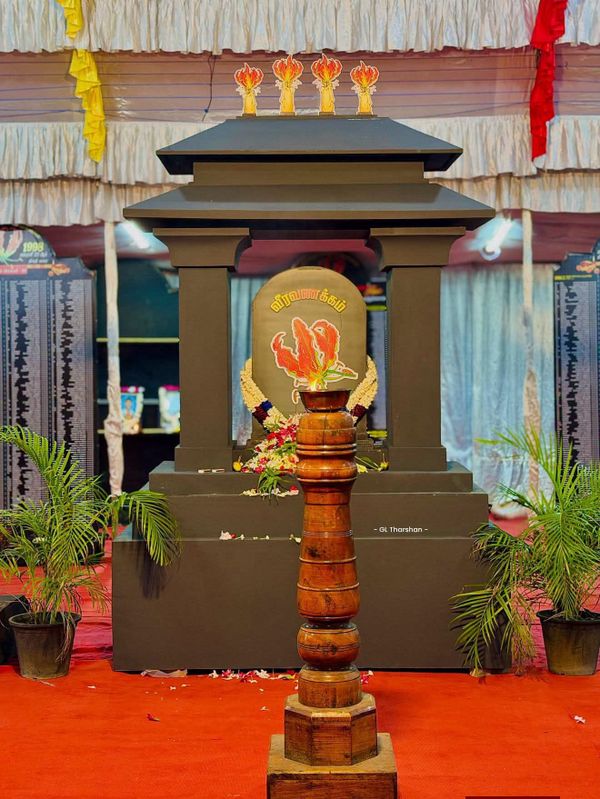
JAFFNA: Police in northern Sri Lanka tore down a memorial shelter on Friday night, the eve of the week Tamils set aside each year to remember rebel fighters killed in the civil war. By Saturday morning the organizers had rebuilt it, and the commemorations had begun.
The standoff in Nelliyady, a town in the Vadamarachchi area of the Jaffna Peninsula, came hours after a magistrate on nearby Kayts island ruled that people have the right to remember the dead, provided they display no symbols of banned organizations and cause no public nuisance. Seventeen years after the war ended, the line on remembrance in the north is still being drawn case by case.
The observance, known as Maaveerar Week, or Great Heroes Week, ends on Nov. 27 with Maaveerar Naal. On that day, families gather at the sites of former rebel cemeteries to light lamps and lay flowers. The date marks the death in 1982 of Lt. Shankar, whom the Liberation Tigers of Tamil Eelam regarded as their first fighter killed in the armed struggle.
The Tigers fought for an independent Tamil state in the north and east for more than a quarter of a century. They ran their own army, police and courts in the territory they held until government forces defeated them in May 2009. They also carried out suicide bombings and assassinations, including the killings of the former Indian prime minister Rajiv Gandhi in 1991 and the Sri Lankan president Ranasinghe Premadasa in 1993. The group remains banned in Sri Lanka.
The shelter in Nelliyady
On Friday evening, a remembrance committee from the Ilankai Tamil Arasu Kachchi, the largest Tamil party in Parliament, put up a temporary shelter in the center of Nelliyady for the week’s events.
Police moved to take it down, and a heated argument followed. Five members of the committee were taken to Nelliyady police station for questioning. A local news site named them as Pushpakar, Thayaparan, Surendran, Nimalan and Nilangathan. While they were being questioned, police removed the shelter. According to the same report, the removal was carried out under the senior superintendent of police for the Kankesanthurai division.
When the five returned, the committee began rebuilding on the same spot, and the argument with police started again. By Saturday the shelter was back up, and the committee said the week’s events would go ahead. Police have not publicly explained why they removed it.
The ruling on Kayts
The court case on Kayts island concerned the Chatti Maaveerar Thuyilum Illam, a former rebel cemetery where organizers had begun preparing for Nov. 27. Thuyilum illam means “resting place.”
A person claiming to own the land complained to Kayts police and asked them to stop the commemoration. Police took statements from four people they identified as organizers. Among them was Velan Swamigal, a Hindu religious figure and civil society activist who has previously been arrested and prosecuted over Tamil commemorations. Police then asked the Kayts Magistrate’s Court to bar the event.
At a hearing on Nov. 17, lawyers for the four said the police application did not cite any law under which the event could be banned. The court accepted the objection, told the police to identify the legal provision they were relying on, and adjourned the case to Friday.
On Friday the magistrate ruled that people are entitled to remember the dead, as long as they do not display the symbols or insignia of banned organizations and do not cause a public nuisance. The court said it could not decide who owns the land in proceedings brought by the police. That question is left for a civil case, if anyone brings one.
The ruling did not authorize any particular event. It did set out a test that police and organizers across the north are likely to apply this week. Mourning the dead is protected. Displaying Tiger flags, emblems or other insignia of the movement is not.
The organizers at Chatti had prepared for either outcome. If the ruling had gone against them, they planned to move the event onto land directly in front of the site that belongs to the local council, the Velanai Pradeshiya Sabha. The council’s chairman and deputy chairman attended preparations earlier in the week.
Across the north, and in Colombo
There were no reported confrontations elsewhere on the first day.
In Valvettithurai, the coastal town where the Tiger leader Velupillai Prabhakaran was born, the week opened on Saturday morning at the house of Lt. Shankar. Maheswari Amma, the mother of Capt. Pandithar lit a remembrance lamp in front of the house, and those present laid flowers. The ceremony was led by V. Kavichelvan, a member of the Tamil National Party’s leadership council and its Vadamarachchi organizer. N. Pathmanathan, the acting chairman of the Valvettithurai Urban Council, and council members also paid tribute.
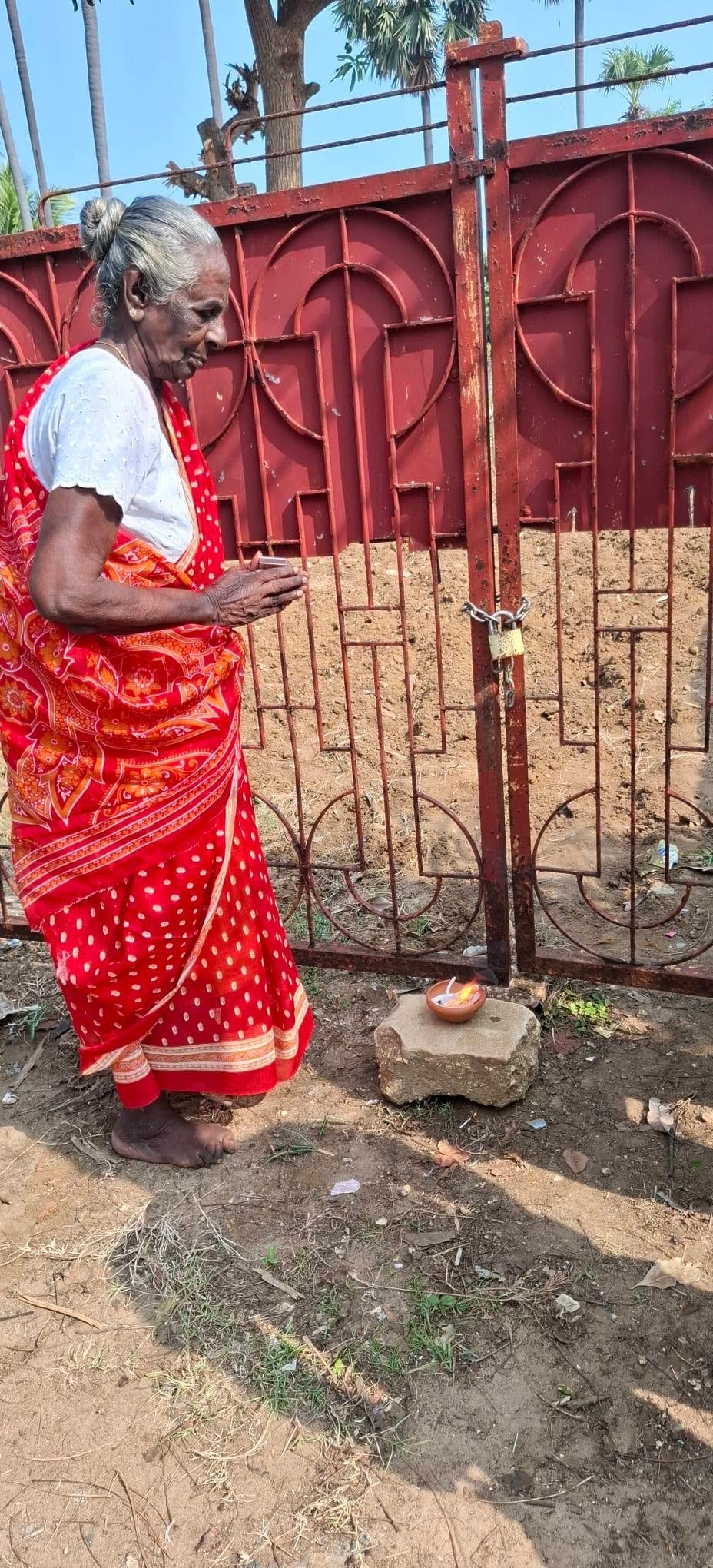
For years the ceremony at Lt. Shankar’s house had been led by M.K. Sivajilingam, the former member of Parliament and chairman of the Valvettithurai Urban Council, who died a week ago. Lt. Shankar was wounded when security forces tried to capture him in Jaffna in November 1982. He was taken by boat across the Palk Strait to Tamil Nadu for treatment and died there on Nov. 27.
Also in Valvettithurai, the organizing committee for Theeruvil Square, one of the main gathering points for Nov. 27, cleaned the grounds on Saturday. They hung red and yellow flags and lit a lamp among the broken remains of a memorial to 12 rebel fighters, among them Kumarappa and Pulendran. The committee invited residents of Valvettithurai and the wider Vadamarachchi area to the main ceremony on the evening of Nov. 27.
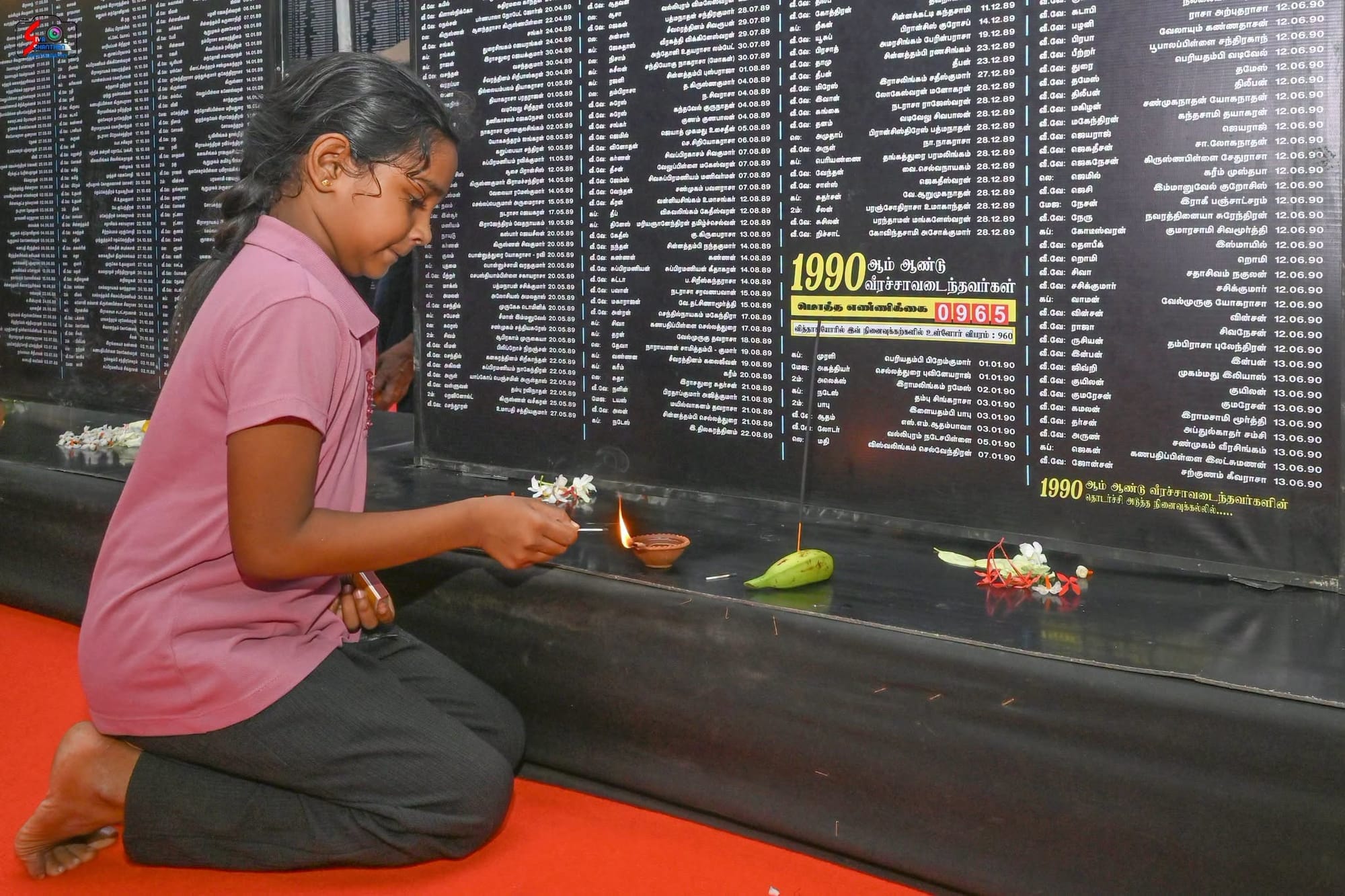
In Nallur, in Jaffna town, a memorial bearing the names of the dead was unveiled on Saturday evening near the monument to Thileepan, the rebel political leader who died on a hunger strike in 1987. Parents of fallen fighters and former combatants attended. The display carries 28,341 names on 67 memorial stones. Its organizers say they include fighters who died from 1982 onward, as well as members of other groups and civilians the movement honored. The memorial will stay open until Nov. 27, and families can display photographs of their children there. Earlier this year, police seized a bust of Thileepan that had been installed at the same site.
In Poonakary, in Kilinochchi District, the Samathuva Party held a remembrance at Vadiyadi Junction on Friday and honored the parents of fallen fighters. M. Chandrakumar, a former member of Parliament, attended. In Valikamam South, members of the Ilankai Tamil Arasu Kachchi opened a memorial complex on Saturday.
The commemoration also reached Colombo. Thurairasa Ravikaran, a member of Parliament for the Vanni district, was in the capital for the budget debate. On the first day of the week, he lit a lamp and laid flowers before a picture of a former rebel cemetery. Public remembrance of the Tigers’ dead has largely been confined to the north and east, where most of their families live.