JAFFNA, Sri Lanka — Roman Catholic clergy in Jaffna demanded an international investigation into the Chemmani mass grave this week, pitting the Tamil priesthood of Sri Lanka's north against the leadership of their own Church. Its most powerful figure, Cardinal Malcolm Ranjith, spent years opposing international scrutiny of alleged wartime atrocities against Tamils — even as he now demands precisely such scrutiny for the mostly Catholic victims of the 2019 Easter Sunday bombings.
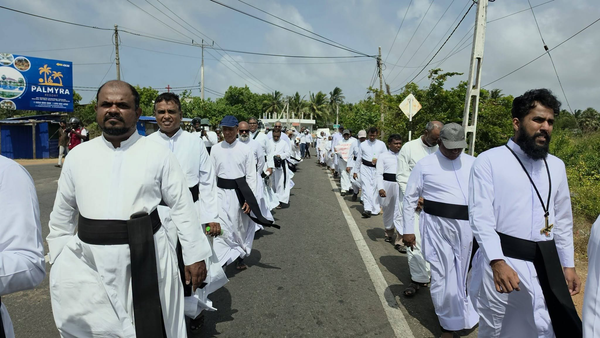
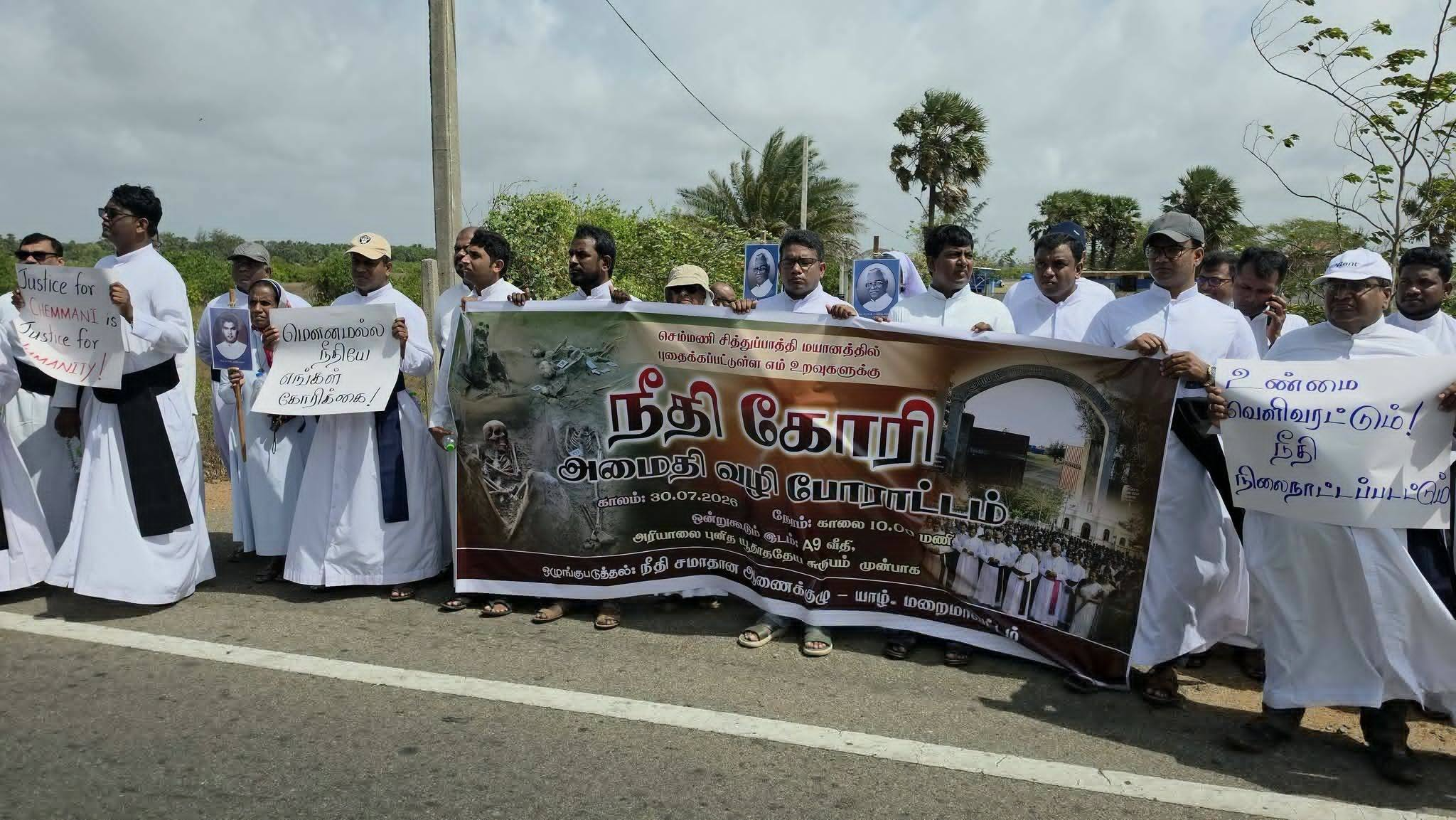
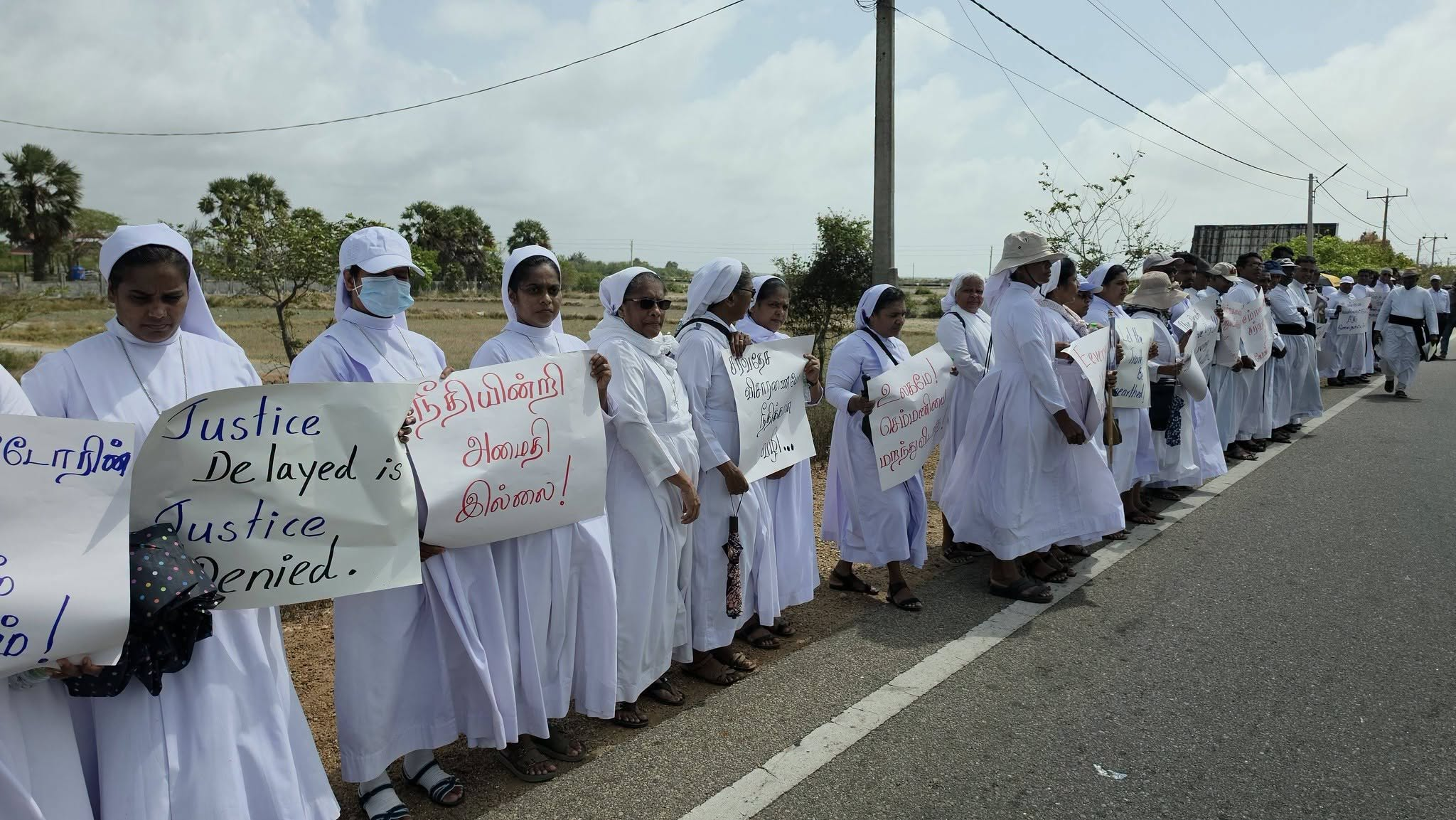
The demand came in a memorandum to Volker Türk, the U.N. High Commissioner for Human Rights, from the Justice and Peace Commission of the Diocese of Jaffna. It followed a march, when more than a hundred priests, nuns, and lay parishioners walked from St. Jude's Shrine in Ariyalai to Chemmani Junction. The memorandum sets out seven requests; in its sharpest passage, it says the scale of what has been unearthed amounts to "clear indications of the broader structural genocide experienced by the Tamil people."
Cardinal Ranjith, the Archbishop of Colombo, is Sri Lanka's most forceful advocate of international justice for the Easter Sunday dead, most of them his own parishioners. He has repeatedly called for an international mechanism to investigate the bombings and travelled to Geneva to press the U.N. Human Rights Council for intervention.
His stance on Tamil deaths has been the reverse. In 2012, when the then Bishop of Mannar, Rayappu Joseph, and others petitioned the Human Rights Council over wartime atrocities, the cardinal said the Church rejected any international accountability mechanism, calling such Western efforts "an insult to the intelligence of the people of Sri Lanka." Two years later, when Catholic bishops sought an inquiry into the army's alleged use of cluster munitions and chemical weapons against Tamil civilians, he said the Church did not support the allegations. An ethnic Sinhalese long allied with the Rajapaksa family, he has consistently opposed any international probe into the killing of tens of thousands of Tamil civilians in the war's final months.
The dig the priests want placed under international oversight is now the largest of its kind in Sri Lanka. As of July 21, forensic teams had recovered 454 sets of skeletal remains, among them infants and children, surpassing the grave at Mannar's Sathosa site to become the biggest ever uncovered on the island. As the court-supervised third phase of excavation continued, later finds included skeletons without skulls and a body still in a raincoat. Feeding bottles, toys, and children's clothing have come out of the ground with the bones.
The site first surfaced in 1998, when a soldier, Somaratne Rajapakse, testified that 300 to 400 bodies of disappeared Tamils lay buried at Chemmani. His claim emerged at the trial over the 1996 rape and murder of the schoolgirl Krishanthi Kumaraswamy and the killing of three others who had gone looking for her. Internationally observed excavations in 1999 uncovered fifteen bodies before the ground was left undisturbed for a quarter of a century — until construction workers reopened it in February 2025.
The state's conduct since has only deepened that distrust. Justice Minister Harshana Nanayakkara visited the site in June and pledged to establish the truth within two years. But when relatives of the disappeared demonstrated during his visit, demanding international supervision, the minister and officials from the Office on Missing Persons walked past without stopping. Police had already obtained a court order barring seven people, several of them relatives of the missing, from disrupting the visit.
Among the memorandum's seven requests: that exhumation and identification proceed under the Minnesota Protocol, the international standard for investigating suspected unlawful deaths; that independent DNA analysis and scientific dating be supported; that investigators be given access to military, police and detention records; that families, witnesses, lawyers and journalists be protected; and that a direct U.N. human rights presence be established in Jaffna, on the ground that witnesses will not speak without it.
The Commission cast its appeal as pastoral, not political. Its aim, it wrote, is not vengeance or hostility toward any community but truth established by evidence and dignity for the dead. It asked Mr. Türk not only to intervene but to reply in writing, spelling out what the United Nations will do.
In effect, the Tamil clergy of Jaffna have signalled that they no longer expect justice from within Sri Lanka — and that the leadership of their own Church, for all its recent talk of accountability, never demanded it on their behalf.