

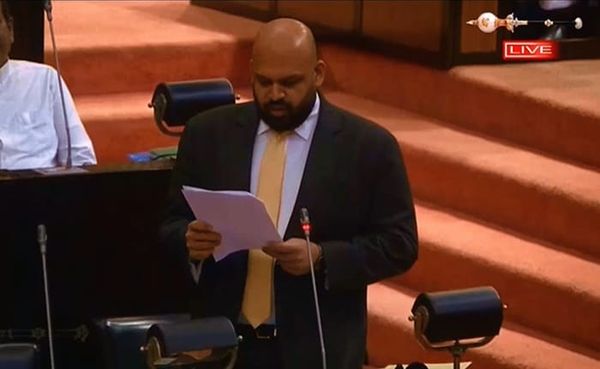
COLOMBO, Sri Lanka: A Tamil opposition lawmaker pressed the government in Parliament on Tuesday over the pay and promotion grievances of Sri Lanka’s development officers, whose unions have called a nationwide sick-leave strike for Nov. 9.
“Must development officers remain in the same post until they die? Is there no promotion?” asked Shanakiyan Rasamanickam, a member of Parliament for Batticaloa District from the Illankai Tamil Arasu Kachchi.
Chandana Abeyratne, the minister of public administration, provincial councils and local government, said in reply that 78,710 development officers are currently in service. He said the government expects to hold direct discussions with the officers on their demands.
Mr. Rasamanickam raised the matter under Standing Order 27(2). He called on the government to hold urgent talks with the officers’ unions and find a solution before public services are affected. He told the House that the unions say disputes over pay anomalies, promotions and amendments to the officers’ service minute have gone unresolved for more than 20 years. The service minute is the document that governs recruitment, grading and promotion within a public service.
The officers want their salary scale raised from MN-4 to MN-5 and promotion opportunities opened under the MN-7 scale, he said. They are also asking for a service structure that recognizes their educational qualifications and experience. The unions accuse the government of failing to keep promises to formally establish a Sri Lanka Development Service and to amend the service minute, he said.
He warned that the strike, during which officers are expected to report sick, could disrupt services at Divisional Secretariats and other government institutions and cause serious inconvenience to the public.
Mr. Rasamanickam asked the government for an update on the revision of the service minute. He asked why it had been delayed and when the revised version would take effect. He also asked whether the government would address the officers’ salary and promotion demands, formally establish the Sri Lanka Development Service and provide a clear career structure based on qualifications and experience. He asked which promises made before the election had been kept, and whether the government was prepared to meet the unions and offer solutions within a fixed timeframe before Nov. 9.
He said officers should be able to get promotions and salary increases through a proper process. The National People’s Power had spoken extensively about development officers’ concerns before it came to power, he noted. He called for a special committee to examine problems in their service structure and recommend solutions through the public administration system.
In reply, Mr. Abeyratne said development officers were brought into service under a service minute that took effect on Aug. 1, 2011. He said the Public Service Commission has approved necessary amendments from time to time, and that provisions relating to Grade I have been introduced. He said a 10-day training program is now being carried out in place of the Grade III efficiency bar examination.
On pay, the minister said increases could be granted in line with the MN-4, MN-5 and MN-7 service classifications. He said the budgets for 2025, 2026 and 2027 had given special attention to salary increases for public servants, including development officers. The government would give special attention to the officers’ current demands, he said.
In a supplementary question, Mr. Rasamanickam said development officers should be able to move up to higher levels instead of staying in the same post for long periods. He noted that officers have asked for an examination that would qualify them for advancement to the MN-7 grade, and he again called for a new expert committee to resolve the problems in their service structure.
Mr. Abeyratne replied that development officers do not necessarily have to remain in the same position for life. He said some had already been recruited as teachers, and others could sit the competitive examination for teachers and join the teaching service. Development officers could also sit other public service examinations and move into higher positions through established procedures, he said.
Mr. Rasamanickam said the government must act urgently on the officers’ grievances to prevent disruption to public services before Nov. 9. The minister did not say when the talks with the officers would take place.