

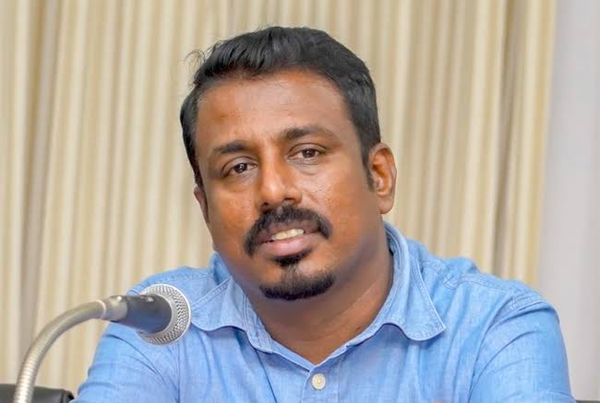
COLOMBO, Sri Lanka — A Sri Lankan deputy minister has accused former President Ranil Wickremesinghe and other senior figures associated with the United National Party of bearing responsibility for the political climate surrounding the 1981 burning of the Jaffna Public Library.
Eranga Gunasekara, the deputy minister of urban development, said the destruction of the library, one of the most searing symbols of Tamil cultural loss in Sri Lanka, had “set fire to the hearts of the people” and contributed to the cycle of violence that engulfed the country in the years that followed.
“The burning of the Jaffna Public Library in 1981 was one of the principal incidents that paved the way for the 30-year war and the Black July violence of 1983,” Mr. Gunasekara said at a news conference organised by the Socialist Youth Union.
He singled out Mr. Wickremesinghe, who was a young cabinet minister in the United National Party government at the time, along with several other prominent figures in the party.
Mr. Gunasekara did not present evidence directly linking Mr. Wickremesinghe to the burning of the library.
The Jaffna Public Library was set ablaze in late May and early June 1981, during a period of escalating political violence surrounding elections to the newly established District Development Councils. The attack destroyed tens of thousands of books and manuscripts, including rare and irreplaceable works documenting Tamil history and culture.
Mr. Gunasekara accused the United National Party government of President J.R. Jayewardene of using state power in an effort to secure victory in the Jaffna District Development Council election.
He said politicians and supporters had been brought to Jaffna as part of an effort to interfere with the electoral process and described the burning of the library as the culmination of a broader campaign of anti-democratic violence.
“The Jaffna Public Library was not merely a building or an ordinary library,” Mr. Gunasekara said. “It was a treasure containing more than 94,000 rare and historically significant books.”
He said the library had occupied an almost sacred place in the cultural life of Jaffna, with visitors traditionally removing their footwear before entering as a mark of respect.
Mr. Gunasekara also cited parliamentary Hansard records that he said showed that Mr. Wickremesinghe and several other United National Party politicians, including Gamini Dissanayake and Gamini Lokuge, were in Jaffna at the time of the violence.
“Those who were in the United National Party at the time set fire to the feelings and hearts of the people,” Mr. Gunasekara said. “What they did that day caused devastation beyond the killing of individuals.”
The burning of the library came two years before Black July, the anti-Tamil pogrom of July 1983 in which hundreds, and possibly more than 1,000, people were killed and tens of thousands were displaced. The violence accelerated the country’s descent into a civil war between the government and Tamil separatist militants that ended in 2009.
Mr. Gunasekara argued that the library’s destruction and the violence and political turmoil that followed should be understood as part of the chain of events that ultimately led to Black July and the war.