
JAFFNA, Sri Lanka, Oct. 11 — Residents of Palaly, in Sri Lanka’s north, gathered on Sunday for the 17th consecutive week to demand that the military return land they were forced to leave 36 years ago.
Many of the protesters were displaced during the civil war between government forces and the Liberation Tigers of Tamil Eelam. They say they have waited decades for permission to go back to their villages, reclaim their property and resume farming and other work there.
The war ended in May 2009 with the military defeat of the Tamil Tigers. Homes and farmland belonging to many Palaly families remain inside areas the military still holds.
“We have been living away from our own homes for the past 36 years,” an elderly man at the protest said. “Seventeen years have passed since the war ended, but we have still not been resettled in our own villages.”
“Our final wish is simply to die on our own soil,” he said.
Palaly, on the Jaffna Peninsula, is the site of a military air base that also serves as Jaffna International Airport. During the war, the surrounding area was part of a large High Security Zone, and many Tamil families living there were made to leave.
Successive governments have released parts of the land held by the military in the north since the war ended. Some families displaced from around Palaly still cannot return to their original properties.
The military’s occupation of private land is among the most persistent complaints in the Northern Province, where most residents are Tamil. Affected families say the land is tied to their livelihoods and to homes their families occupied for generations.
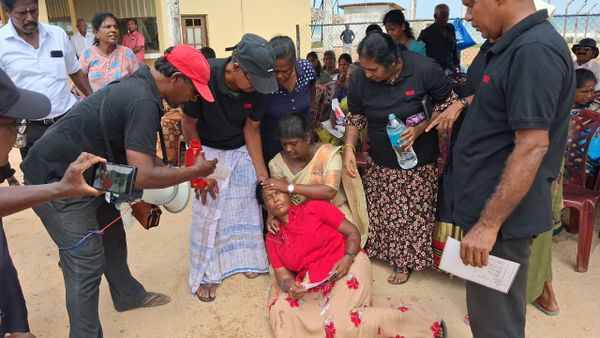
Sunday’s protest was held in intense heat. A woman taking part fainted, and other protesters gave her first aid and moved her into the shade. She stayed until the protest ended.
Some of the older protesters said they feared they would die before being allowed to return. If they could not live out their lives in the villages where they were born, they said, they wanted at least to spend their final days there.