

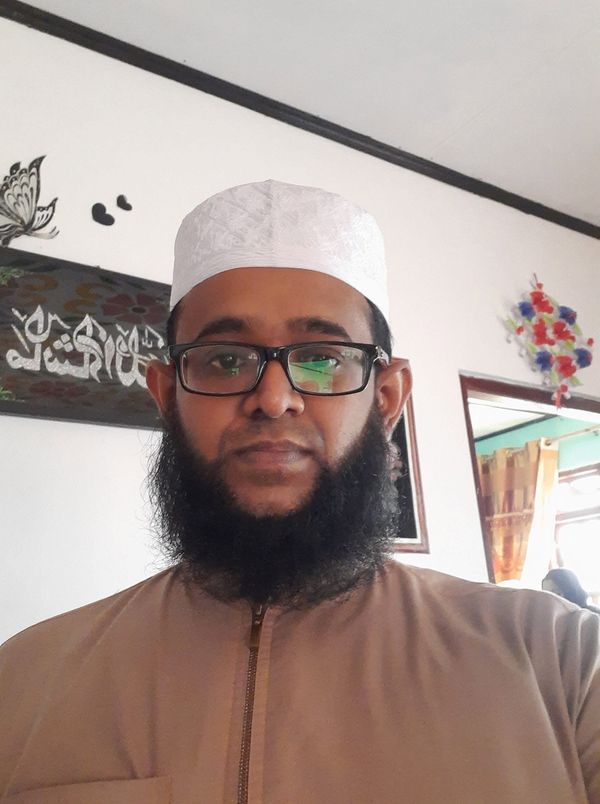
COLOMBO, Sri Lanka — The WhatsApp account called itself “Army Public School.” In December 2021, according to Indian prosecutors, it sent messages to the phones of Indian defense officials that carried malware designed to steal military information. The phone number behind it, they said, had been bought with identity papers that a Sri Lankan man named Muhammad Yasir obtained using false information.
Nearly five years later, Mr. Yasir, known to his supporters as Yasir Maulavi, has become a political cause at home. On Nov. 17, Mujibur Rahman, a Muslim opposition lawmaker from the Samagi Jana Balawegaya, told Parliament that Mr. Yasir had been held in India for five years and urged the government to bring him back. Clips of the speech spread across Muslim-run Tamil-language news websites under the caption “No crimes have been proven!”
An Indian court found otherwise. In February, a judge in Tamil Nadu convicted Mr. Yasir of obtaining Indian identity documents with false information. He is serving a two-year sentence and did not appeal.
Here is what is known about him and his case.
Who is Yasir Maulavi?
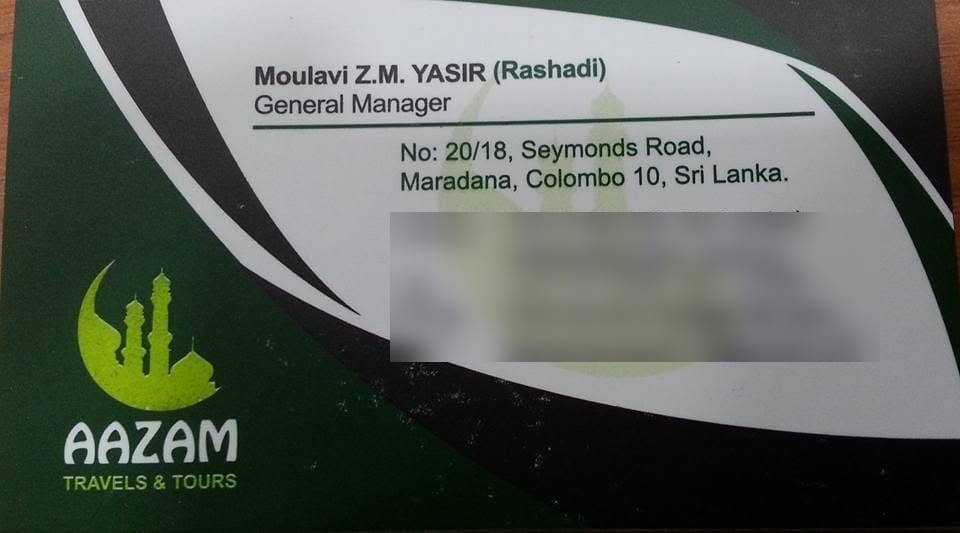
Mr. Yasir, 40, is from Nuwara Eliya, in Sri Lanka’s central hills. The title his supporters use is one he also used himself. A business card from his time in Colombo describes him as “Moulavi Z.M. Yasir,” general manager of Aazam Travels & Tours, an agency in Maradana that listed a contact number in Mecca.
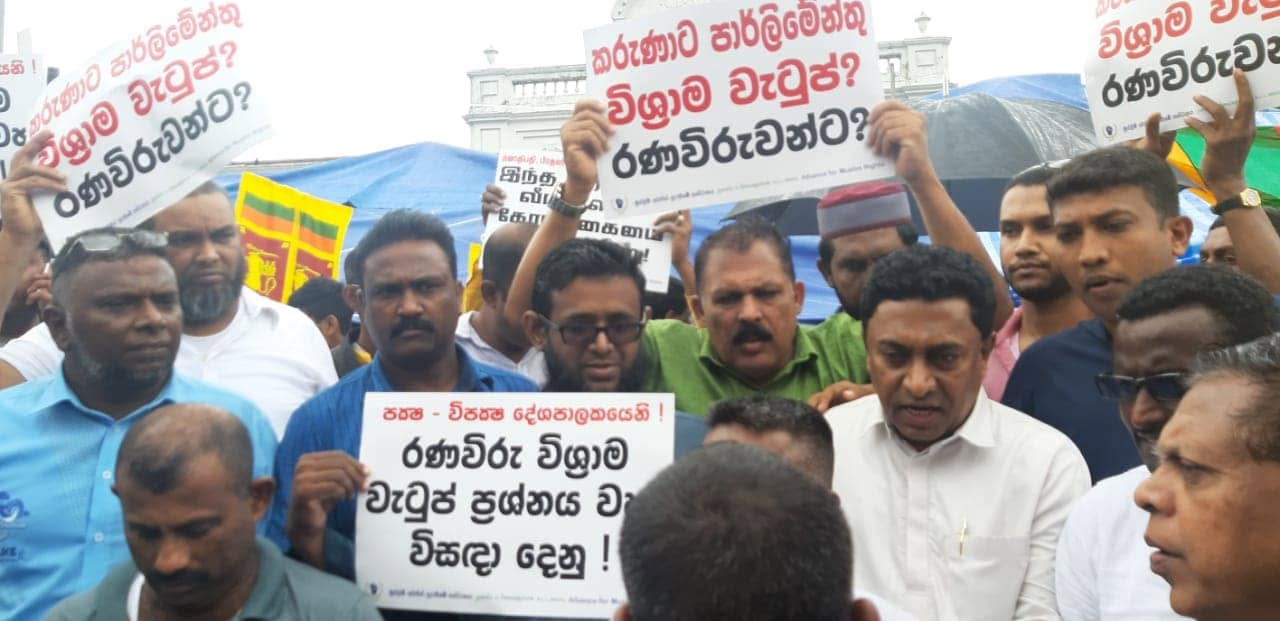
In 2015, he and his wife, Farika Rizmia, now 35, were working at a hotel in Malaysia owned by Abdul Rasheed, an Indian-born businessman who had become a Malaysian citizen. By 2019, Mr. Yasir was back in Colombo, where he joined a street protest on behalf of Sri Lanka’s war veterans. Demonstrators held signs in Sinhala asking why Karuna, the former Tamil Tiger commander turned politician, should draw a parliamentary pension while soldiers went without.
With Mr. Rasheed’s help, the couple later moved to Enmanankondan, a village near Uchipuli on the Ramanathapuram coast, across the Palk Strait from Sri Lanka. They lived with Mr. Rasheed’s sister-in-law, Siddhi Sulaiha.
What was he accused of?
Prosecutors said the couple gave false details to obtain Aadhaar cards, India’s national identity document, and had their names added to Ms. Sulaiha’s family ration card. The Aadhaar cards were then used to buy two SIM cards. Mr. Yasir handed both to Mohamed Miflal Maulavi, a man living in Karachi, Pakistan, whom investigators linked to the Islamic State.
One of those numbers, prosecutors said, was used to set up the “Army Public School” account, a name borrowed from a chain of schools that educate the children of Indian military personnel. Indian investigators have found the same ruse in other operations, which they attributed to Pakistani intelligence.
The case went to the Q Branch, the Tamil Nadu police unit that investigates terrorism and espionage. In December 2021, its officers arrested Mr. Yasir, Ms. Rizmia, Mr. Rasheed and Ms. Sulaiha. The couple were held in the special camp for foreign nationals inside the Tiruchi central prison complex. Mr. Rasheed and Ms. Sulaiha were released on bail.
What did the court decide?
The trial ended on Feb. 17. Judge Mehboob Ali Khan, the principal district judge in Ramanathapuram, found that Mr. Yasir and Ms. Rizmia had obtained Indian identity and ration documents through forgery. He sentenced each to two years in prison and a fine of 5,000 rupees. Mr. Rasheed was convicted of helping them and of entering India irregularly, and received three years. Ms. Sulaiha was acquitted.
The judge gave the defendants a month to appeal. Ms. Rizmia and Mr. Rasheed did. Mr. Yasir did not, and in April he was moved to Puzhal Central Prison in Chennai to serve his sentence.
Why do his supporters say nothing was proven?
Part of the answer lies in what Sri Lankans were told. A day after the verdict, a Sri Lankan Muslim news website reported that the court had declared the couple innocent and freed them, and that they would soon be sent home through the Sri Lankan mission in Chennai. The court had convicted them. Nine months later, the same claim was being repeated in Parliament.
The five years his supporters cite are closer to the mark. Mr. Yasir has been confined since December 2021, first in the Tiruchi camp and then in prison, and he spent most of that time awaiting trial.
Can Sri Lanka’s government bring him home?
Not in the way his supporters want. Governments routinely press for consular access and fair treatment for citizens jailed abroad, but they rarely ask another country to overturn a conviction handed down after a contested trial. Colombo would be asking India to set aside a prosecution that grew out of an investigation into espionage against its armed forces.
The case is also sensitive at home. Indian investigators linked Mr. Yasir’s contact in Karachi to the Islamic State, the group that claimed responsibility for the 2019 Easter Sunday bombings that killed more than 260 people in Sri Lanka. Mr. Yasir has not been accused of any role in those attacks.
Why is his case being compared with Anojan’s?
Supporters point to Sivarasa Anojan, a Tamil migrant worker from Sri Lanka whose death sentence in Saudi Arabia was overturned in October after the government sent lawyers and diplomats to fight for him. A Facebook post shared widely on Nov. 19 asked whether the state valued a Muslim citizen less than a Tamil one.
The two cases have little in common. Mr. Anojan, 27, from Natpittimunai, near Kalmunai in eastern Sri Lanka, posted a Facebook comment in June that was taken as an insult to the Prophet Muhammad. He deleted it about 10 minutes later and posted a video apology. At his first hearing in Saudi Arabia, he had no lawyer and no contact with his embassy, and he pleaded guilty. In September, an appeals court reclassified the offense as a hadd crime, which carries a fixed punishment under Islamic law, and sentenced him to death.
Colombo stepped in because a citizen faced execution for something he wrote, after a hearing at which no one spoke in his defense. Mr. Yasir is serving two years for document fraud after a full trial, with the right to a lawyer and a right of appeal he did not use.
The campaign for Mr. Anojan also crossed community lines. In September, Muslim and Tamil lawmakers wrote jointly to Saudi Arabia’s foreign minister asking for royal clemency. Mr. Rahman told Parliament that month that the president, the prime minister or the foreign minister should lead the mission to Riyadh in person. Faiszer Musthapa, a Muslim lawmaker and senior lawyer, joined the legal team that took the case to the Saudi Supreme Court, which set aside the death sentence on Oct. 13. Saudi prosecutors closed the case on Nov. 9.
The Facebook post that set the two men side by side did not mention the SIM cards, the WhatsApp account or the espionage inquiry.