

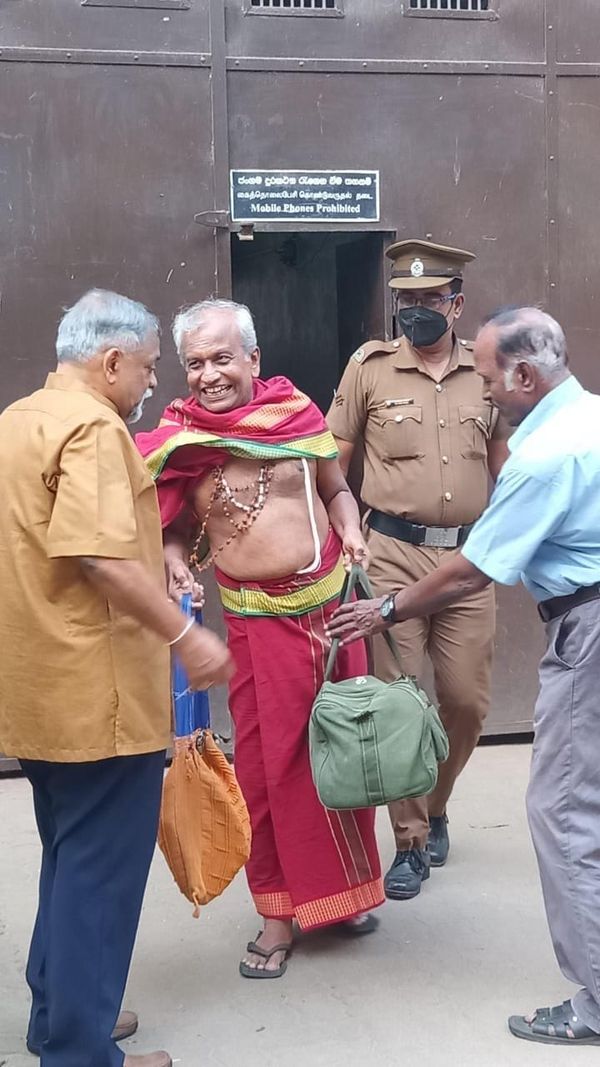
COLOMBO, Sri Lanka — A Hindu priest who spent about 22 years in prison in connection with the 1999 assassination attempt on President Chandrika Bandaranaike Kumaratunga has asked a Tamil nationalist Facebook page to stop publicising his case, saying the renewed attention has threatened the life he has rebuilt since his release.
In an open letter posted on Facebook on Tuesday, the priest, Brahmasri Chandra Iyer Ragupathi Sharma, asked the page, Inam Ondrin Kural, or Voice of a Race, to stop using his imprisonment and his family’s experiences in a debate over how religious figures are treated in Sri Lankan prisons.
“Please allow us to live in peace,” he wrote. “We were not allowed to live properly while inside prison. Please allow us to live peacefully in our own country.”
The Hindu Priests’ Association has backed his appeal.
The page had compared Mr. Sharma’s treatment in prison with that of Galagoda Aththe Gnanasara Thero, a Sinhala Buddhist nationalist monk whose removal from his robes after his imprisonment has drawn objections from the country’s most senior Buddhist clergy. President Anura Kumara Dissanayake has since discussed changes to prison rules on religious attire. The post argued that a Hindu priest had faced severe restrictions on his religious practice in custody without receiving the institutional support now being sought for a Buddhist monk.
The post also stated that Mr. Sharma had been acquitted in 2015. He was not. It was his wife, Vasanthi Ragupathi Sharma, who was acquitted that year, after about 15 years in detention. Mr. Sharma remained in prison until he was pardoned in October 2022.
The case stems from the December 1999 suicide bombing at an election rally in Colombo. The attack, carried out by the Liberation Tigers of Tamil Eelam, killed more than two dozen people and left Ms. Kumaratunga blind in one eye.
Mr. Sharma, then the chief priest of a Hindu temple, was arrested by the Terrorist Investigation Division at his temple residence on Feb. 9, 2000. His wife was arrested on Feb. 24. They were held in separate prisons, and their three children were sent to a Hindu orphanage in Batticaloa, where they grew up largely without their parents. The couple were indicted in May 2002 in Colombo High Court case No. 891/02 and spent more than 12 years in detention before any verdict was reached.
The Facebook post said that prison authorities removed Mr. Sharma’s sacred thread, confiscated his religious objects, barred him from performing Hindu rituals and forced him to eat meat. It also said he was denied a proper opportunity to defend himself in the early stages of his detention.
The post said he had been sentenced to 300 years in prison. On Sept. 30, 2015, the Colombo High Court sentenced Mr. Sharma and a co-defendant, Velayutham Varatharajah, to terms totalling hundreds of years. The sentences ran concurrently, for an effective term of 30 years.
On Oct. 24, 2022, President Ranil Wickremesinghe pardoned eight Tamil prisoners, including Mr. Sharma and two others convicted in connection with the attack on Ms. Kumaratunga, who consented to their release. The pardons followed discussions with Tamil lawmakers, a preliminary review involving the Ministry of Defence and consultations with justice officials. The three had been serving 30-year terms and had spent about 22 years in custody.
In his letter, Mr. Sharma asked why his past had been revived without his consent.
“Did you think about my situation?” he wrote. “Did you think about my wife’s situation? Did you think about my children’s situation?”
He asked whether those now writing about his case had helped his family when it was struggling. “Did you do anything for my children’s education?” he wrote. “Why has this concern appeared only now?”
Mr. Sharma said he lives under the care of a religious charitable organisation, which questioned him after the post appeared. He said intelligence personnel continue to question him. “I cannot go to prison again,” he wrote. He said he had forwarded the post to the authorities but did not say which ones or whether any action had followed.
He criticised the page’s administrator for publishing from abroad without considering the consequences for someone living in Sri Lanka. “If you want to confront someone, you can directly confront the Venerable Gnanasara Thero or President Anura Kumara Dissanayake through Facebook, letters or in person,” he wrote. “Why drag my family and me into this unnecessarily? What have we done to you?”
He said his imprisonment did not entitle others to use his photograph, personal history or family circumstances for political commentary. “Before making my affairs public, why did you not contact me and obtain my consent?” he wrote.
In a statement on its Facebook page, the Hindu Priests’ Association described Mr. Sharma as a spiritual teacher who had endured great hardship and should be allowed to continue his religious work in peace. It warned against using individuals as political instruments and against circulating information without checking its accuracy, saying that even well-intentioned posts could cause serious harm. The statement did not address the errors in the original post.
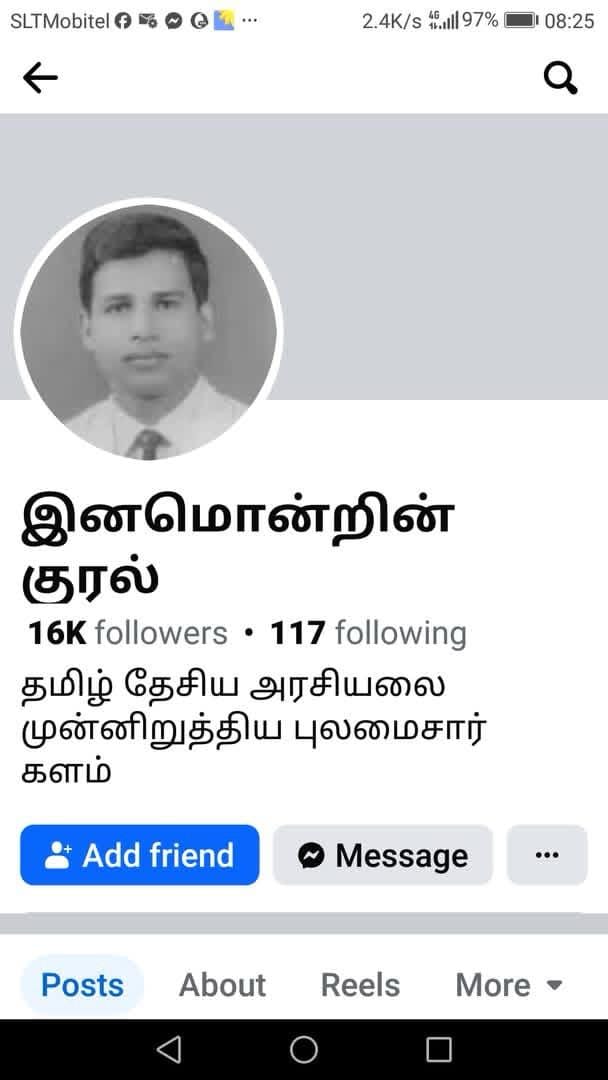
Inam Ondrin Kural, an ultranationalist Tamil Facebook page, frequently publishes commentary and political narratives favourable to the Tamil National People’s Front (TNPF) and its leader, Gajendrakumar Ponnambalam. Several people familiar with the page described its administrator as a lawyer involved in Tamil nationalist politics. Jaffna Monitor has not independently verified the administrator’s identity or established any formal connection between the page and the TNPF.
Mr. Sharma ended his letter with a plea. “I am begging you,” he wrote. “Please allow me to live peacefully in one place.”