
By M.R. Narayan Swamy
“Ma, if something isn’t done about Pa’s security, I know I’ll soon have to come back for his funeral.”
Rahul Gandhi, now a Congress star, issued this chilling warning about what could happen to his father, former Prime Minister Rajiv Gandhi, just before leaving for the United States to continue his studies.
Both his mother, Sonia Gandhi, and his sister, Priyanka Gandhi, were stunned to hear him.
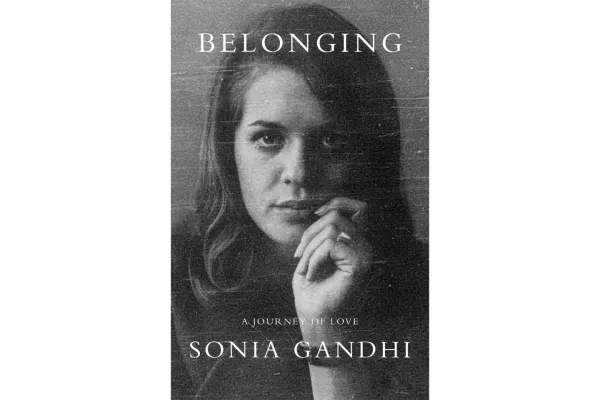
“His words made my hair stand on end and would come back to haunt me when I was struggling to fall asleep while Rajiv Gandhi was away,” writes Sonia Gandhi in her racy autobiography, Belonging: A Journey of Love (HarperCollins India), which became a bestseller within days of hitting the market.
Friend-turned-foe V.P. Singh withdrew Rajiv Gandhi’s Special Protection Group (SPG) security immediately after succeeding him as prime minister in 1989, clearly out of spite and without considering the long-term consequences.
And so Rajiv Gandhi, once among the world’s best-protected leaders, had to make do with virtually no security, a gaping hole that the scheming Liberation Tigers of Tamil Eelam (LTTE) exploited to assassinate him.
Sonia has written at length about Rajiv Gandhi’s final hours and what she felt when she and her family heard about his killing. Much of this has never been made public until now.
She says Rajiv Gandhi had invited her to accompany him when he visited Tamil Nadu as part of a hectic election campaign in May 1991, but she declined as she felt very tired – a decision she would rue for many years.
It was Priyanka, her daughter and the younger of two children, who broke the news of Rajiv Gandhi’s death to a stunned Sonia.
Breathing fast and shallow and the colour drained from her face, Priyanka told her mother that she got a call about a bomb explosion at the election rally at Sriperumbudur near Chennai on the night of May 21, 1991.
“They are saying that twelve people around Papa are dead, but he is okay,” Sonia quotes her as saying. “It can’t be possible. If twelve people have died, he must be injured; he must be in hospital. We’ll have to go to Madras, Mama. Start getting dressed.”
Sonia then recounts what went through her mind in those agonizing moments.
“I couldn’t understand what she was saying; she was speaking fast, and nothing was making sense. Why Madras? Was Rajiv in Madras? What bomb? It was less her words than the dread in Priyanka’s voice that froze me into realising what she really meant. I couldn’t breathe. I stood up; she stepped forward and held me in her arms. I could hear her heart thumping wildly against my chest.”
Minutes later, after making some hectic telephone calls, Priyanka returned to Sonia to give her the devastating news: “Papa is dead.”
Sonia recalls: “I looked into her eyes, desperately hoping this was a nightmare from which I would awake. She looked back at me, her gaze piercing mine, mirroring my horror.
I crumpled in my daughter’s arms. ‘I should have gone with him,’ I cried out, again and again. ‘Why didn’t I go with him?’ She (Priyanka) said nothing.”
After Rajiv Gandhi’s body was brought back to a New Delhi hospital, Sonia recalled that he had long ago made a donation of his eyes. She wanted to talk about this to a family physician, Dr. Mathur.
The doctor’s bitter response in Hindi numbed Sonia: “Eyes? What are you talking about? There’s nothing left, nothing!”
The doctor’s words “dealt me a blow that made me sick to the stomach; it made me want to throw up. I couldn’t breathe. I wanted to die. I should have gone with him. I should have been there too.”
She added: “The lacerating force that graphic reply had brought home to me the brutality of the death of my beloved… I wailed aloud till I had no tears left.”
Rahul Gandhi, who was in the US when his father was killed, was to have joined Rajiv Gandhi in the final leg of the election campaign.
“Had there not been a hitch in his schedule, he would have been in Sriperumbudur, right by Rajiv’s side.”
Sonia is, of course, in no doubt that the LTTE killed her husband, although she moans that the Narendra Modi government’s decision to shut down the Multi-Disciplinary Monitoring Agency (MDMA) in 2022 buried “the truth behind the conspiracy”.
“The perpetrators directly involved in the plot were indeed helped by networks in both Sri Lanka and Tamil Nadu.”
Sonia says she learnt that close to a year before the assassination, an intercept of VHF communication often used by the LTTE had been picked up and translated from Tamil.
“It said coldly: ‘Blow Rajiv Gandhi’s head off. Eliminate him. Kill him.’
“The IPKF head of intelligence had immediately alerted the Intelligence Bureau. But that chilling intercept, instead of being investigated and followed up, was ignored.
“The removal of Rajiv’s security by V.P. Singh had sent out a clear message, from the top down to the lowest levels of governance: Rajiv’s safety was of no consequence.
“There were further, later intercepts, but they had not even been decoded.”
Sonia writes that the 1987 India-Sri Lanka Accord “conceded a number of important concessions to the Tamil population, including an autonomous province within Sri Lanka” but adds that feelings ran high amongst sections of the Sinhalese who were not in its favour.
She says when she and Rajiv Gandhi reached Colombo for him to sign the agreement, “I could feel the tension in the air that lasted throughout our brief stay”.
Sonia says that after the attack on Rajiv Gandhi at a guard of honour in Colombo by a naval rating, the Indian leader suffered a large bruise and swelling on his shoulder.
“He took painkillers for a number of days, but the blow had been fierce and, while the pain lessened, it lingered to the end of his days.”
The one Sri Lankan leader Sonia lavishly praises is former president Chandrika Kumaratunga. She calls her “a woman leader to whom I had always felt a particular closeness, albeit unspoken”.
The Italy-born Sonia – who married Rajiv Gandhi in 1968 – says she admired Chandrika “for her courage, her strength of character, and her determination to redress the injustice being done to the minority Tamil population in her country”.
Sonia adds: “It was always a pleasure for me to meet her, either officially while she was president of Sri Lanka or when she came to Delhi privately or on the way to see her family abroad.
“An imposing figure with an infectious, hearty laugh, she’d share in her deep voice anecdotes of people or incidents we both knew. There was much for us to talk about together, our own experiences and challenges, which were in some ways similar, in our personal tragedies and in finding our way in politics in a man’s world.”
In the very readable book, Sonia doesn't say what feelings, if any, came over her when LTTE chief Prabhakaran, who had widowed her, was killed. This happened in May 2009, when Sonia led the Congress-led UPA alliance to an unexpected victory in the parliamentary elections for a second time in a five-year row. Indeed, after talking about Rajiv Gandhi's assassination, she does not return to the subject of the LTTE except once, when, in the context of Congress-DMK ties, Sonia refers to the Tigers as a terrorist group.