
By Aruliniyan Mahalingam
Jaffna, 13 November 2026
The government plans to take control of the four district general hospitals run by the Northern Provincial Council. Many doctors in the region say the change is overdue. Tamil politicians say it strips the council of one of the few powers it actually exercises.
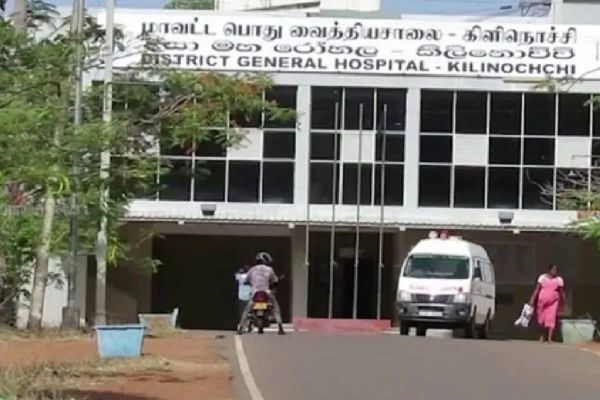
President Anura Kumara Dissanayake announced the plan in his budget speech on Thursday. The district general hospitals in Mannar, Mullaitivu, Vavuniya and Kilinochchi will be transferred to the central government, along with those in Gampaha and Avissawella in the Western Province. The speech said the change was “in response to the requests of the people of those areas” and would provide “an optimal service at the level of national hospitals.”
According to the speech, these six are the only district general hospitals out of the country’s 20 that are still run by provincial councils. Once they move, the Ministry of Health will run all 20. The speech did not say when the transfers would take place or how much money would follow them.
The proposal drew criticism in Parliament on Friday, the first day of the budget debate. Shanakiyan Rasamanickam, the parliamentary group leader of the Ilankai Tamil Arasu Kachchi, said the government was taking over provincial hospitals while still not holding provincial elections. “You are taking away power that was given to the Provincial Council, whilst not having Provincial Council elections,” he said.
What the law allows
The 13th Amendment to the Constitution, passed in 1987, places “the establishment and maintenance of public hospitals” on the Provincial Council List. Teaching hospitals and hospitals established for special purposes are excluded and stay with the centre. Jaffna Teaching Hospital, the largest in the North, is already run by the ministry.
Taking a hospital from a province has not required a change in the law. This year, the Health Ministry has used gazette notices to take over the base hospitals at Puttalam, Dambulla and Mahiyanganaya and the Horana District General Hospital. Each transfer followed a Cabinet decision and had the agreement of the provincial governor. At Mahiyanganaya, staff were allowed to choose whether to join the central ministry.
In the North, that agreement rests with the governor, N. Vethanayahan, who is appointed by the President. The Northern Provincial Council has had no elected members since its term ended in October 2018.
Why doctors want the change
The four hospitals have struggled for years with shortages of staff and equipment. In June, the Health Minister, Nalinda Jayatissa, and the governor chaired a meeting in Jaffna where provincial officials described the problems. Specialist posts at all four hospitals were being filled by doctors on temporary attachment instead of by permanent appointments. Thirty-four of the province’s 55 divisional hospitals had no nurses, and recruitment to basic grade posts had been frozen for 11 years. The CT scanner at Vavuniya was faulty, and Mannar had none. The governor asked the ministry to fund the North’s district hospitals at the same level as the district hospitals it runs in other provinces.
A senior medical specialist in Jaffna who is familiar with the provincial health administration spoke on condition of anonymity. He said the provincial council could not meet the cost of medicines, staff and upgrades at hospitals of this size, because its allocations are small and it raises almost no revenue of its own. Hospital development and even routine matters need several layers of approval, he said, and doctors face delays over requests as ordinary as leave to travel overseas. With no elected council, those decisions fall to the governor and to provincial officials.
He said many doctors in provincial hospitals would welcome central control, because they expect it to mean fewer obstacles and faster development. He said some of the political objections reflected a wish to keep influence over the hospitals, including over appointments.
The specialist said he understood why the move was sensitive for Tamils, many of whom regard devolution as a central political demand. But he said the purpose of a hospital is to treat patients, and who runs it matters less than the care it provides. The situation could be different, he said, if the provinces had real financial resources, the power to raise revenue and full administrative authority. Until they do, he said, central administration would serve patients better.
In Mannar, the demand has also come from the public. At a district development committee meeting in August last year, a mother asked for the hospital to be brought under the central government. She said people who need urgent treatment often have to travel to Jaffna Teaching Hospital because their own hospital lacks the facilities. In the same month, the hospital’s patient welfare association made the same request to the governor. The association said the hospital had no permanent specialists and had been upgraded from a base hospital without any increase in staff.
The Roman Catholic Bishop of Mannar, Gnanapragasam Antonypillai, has pressed the case repeatedly. Speaking at the hospital on 28 August at a welcome for eight newly appointed house officers, he said efforts were underway to bring it directly under the central government. He called this a priority for the people of the district and asked for political and official support.
Some of what holds back the northern hospitals is already decided in Colombo. When the Mannar association asked for permanent specialists, the governor said he would take the request to the central Health Ministry. Staff numbers are approved by the Department of Management Services, which is also a central body. The governor’s office said this year that the department had carried out on-site staffing reviews in the province for the first time in about 13 years.
Why Tamil politicians object
The bishop’s position drew a public rebuke. In early September, Suresh Premachandran, a former member of Parliament and leader of the Eelam People’s Revolutionary Liberation Front, told reporters in Jaffna that it was not right for the bishop to keep calling for the hospital to be handed to the centre. He said the hospital’s shortcomings were real but should be fixed by filling its vacancies. Handing it over, he said, would mean giving back powers that Tamils had won through long struggle, and it would set a precedent. He warned that schools could be next. He said his criticism was not directed at the bishop or at the Christian community.
At the Mannar development committee meeting in August last year, Dr. P. Sathiyalingam, a national list member of Parliament for the Ilankai Tamil Arasu Kachchi, strongly opposed the takeover.
The four northern hospitals have been the subject of a takeover plan before. On 14 June 2021, President Gotabaya Rajapaksa’s Cabinet approved moving nine district general hospitals, including these four, to the Health Ministry. C.V.K. Sivagnanam, a former chairman of the Northern Provincial Council, wrote to the governor at the time asking her to stop it. “When the government takes over these hospitals, people will no longer feel that these are their hospitals,” he said. He said the Tamil National Alliance as a whole opposed the move. By the end of 2023, the ministry was running the other three hospitals on that list, Matale, Nawalapitiya and Embilipitiya. The four northern hospitals stayed with the province.
A test case at Tellippalai
A similar dispute has played out this year over Tellippalai Base Hospital, home to the cancer hospital that serves the whole Northern Province.
In June, members of Parliament from the National People’s Power pushed resolutions through the Tellippalai divisional coordinating committee and the Jaffna district coordinating committee calling for the hospital to be handed to the central government. The effort was led by Ramalingam Chandrasekar, the fisheries minister, and S. Sri Bavanandarajah, a member of Parliament for Jaffna. The Ilankai Tamil Arasu Kachchi, the All Ceylon Tamil Congress and the Eelam People’s Democratic Party objected. They argued that provincial powers should not be taken back in the name of development, and that schools moved to national control had not improved as promised.
Gajendrakumar Ponnambalam, the leader of the All Ceylon Tamil Congress, asked whether Jaffna Teaching Hospital, already under central control, had enough staff and facilities. Ramanathan Archchuna, an independent member of Parliament for Jaffna and a physician, supported the transfer. In September, staff and consultants at the hospital were reported to want the whole hospital moved to the central ministry, saying the provincial government received too little money to run the cancer unit.
When the Health Minister visited the hospital in June, he set out three options. The hospital could stay with the provincial council and receive money, staff and equipment from the centre. The cancer unit alone could be transferred. Or the whole hospital could be transferred. He said the first option would probably be the least controversial.
On 20 October, central Health Ministry officials and the governor agreed that the cancer hospital would come under the ministry in the future. Until then, the two administrations would work together under a memorandum of understanding. The governor said there were legal and procedural difficulties in transferring provincial hospitals.
What the North would keep
The Northern Provincial Council runs 117 hospitals, and the transfer would leave it without a district general hospital. Its largest institutions would be base hospitals such as those at Point Pedro, Tellippalai and Mallavi. In the Eastern Province, the ministry already runs the district general hospitals at Trincomalee and Ampara, as well as the Batticaloa Teaching Hospital.
The National People’s Power promised in its 2024 manifesto to hold the long-delayed provincial council elections. The government has said it will hold them once Parliament passes the necessary legislation and the delimitation of electorates is complete. It has not announced a date. Any council elected later would take office without the four hospitals.