
TEHRAN — March 2, 2026
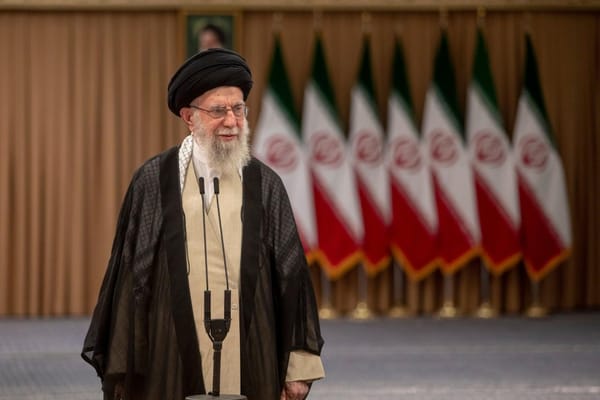
He moved rarely and unpredictably. His offices and residence in central Tehran — known collectively as the Beit Rahbari, or Leader’s House — were protected by hardened construction, reinforced underground chambers, and multiple layers of physical and electronic security. Former Iranian officials have said the descent from the surface to his deepest bunker could take several minutes by a secured elevator. His communications were routed through tightly controlled channels designed to limit interception. His personal protection, overseen by elite units of the Islamic Revolutionary Guard Corps, operated on a single principle: ensuring his safety through secrecy and unpredictability.
On Saturday morning, February 28, that defense failed.
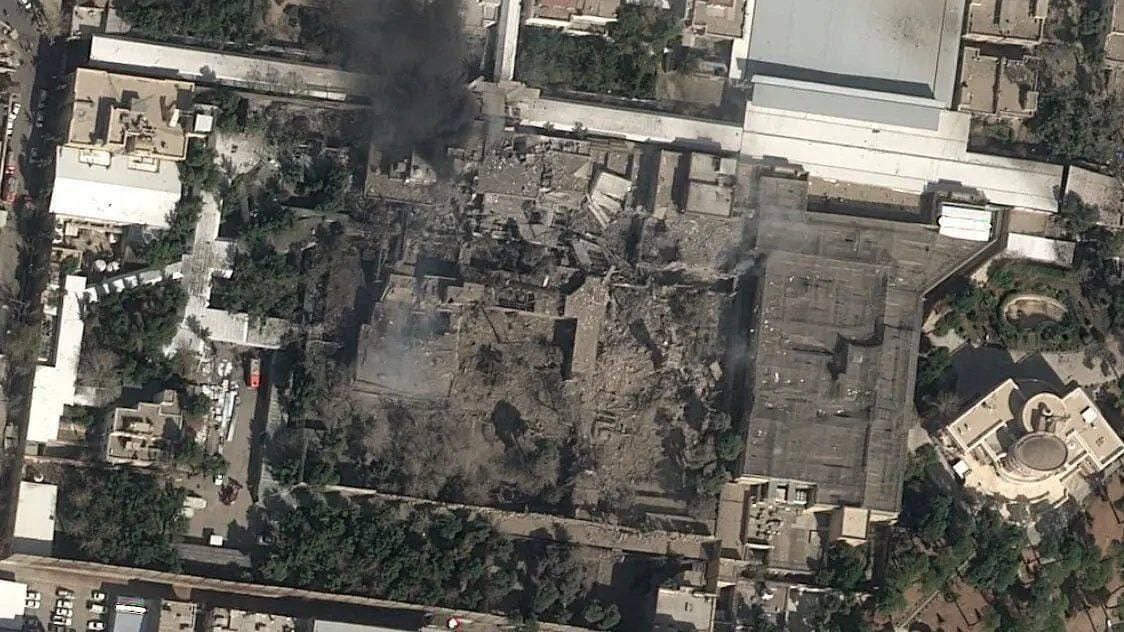
At 9:40 a.m. Tehran time, precision-guided Israeli munitions struck the compound simultaneously from multiple directions. Iranian state media reported that Khamenei was inside his office at the time and was killed in the strike.
Current and former officials from the United States, Israel, and allied governments, as well as regional defense analysts, spoke to Jaffna Monitor on condition of anonymity because they were not authorized to discuss classified operations. Their accounts describe an operation built not on sudden discovery, but on years of surveillance — and a brief moment when intelligence certainty aligned with operational opportunity.
Years of watching
American and Israeli intelligence services had maintained persistent surveillance of Khamenei’s movements and leadership compounds for years, officials told Jaffna Monitor. The surveillance relied on overlapping intelligence disciplines: reconnaissance satellites that monitored physical infrastructure and vehicle movements; signals intelligence systems that tracked communication patterns; and long-term behavioral analysis of leadership routines.
“You are not watching to catch him in a single instant,” a former Western intelligence official told Jaffna Monitor. “You are watching to understand the system around him — his rhythms, his security posture, the differences between routine activity and leadership presence. That understanding is built slowly.”
Signals intelligence proved especially important. Khamenei’s communications were heavily encrypted and often physically isolated from broader networks, making direct interception difficult. But intelligence agencies could still analyze communication patterns — the volume of messages, their timing, and the routing between facilities.
When communication traffic suddenly increases or changes structure, it tells you something,” a former official told Jaffna Monitor. “It may indicate preparations, movement, or leadership coordination. You do not need to read the message itself to understand its significance.
Officials said the intelligence picture became significantly clearer during the June 2025 conflict between Iran and Israel, when Iranian leadership operated under acute military pressure. During that period, intelligence agencies observed how Khamenei’s security apparatus relocated leadership figures and managed communications during wartime conditions.
“The June conflict gave intelligence services something rare — a real-world stress test of his protection system,” a former official familiar with the assessments told Jaffna Monitor. “They observed how leadership moved when they believed they were at risk. That behavioral data was analyzed carefully afterward.”
The meeting that created vulnerability
In the days before the strike, intelligence analysts detected what officials described as an unusual convergence of indicators.
Signals intelligence showed changes in communication activity among senior Iranian military and political leadership. Satellite imagery detected increased security presence and vehicle arrivals at the leadership compound. Analysts assessed with high confidence that a senior leadership meeting was scheduled for Saturday morning.
“When leadership converges physically, it creates exposure,” a regional military analyst told Jaffna Monitor. “From an intelligence perspective, those moments provide the highest certainty.”
The intelligence was rapidly shared between allied governments. Officials said military planners had previously prepared strike options but had not executed them due to uncertainty about Khamenei’s precise location.
That changed when the intelligence reached what one official described to Jaffna Monitor as “actionable certainty.”
“Opportunities like this do not remain open for long,” the official said. “Once intelligence confidence crossed the operational threshold, the decision process moved quickly.”
Launch and strike
Israeli strike aircraft departed from forward operating positions, according to officials familiar with the operation who spoke to Jaffna Monitor. The exact launch location and flight path remain classified.
Officials gave conflicting accounts of when the final strike authorization was issued. One official said the order was given the night before, after intelligence confidence had been assessed and confirmed at the highest levels. Another said the authorization came within hours of the strike itself, following a final review of real-time surveillance data. Jaffna Monitor could not resolve the discrepancy — and a third official, when asked directly, declined to address the timeline at all, saying only that "the process followed established protocols."
Approximately two hours later, at 9:40 a.m. Tehran time, precision-guided munitions struck the leadership compound.
Multiple structures were hit simultaneously, officials said, a tactic designed to ensure target destruction and reduce the risk of leadership escape.
Despite Iran’s extensive air defense network — which includes long-range radar systems and surface-to-air missiles — the strike achieved what military officials describe as tactical surprise.
“Tactical surprise does not mean Iran was unaware of military risk,” a European defense analyst told Jaffna Monitor. “It means the strike occurred faster than their defensive system could respond.”
Air defense systems operate within physical limits. Radar must detect incoming threats, identify them, assign interceptors, and launch defensive missiles. That process takes time.
“If a strike is launched from sufficient distance, using precision weapons and carefully planned timing, interception becomes extremely difficult,” the analyst said.
Why his security failed
Officials and analysts told Jaffna Monitor that the operation did not reflect a failure of physical protection alone.
Khamenei’s compounds were among the most fortified leadership facilities in the world. His security detail was extensive and highly trained.
What failed, officials said, was secrecy.
“Security ultimately depends on controlling information,” a former senior intelligence officer told Jaffna Monitor. “If an adversary can accurately determine your location and timing, physical defenses alone cannot guarantee protection.”
Officials declined to confirm whether the intelligence included human sources inside Iran’s leadership structure, technical surveillance breakthroughs, or a combination of methods.
But several officials emphasized that the precision of the strike indicated a high degree of intelligence confidence and suggested the possible involvement of human sources.
“When operations involve high-profile targets, intelligence agencies rely on multiple independent confirmations,” a former official told Jaffna Monitor. “That level of certainty is not achieved casually.”
The vulnerability arose from a basic requirement of governance: Khamenei had to meet with his senior leadership.
“He could not govern from complete isolation,” a former intelligence official told Jaffna Monitor.
A culmination of long-term intelligence effort
Officials described the strike as the culmination of years of intelligence collection and analysis.
“It was not a single breakthrough,” a Western official told Jaffna Monitor. “It was the accumulation of thousands of observations — until the intelligence picture became clear enough to act.”
Much of the intelligence behind the operation is expected to remain classified indefinitely.
But intelligence officials said the operation demonstrated a broader reality of modern conflict: even the most heavily protected leaders remain vulnerable when persistent surveillance aligns with operational opportunity. Analysts at international security think tanks have long warned that advances in satellite surveillance have significantly reduced the ability of national leaders to remain hidden.
“In intelligence work, certainty rarely appears suddenly,” the official said. “It emerges gradually — and when it does, the window to act may be very brief.”
Editor’s Note on Sourcing
This report is based on interviews conducted by Jaffna Monitor with current and former officials from the United States, Israel, Europe, and regional governments, as well as defense and intelligence analysts familiar with Iran’s leadership security arrangements. All spoke on condition of anonymity because they were not authorized to discuss classified intelligence or military operations publicly. Information was corroborated through multiple officials and independent analysis wherever possible. Israeli, American, and Iranian authorities declined to comment on specific operational and intelligence details. Some officials interviewed had prior professional contact with Jaffna Monitor, while others were reached through intermediaries familiar with the publication’s reporting. All requested anonymity due to the sensitivity of the subject.
Interviews for this report were conducted between February 28 and March 2, 2026.