
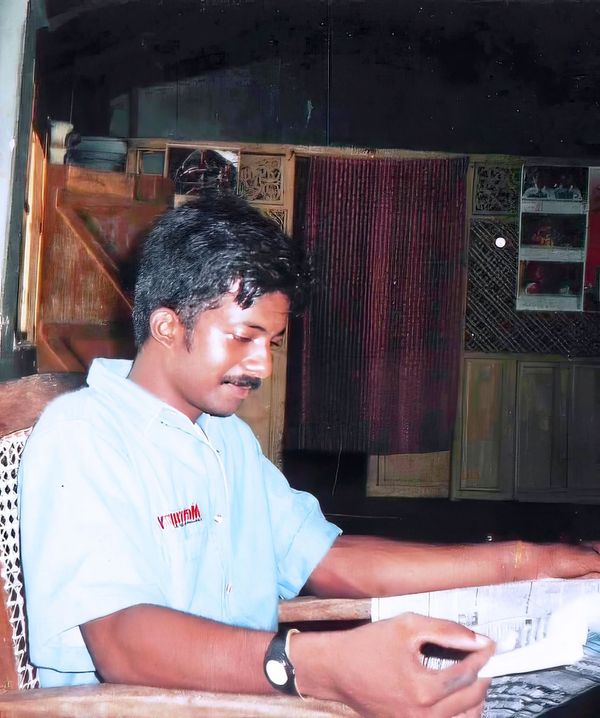
JAFFNA, Sri Lanka — Nineteen years after Sahathevan Nilakshan, a 22-year-old journalist and University of Jaffna student, was shot dead outside his home during a military curfew, no one has been charged in the case. His killing, former classmates and colleagues say, deprived not only Sri Lankan journalism of a promising young journalist but also the Tamil community of a potential future leader.
Mr. Nilakshan, a former student of Jaffna Hindu College, was remembered by teachers and fellow students as a gifted organizer whose leadership qualities were evident from his school days. Many of his juniors still affectionately refer to him as "Nila Anna" ("Brother Nila"), recalling his willingness to go to any length to help and mentor younger students, as well as his ability to inspire those around him.
Mr. Nilakshan, a media student at the University of Jaffna’s Media Resources Training Centre, was the editor of the student magazine Saaralam. He was killed on Aug. 1, 2007, one day after returning from a two-week journalism training program in Colombo. He had also served as president and later patron of the Jaffna Tamil Students’ Union.
According to multiple individuals with direct knowledge of the case, the killing was carried out by a group led by Gunaratnam Sugantheepan, a former medical student at the Faculty of Medicine, University of Jaffna. Mr. Sugantheepan left his medical studies to work with the Liberation Tigers of Tamil Eelam (LTTE) during the 2002-06 ceasefire period before later joining the Sri Lankan military after falling out with the LTTE. He was later shot dead near his home in Kokkuvil by LTTE gunmen.
According to accounts of the killing, the Jaffna Peninsula was under one of the strictest military curfews of the civil war when armed men arrived on motorcycles at Mr. Nilakshan's home in Kokkuvil between about 4 a.m. and 5 a.m. They called him outside and shot him dead in front of his parents before fleeing the scene.
The killing took place in an area under tight government and military control. Nearly two decades later, there has been no public explanation of how the assailants were able to move through the curfew and carry out the attack. No suspects have been prosecuted, and the investigation has produced no publicly known breakthrough.
Press freedom and human rights organizations have repeatedly cited Mr. Nilakshan’s killing as one of the many unresolved attacks on journalists during Sri Lanka’s civil war, pointing to it as evidence of the country’s enduring culture of impunity for crimes against the media.
His mother spent more than 15 years seeking justice for her son’s killing before dying a few years ago without seeing the case resolved.
On the 19th anniversary of his death, journalists and human rights advocates renewed calls for an independent and credible investigation, urging the Sri Lankan government to ensure accountability for crimes committed against media workers and to bring those responsible before the courts.
Mr. Nilakshan’s death remains one of dozens of unresolved cases involving journalists who were killed, disappeared, or forced into exile during Sri Lanka’s decades-long conflict, with only a handful of those cases resulting in successful prosecutions.