
By Aruliniyan Mahalingam
Just after midday on May 29, 1999, Muthulingam Ganeshkumar was bargaining over a motorcycle. He loved motorcycles almost as much as he loved guns.
He stood in the forecourt of Ivan’s, a well-known garage on Trincomalee Road in Batticaloa, run by a member of the town’s shrinking Burgher community. He was talking with Mohammed Ali Thahir, a trader from Eravur. His bodyguard stood a few feet away, with his deputy beside him. In a pickup truck parked nearby, four more armed men watched the street.
A slightly built young man who could have passed for a schoolboy rode into the yard on a bicycle. He parked, walked up to Ganeshkumar and hugged him tightly. Before anyone understood what was happening, the explosives strapped to his body went off.
Ganeshkumar, known across Sri Lanka's east by his nom de guerre, Razeek, was dead within seconds, along with his bodyguard, the trader and the bomber. His deputy died of his wounds hours later. Nine more people were wounded, several of them Razeek's own fighters. Ten motorcycles were destroyed, and the garage was left in ruins.
It was the first time the Liberation Tigers of Tamil Eelam, or LTTE, had used a suicide bomber to kill the leader of a rival Tamil group.
Razeek was 34. His career had lasted 16 years and taken him from schoolboy athlete to commander of one of the most feared armed groups in the east, a force that fought the LTTE alongside the Sri Lankan military and was accused of extrajudicial killings, abductions and extortion.
KARAITIVU
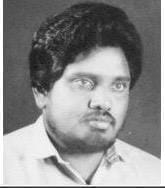
Razeek was born on Nov. 21, 1964, in Karaitivu, a coastal Tamil village in Ampara district and the birthplace of the scholar Swami Vipulananda. He came from a family of teachers. His father was from nearby Akkaraipattu and his mother from Karaitivu, and the family settled in her village.
In those years, Karaitivu belonged to the Eelam People's Revolutionary Liberation Front, or EPRLF. The LTTE had almost no foothold there. Much of the EPRLF's strength in the village came from P. Kirubakaran, a Karaitivu native who rose through the party and later became finance minister of the North-East Provincial Council set up under the 1987 Indo-Lanka Accord. His standing made Karaitivu one of the party's strongholds in Ampara district. In June 1990, an LTTE squad killed him in Chennai, along with the EPRLF's leader, K. Pathmanabha, and several others.
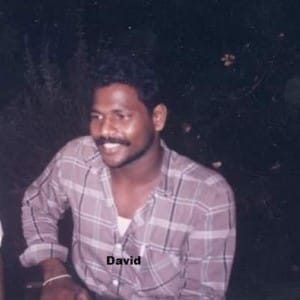
The squad was led by an LTTE gunman known as David, whose real name was Christopher Antony Mariyathas, from Polikandy in Jaffna. He died at sea a year later, on June 9, 1991, while on a mission to bring LTTE members back from India as the crackdown that followed Rajiv Gandhi’s assassination closed in.
As a young man, Razeek was known as a sportsman more than a firebrand. He was an athlete and practiced karate. At school, he joined the General Union of Eelam Students, the EPRLF's student wing. Then came the anti-Tamil pogrom of July 1983, which pushed a generation of young Tamils into the militant movements. In Karaitivu, most of them followed Kirubakaran into the EPRLF, and Razeek went with them.
INTO THE WAR
In early 1984, he was one of 120 EPRLF fighters sent to Uttar Pradesh in India for military training. He spent the next two years with the movement in the east before he was promoted and posted to Mullaitivu.
There, former EPRLF members say, he watched the Tamil armed struggle turn on itself. In 1986, the LTTE crushed the Tamil Eelam Liberation Organization, or TELO, and later that year turned its guns on the EPRLF. People who knew him then say that seeing his comrades killed by another Tamil movement made him an enemy of the LTTE for the rest of his life.
The Indo-Lanka Accord brought Indian troops to the island in 1987, and war soon broke out between them and the LTTE. Razeek worked informally alongside the Indians. He also grew close to Annamalai Varadaraja Perumal, the EPRLF politician who became chief minister of the new North-East Provincial Council in late 1988, and rose to regional commandant of the Civilian Volunteer Force, also known as the Tamil National Army.
A man from Ampara, studying in Jaffna at the time, remembers seeing Razeek ride past in a jeep, a red band tied around his forehead. They knew each other from home. Razeek recognized him and waved.
THE JUNGLE
The Indian Peace Keeping Force completed its withdrawal in March 1990, with the last troops leaving Trincomalee on March 24. For the EPRLF, which had staked everything on India’s protection, the pullout was close to a death sentence.
The LTTE, meanwhile, had grown stronger. President Ranasinghe Premadasa, determined to get the Indian army off the island, had struck an extraordinary bargain with the Tigers and quietly supplied them with weapons, even though they remained an armed separatist movement at war with his own state. The EPRLF lost its protector just as its enemy was gaining strength.
In Jaffna, people sometimes compared the LTTE to the komberi mookan, a snake with a grim reputation in Tamil folklore. After biting someone, it was said to climb a tree and wait for the smoke from the victim’s funeral pyre, so that it could be sure he was dead. Jaffna people saw the same unforgiving instinct in the Tigers. Defeating a rival was not the end of it. They kept going until the job was confirmed.
That is how the months after the withdrawal looked to people who lived through them. Former EPRLF members and former LTTE cadres told Jaffna Monitor that the Tigers moved against rival Tamil groups across the north and east with terrifying speed, and that any link to the EPRLF or the departing Indian forces, however slight, could make a person a target. The pursuit reached well beyond fighters and party officials. The LTTE ran detention and killing sites, including its notorious camp at Thunukkai. Former residents of several marginalized villages in Valikamam North said that in some communities, at least one man from nearly every household was killed.
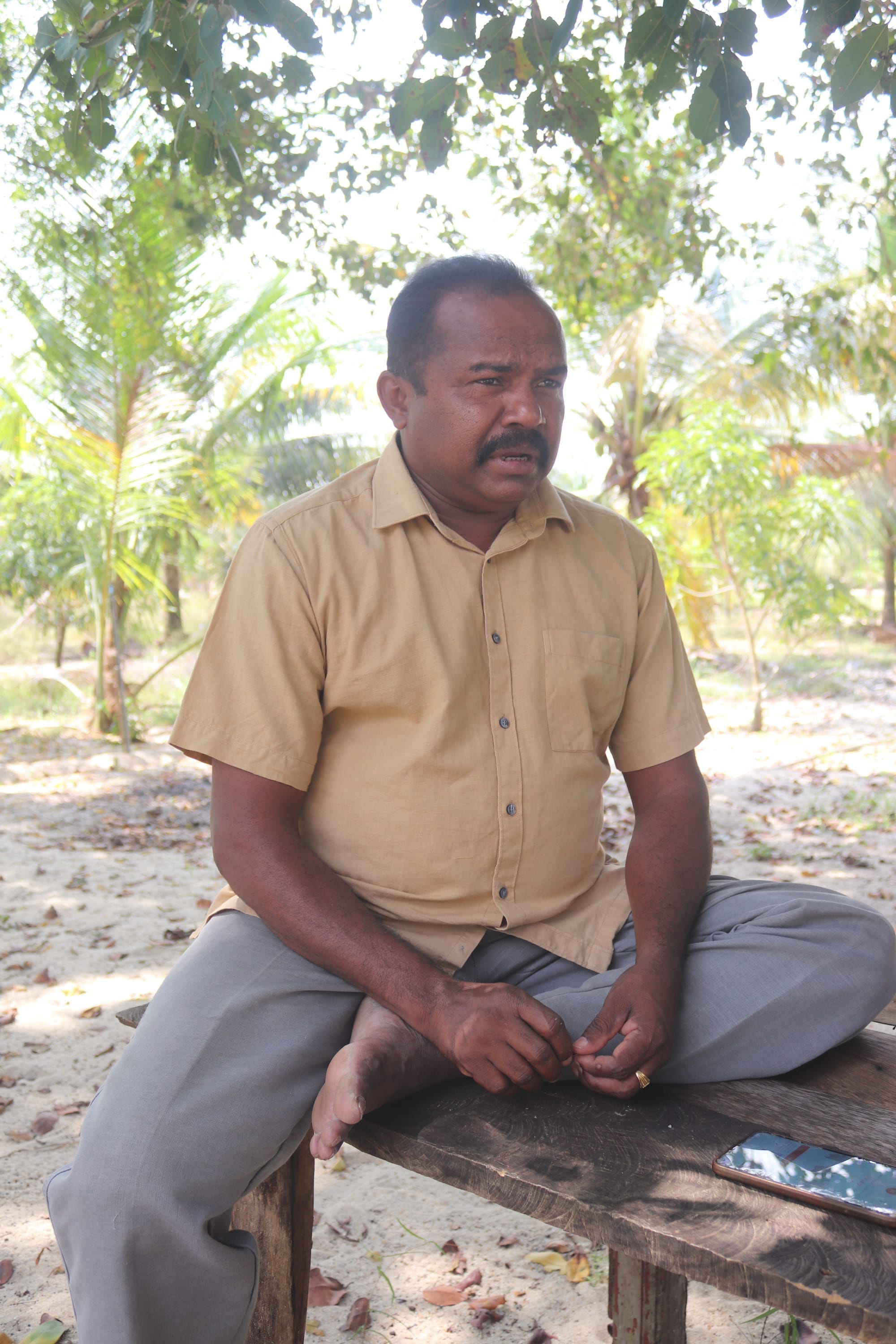
Karuna Amman, the LTTE's eastern commander who broke with the movement in 2004, told Jaffna Monitor in a 2024 interview that the Tigers killed roughly 8,000 members of rival Tamil organizations in the east alone in the months after the Indians left.
Razeek and his men fled into the forests of the Panama-Okkanda region in the southeast, near what is now Kumana National Park, and went into hiding. One former cadre, who now lives abroad, said the group survived for long stretches on wild leaves and stream water, and that hunger became their main concern.
People who knew Razeek say the jungle changed him.
"He started hating the LTTE with every cell of his being," said a Karaitivu resident who knew him well.
After the short-lived understanding between the LTTE and the Premadasa government collapsed in June 1990, Razeek and the survivors came out of the forest, reached a Sinhala settlement and surrendered to the security forces, according to former EPRLF members.
Former cadres said Razeek then reached an informal arrangement with senior figures in the security establishment, among them Ranjan Wijeratne, the powerful Minister of State for Defense, and Maj. Gen. Denzil Kobbekaduwa, a senior army commander. The security forces would protect Razeek and his men and allow them to operate. In return, the men would use their knowledge of the region and of Tamil militant networks against the LTTE.
Within a few years, Razeek was one of the security forces' most important Tamil allies in Batticaloa.
A GROUP OF HIS OWN
The EPRLF's civilian leadership had little interest in rebuilding an armed wing, so Razeek built one himself. By 1996, it carried his name: the Razeek Group.
The group was brought into the National Auxiliary Force as the Ninth Battalion of the Sri Lanka National Guard. The army paid, trained, and supervised the fighters, while Razeek ran their day-to-day operations. Most reports from 1999 put its strength at about 250. The fighters went through two months of training at the army's infantry school in Minneriya. Razeek completed an officers' course and was commissioned as a second lieutenant, but he refused the rank, arguing that his experience warranted at least a captaincy. He was promoted to lieutenant only after his death.
The group's headquarters was a large mansion on Lake Road in Batticaloa, overlooking the lagoon. It had belonged to the former Tamil parliamentarian Sam Thambimuthu, who was shot dead along with his wife, Kala, outside the Canadian High Commission in Colombo in 1990. The gunman was Neelan, alias Kanthan, an operative of the LTTE's intelligence wing.
From Sam's mansion, the Razeek Group became the dominant Tamil armed force in Batticaloa town, working with the military against LTTE cells and the so-called pistol gangs. Its men also carried out a number of successful ambushes inside LTTE-held areas. Razeek liked to boast that while his men were on watch, the Tigers could not even "wag their tails" in Batticaloa.
Former fighters say he stood out because he held his ground at a time when many Tamil militant leaders were trying to get away from the LTTE.
"While other leaders were in survival mode, trying to escape, he was ready to confront the LTTE and face the danger head-on," a former EPRLF cadre said.
THE RECORD
Four consecutive editions of the U.S. State Department's annual human rights report, covering 1996 through 1999, named the Razeek Group, together with the militant wing of the People's Liberation Organisation of Tamil Eelam, or PLOTE, as pro-government Tamil militias implicated in extrajudicial killings, even though the group formally operated under the security forces. The 1996 report said it was impossible to determine the number of victims "because of the secrecy with which these groups operated."
Journalists and human rights monitors at the time accused the group of more. The accusations, repeated since, included extorting "taxes" from farmers and businessmen, controlling parts of the local timber and sand trade, abducting young men for recruitment, and torturing suspected LTTE sympathizers. In one widely repeated account, his men dragged a man behind a motorcycle.
In Karaitivu, memories of Razeek are mostly favorable, though not without darker episodes. One resident, now a teacher, recalled being rounded up as a young man when the Tamil National Army was forcibly recruiting youths from the village. He was taken to the local playground for conscription and was relieved to find that the officer in charge was Razeek, his senior from school. He pleaded to be allowed to finish his examinations first. Razeek agreed and let him go.
Others in the village insist Razeek never turned his violence on ordinary people.
"His primary target was the LTTE," one resident said. "He did not even harm the families of known LTTE members in Karaitivu. Had he wanted to, he could easily have done so."
A PRIVATE LIFE
After his death, a story spread that Razeek had turned against the LTTE because the Tigers had killed members of his family. People who know the family say that is not true. None of his immediate relatives died at the LTTE's hands. His three brothers, all government employees, still live in Karaitivu, as does his sister.
His own marriage has a darker story. People familiar with the family say he abducted a young woman from Akkaraipattu and forced her to marry him. The couple had no children.
As Razeek's name grew more feared, the family struggled to find anyone willing to marry his sister. According to the same sources, he eventually forced his wife's brother to marry her. That couple also had no children.
The wedding was his last known visit home. The next time he came to Karaitivu, it was for his funeral.
Neighbors say the family was neither shunned nor favored. "We treated them normally," one resident said. "Not especially well and not badly either. Just normally."
Some in the village reject the label “paramilitary leader” altogether. Razeek and his men, they point out, worked directly with the army and were paid by the government.
“He joined the Army and fought alongside it,” one villager said. “He was not simply the leader of a paramilitary group.”
In Karaitivu, the point carries weight. A government salary is the most respected income a family here can hope for, and one resident noted that, whatever else might be said about Razeek, he had managed to draw one.
“If my son was offered 500,000 rupees a month in the private sector and 50,000 in a government job, I would definitely tell him to take the government job,” he said, laughing. “That is Karaitivu.”
ONE LAST AMBITION
By early 1999, Razeek’s ambitions reached beyond Batticaloa. Some of his old EPRLF comrades had briefly returned from exile, and Razeek went with them to a meeting with President Chandrika Kumaratunga. They discussed building a larger Tamil regiment, in effect a revival of the EPRLF’s armed wing on a far greater scale. Several accounts suggest the plan gave the LTTE one more reason to make him a priority target. He had already been a marked man in Batticaloa for years.
Days before his death, a group of journalists visiting Batticaloa sat down with him. He told them his men had killed about 30 LTTE fighters in recent operations and lost 21 of their own. Over the course of his war with the Tigers, he claimed, the toll stood at 374.
Asked whether he feared the Tigers would finally get him, Razeek said it was the life he had chosen.
THE BOMBER
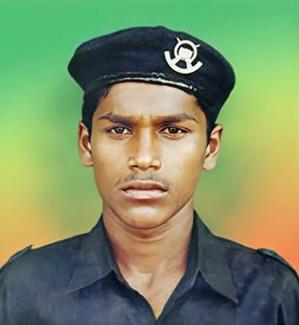
The LTTE leadership had wanted Razeek dead for years. According to former eastern Tiger fighters, the commanders eventually concluded that a suicide attack offered the best chance of killing him. Several Black Tigers volunteered for the mission.
"They wanted him dead, but they respected his courage," said a former LTTE fighter who served on the eastern front.
A former LTTE commander who spoke to Jaffna Monitor said the operation was planned by two senior figures in the eastern command, Colonel Ramanan and Colonel Nagesh, under the overall command of Karuna Amman. Ramanan chose the bomber, a fighter from Chandiveli, a strongly pro-LTTE village in the Kalkudah area, who went by the name Arasappan. His birth name was Mayilvakanam Arulchelvan.
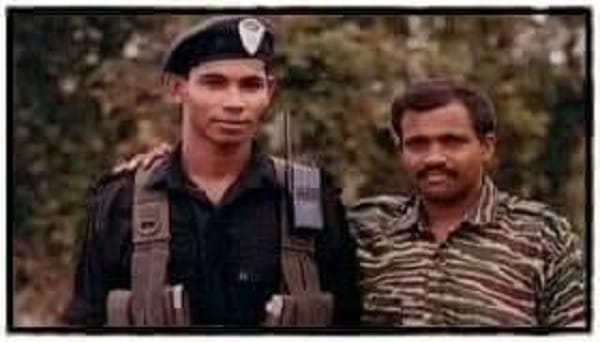
Arasappan was picked partly for his looks, the former commander said. He was short, slightly built and young enough to pass for a teenager, and he was unlikely to arouse suspicion as he approached his target.
Asked why the Tigers had not simply shot Razeek or ambushed him, the former commander gave a practical answer.
"Razeek was not a coward," he said. "He was ready to die and, more importantly, always ready to fight. If we had attacked him with guns, we were certain he would have fought back fiercely. So we chose a human bomb, a man just as ready to die as Razeek was."
THE MAN WHO LEFT EARLY
Razeek was buried the next day, May 30, 1999, in Karaitivu with full military honors, his coffin wrapped in the Sri Lankan flag. Thurairatnam, the EPRLF's political leader for Batticaloa and Ampara, presided over the funeral, and senior army officers attended. Many residents, villagers recall, stayed away out of fear.
What investigators found afterward suggested the LTTE had also worked its way inside Razeek's own ranks.
Shortly before the bombing, one of his cadres left the garage, saying he was ill. He never came back.
The man had once belonged to the LTTE and had apparently deserted to join Razeek's group. The Tigers made sure people knew it. Loudspeaker announcements warned that he had run away to join "the traitors," and posters carrying the same message went up across LTTE-controlled areas. To Razeek's men, that was convincing proof that the defection was real.
Former cadres familiar with the episode said they later came to believe that the desertion, the denunciations and the posters had all been staged, and that the man had been sent in. Razeek's men never saw him again.
Others deserted in the days that followed. The group's acting head, Sivaguru Navaratnarajah, known as Kanthy, or Gandhi, led an internal purge.
AFTER RAZEEK
The Razeek Group did not last long as a real fighting force. On Sept. 14, 2005, Kanthy was killed by a grenade thrown into the bathroom of the same Lake Road compound, inside a high-security zone. The attackers were never publicly identified. His death marked the effective end of the group.
By then, the place it had held in the state’s campaign against the LTTE in the east had been taken by a very different force: Karuna Amman’s breakaway faction.
A former member of that faction pointed out what this meant. As the Tigers’ eastern commander, Karuna had tried repeatedly to kill Razeek and finally succeeded in 1999. Five years later, he and his men were at war with the LTTE they had once served, and they were being hunted down by Tiger units sent from the Vanni.
In those desperate months, the former faction member said, he and the others must have thought at least once about the enemy they had killed.
“Had Razeek still been alive,” he said, “we could have hunted the Vanni Tigers together.”