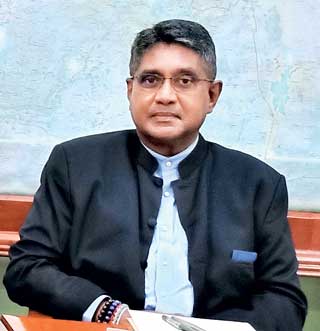

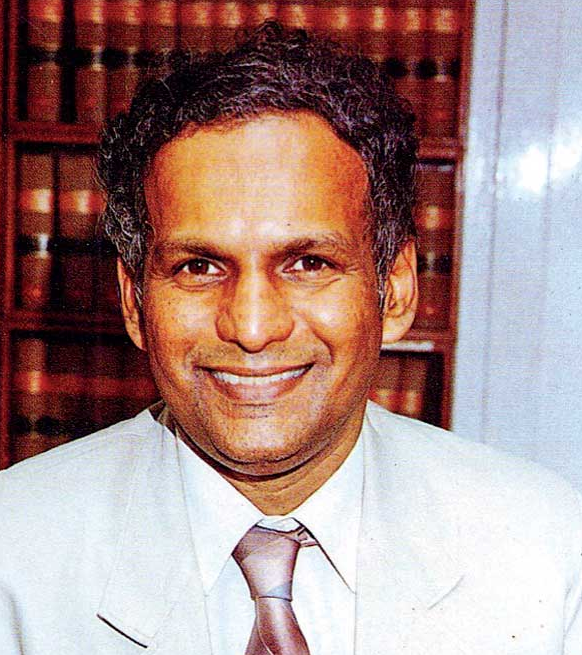
By Jeevan Thiyagaraja
How I Came to ICES
Neelan Tiruchelvam — Tamil member of parliament, constitutional lawyer, and founder of the International Centre for Ethnic Studies — was assassinated by an LTTE suicide bomber on 29 July 1999. These are personal recollections, offered on the anniversary of his death, of the years I worked alongside him and of the people whose lives that work brought together.
I got to know Neelan Tiruchelvam by accident. Quadri Ismail, a brilliant writer and journalist who wrote for The Times in Sri Lanka and Time magazine in the United States, walked with me one day down Ward Place to the International Centre for Ethnic Studies (ICES) at Kynsey Terrace, in late 1983. Quadri would himself be shot and badly wounded some years later, in November 1987 — hit in the neck by fire from a passing Indian Army helicopter as he tried to leave a restricted war zone he had slipped into to report.
ICES had grown out of a Ford Foundation–sponsored conference on ethnic conflict held at Taita Hills, Kenya, in August 1981, followed by a second workshop at Trincomalee in March 1982, at which the Foundation resolved to fund a research centre on ethnicity in Sri Lanka. Neelan secured the initial grant; Prof. K.M. de Silva secured government approval to establish the institute and became its founding Chairman; and Radhika Coomaraswamy — then a young Yale- and Harvard-trained lawyer who would go on to become the UN's first Special Rapporteur on Violence Against Women and, later, UN Special Representative for Children and Armed Conflict — joined soon after as Associate Director in Colombo, alongside Sam Samarasinghe in Kandy. ICES was conceived as a research institute to study Sri Lanka's ethnic relations and the wider politics of identity and conflict in South Asia, with twin offices in Colombo and Kandy, and it grew over the years into one of the region's foremost independent centres for research on ethnicity, law, and conflict.
The years that followed my joining were turbulent. Riots developed into something beyond comprehension — serious enough for the imposition of the 1987 Indo-Lanka Accord. I recall protestors marching on Colombo from all sides on the eve of the Accord. It was a tense period.
Documentaries and the Journey North
In between, ICES produced a great many documentaries — directed by our foremost directors — promoting multiculturalism. The videos were played in rural settings, hosted by scores of simple community groups.
In 1987–1988, Kusal Perera, I, and two Holy Family sisters travelled by train and bus to see for ourselves the impact of the war on ordinary people across the North and East. In Jaffna I walked so much that my shirt tore from sweat and salt.
Echoes of War was the documentary that came out of that journey, funded by Bread for the World and directed by Dharmasiri Bandaranayake, with Suren de Silva on the crew. In the Vanni they were accosted and taken into custody by the LTTE, and were saved only by an IPKF (Indian Peace Keeping Force) patrol passing by. Our hearts froze for a few days, not knowing their fate.
Election Observation, 1988–1991
In 1988 Neelan was invited to observe elections in Hungary. That experience led him to float an idea, which in turn led to him, Neville Kanakaratne — the veteran Sri Lankan diplomat who had served as Ambassador to the United States and High Commissioner to India — and me coordinating the visit of an eminent group of observers drawn from SAARC countries for Sri Lanka's 1988 presidential election.
The environment was tense — the JVP insurrection in the south was at full strength. Ranasinghe Premadasa was standing for the UNP and Sirimavo Bandaranaike for the SLFP; she lost by a whisker. The observer group itself was remarkably distinguished. Among them were Niaz Naik, Pakistan's former Foreign Secretary and later the architect of Pakistan–India back-channel diplomacy; Fakhruddin Ahmed (1931–2001), a career diplomat who served as Bangladesh's Foreign Secretary twice (1974–75 and 1986–87), and as Ambassador to Italy and Yugoslavia and High Commissioner to the UK; Muchkund Dubey, who would later serve as India's Foreign Secretary; Nikhil Chakravartty, the veteran Delhi journalist and founder-editor of Mainstream; and Dr. Devendra Raj Pandey, Nepal's former Finance Secretary, who would later serve as Finance Minister in the caretaker government formed after Nepal's 1990 pro-democracy movement.
The final report was written from Faletti's Hotel in the winter of 1988. Faletti's, in Lahore, was one of four sister hotels built in the late nineteenth century by the Italian hotelier Giovanni Faletti — the others being Flashman's Hotel in Rawalpindi, Dean's Hotel in Peshawar, and the Cecil Hotel in Murree. A briefing chapter was written by Jayadeva Uyangoda.
In that report we noted that it had been a monumental folly on the part of J.R. Jayewardene to proscribe the JVP, since the ban gave birth to the second uprising, at enormous cost. The factual narrative was correct, but Chandrananda de Silva, then Elections Commissioner, told me that Jayewardene would sue if the line was not withdrawn. ICES, for its part, was probably one of the rare few offices kept open every day, notwithstanding the closures the JVP imposed on the country — I used to walk in myself to keep it open.
Election observation missions followed across the region:
Pakistan — organised again when Zia-ul-Haq died in a plane crash and Benazir Bhutto was elected. In all we covered three elections there.
Bangladesh — starting in 1990, we covered the 1991 election after the fall of Ershad, when Sheikh Hasina was elected, and two or three more after that.
Nepal — we covered the election held after the king was deposed and the pro-democracy movement won multiparty elections.
India — I was in Delhi when Rajiv Gandhi was assassinated in Tamil Nadu in May 1991.
Anura Bandaranaike — son of S.W.R.D. and Sirimavo Bandaranaike, and younger brother of Chandrika Kumaratunga, who would himself go on to serve as Speaker of Parliament and Leader of the Opposition — was with us on one of the Bangladesh missions. In one constituency the ballot boxes were thrown into the village pond, necessitating a by-election. Anura was famous all his life for his pranks — on one occasion sending out birthday invitations inviting scores of guests to the houses of his friends, who had no idea a party had been announced in their name, on another smuggling a pet leopard cub under a cabinet minister's chair at the family home on Rosmead Place, shortly before his father chaired a meeting there. In Dhaka, the two of us once slipped an amorous note under the hotel-room door of a distinguished lady observer overnight, purporting to be from Rauff Hakeem. Neither she nor Hakeem was ever any the wiser.
Across all of these missions, we met some of the finest men and women of South Asia — a remarkable circle of jurists, scholars, and public figures drawn together by a shared belief in democratic process. It was a period of a South Asian Renaissance. It is in no small part to keep their memory, and Neelan's role in bringing us all together, that I set these recollections down now.
Geneva, and the Wider South Asian Circle
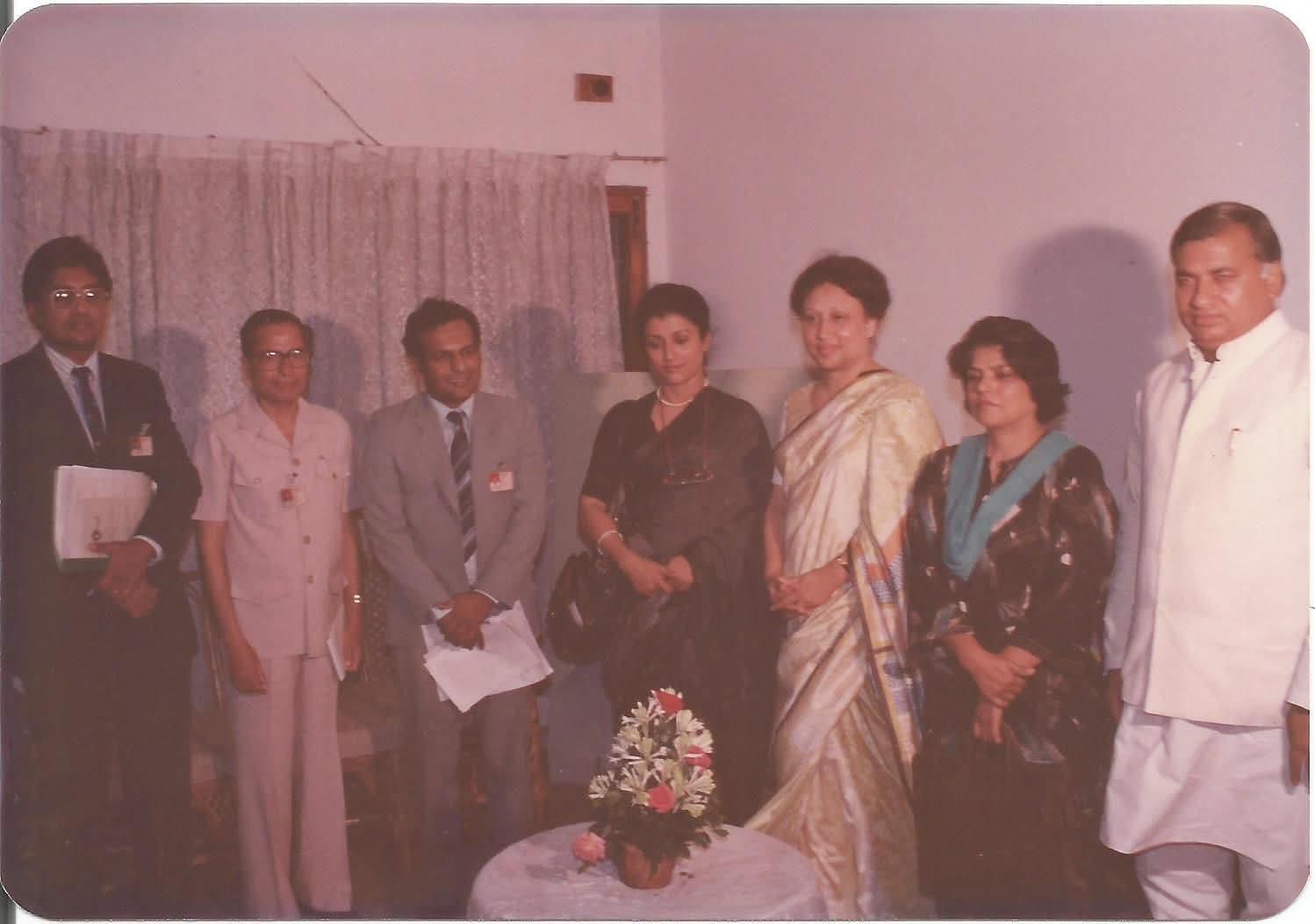
Another important programme was our work with the UN Working Group on Minorities in Geneva. It was after one such session that I had a long conversation with Neelan at Geneva airport as evening fell. Soon after, he left for a sabbatical in Italy before returning to Sri Lanka.
He and I once met P.V. Narasimha Rao when he was preparing to go home, shortly before he was suddenly catapulted into becoming Prime Minister of India. We had similarly memorable conversations with Inder Kumar Gujral, who also went on to become Prime Minister. These were heady days in the renaissance of South Asian intellectual and political life — across the region we had extraordinary conversations, including early discussions about what would become the idea of a South Asian University.
In Sri Lanka, Chandrika and Vijaya Kumaratunga once joined a dinner for Ashok Mitra, the economist from Calcutta — both dressed in black that night, if memory serves, with dinner served from banana leaf. There was a space at ICES called the Thatched Patio that hosted countless such gatherings.
The Committee for Rational Development used to meet in Radhika's room, deliberating there in the years after 1983. The CRD published a report titled Sri Lanka's Ethnic Problems: Myths and Realities (November 1983), which they expanded the following year into an edited volume, Sri Lanka, the Ethnic Conflict: Myths, Realities and Perspectives (New Delhi: Navrang, 1984), with contributions from scholars including Newton Gunasinghe and Kumari Jayawardena.
Regi Siriwardena — the veteran writer, critic, and left intellectual, one of the most respected literary and political voices of his generation — was a maestro working at ICES at that time, editing its journal and held in great affection by the young researchers who passed through.
Neelan's work ethic was indefatigable. There were only one or two of us who could decipher his handwriting, in pencil or pen; Hamza, his typist, was the other. It is most probable that he brought three people into politics. Two went on to become highly distinguished ministers under Chandrika Bandaranaike Kumaratunga (CBK); the other resigned as an MP a while later.
In the midst of all this, Neelan negotiated — and I helped conclude — a grant from NORAD that became an endowment for ICES, matched by counterpart contributions from the Ford Foundation, which continues to this day.
Cambodia and SOAS
In 1993 he decided I needed to go to Cambodia for the first UN-managed elections there. I spent a considerable amount of time working with Cambodian human rights NGOs and the UN's Human Rights Component. Among those in the UN component was Thant Myint-U, grandson of U Thant, the former UN Secretary-General; his book on his grandfather illustrates what the UN could achieve for peace.
On my return, Neelan was responsible for sending me to the School of Oriental and African Studies (SOAS), University of London, for a master's degree in South Asian Studies. He was similarly, deeply supportive of another, very personal matter of mine. His generosity in this respect was relentless.
Scores of young activists and scholars passed through ICES in those years. Among the visitors before he went on to found the Centre for Policy Alternatives (CPA) was Paikiasothy Saravanamuttu ("Sara"). D.B.S. Jeyaraj, the journalist who would go on to become one of the most significant chroniclers of Sri Lankan Tamil politics, was also in residence at ICES during that time. Neelan's trademark was his ability to hold the middle path and draw in so many different voices and colours.
The Humanitarian Years
Back in Sri Lanka in 1996, I joined the setting-up of a humanitarian consortium which, at its peak, probably numbered upwards of eighty agencies — local, foreign, UN, bilateral, and multilateral.
During that period the Sri Lanka Army (SLA)'s then-Commander, Jaffna, wanted me to travel to Jaffna, and the Additional Defence Secretary — a rascal — prohibited me from doing so and told me so. A little later, a mischievous Vanni commander stopped the food convoys (FDL) crossing from functioning. During one such stoppage I called him and told him people were going hungry. His response was that he wanted the people to feel it. The strategy, it seemed, was to make people leave the Vanni. That story continues, in various forms, right up to the last days of May 2009 and the years after.
In between, the 2004 tsunami struck, and for about 365 days it was a tsunami of work, seven days a week.
Constitutional Reform: From JRJ to CBK
Running alongside all of this was the constitutional work that consumed most of Neelan's life. It began around 1980, when he and Prof. A.J. Wilson, the constitutional scholar, and J.R. Jayewardene's own son-in-law, learned that Jayewardene had privately described to them the outlines of a possible islandwide anti-Tamil pogrom, and proposed the District Development Council scheme as a way to avert it through sustained Tamil-Sinhalese partnership. Neelan and Wilson doubted the scheme offered real devolution — each district also got a government-appointed District Minister, who held the real executive power, leaving the elected council itself largely advisory, but Jayewardene had promised that fuller powers would follow if it proved workable — a promise neither man was fully convinced of himself. The DDC elections went ahead as planned, in June 1981 — and were wrecked in Jaffna itself. The government sent a team of officials from the south to oversee the poll, among them Chandrananda de Silva, who would go on to become Commissioner of Elections — the same official who, years later, warned me that Jayewardene would sue over our 1988 election report. The spark itself was, by most accounts, unplanned: at a TULF rally on 31 May, two unidentified gunmen fired on the police, killing three officers. What followed was not — police and mobs bussed in from outside the peninsula went on a rampage through Jaffna town, wrecking homes, shops, and the TULF headquarters, and, that same night, the Jaffna Public Library, destroying tens of thousands of irreplaceable Tamil manuscripts and books. It became one of the defining injuries of the conflict, and hardened many Tamils' doubts about whether devolution offered through Colombo could ever be trusted.
The larger effort came later, and closer to home. When Chandrika Kumaratunga — his childhood friend — became President in 1994, Neelan, working alongside her Constitutional Affairs Minister Prof. G.L. Peiris, became a lead author of her devolution proposals, put forward on 3 August 1995 and known afterward as the "GL-Neelan Package." Peiris later credited Neelan as co-author of three successive drafts, in 1995, 1996, and 1997. Each revision diluted the last: what began as a bold proposal for genuine power-sharing was pared down when tabled formally in January 1996, and pared down again when it reached Parliament as a white paper in October 1997. Neelan was attacked from both directions throughout — accused of separatism by Sinhala hardliners, and of betrayal by the LTTE and its supporters. He was assassinated in the middle of that unfinished work, in July 1999.
The Day He Died
The day he died I heard a noise like a bomb going off in a garbage bin. I picked up my phone and ran toward the noise. As I ran, staff at ICES and LST, on either side of Kynsey Terrace, shouted that there could be another bomb.
What I recall is his police security officer opening his door and getting out of the car, his driver likewise from the other side, and Neelan, in the back, in pieces. The bomber's head lay about forty or fifty yards south, on Kynsey Road. I recall asking a policeman to secure it. I remember thinking, in that moment, of the journey the bomber had made — literally, and as a human being — from person to human bomb, reduced to fragments strewn across the road. It was an extremely sad sight, and a sad moment.
His backup jeep had rear door locks that could only be opened from the outside. At one point, his backup police car had a hole where the antenna should have been. Having said that, he had, in writing, been told by a government agency of the serious threat against him.
Smoke was rising; at one point the car caught fire and I thought the petrol tank would explode. With a garden hose borrowed from a nearby dentist's house and surgery, we started hosing down the car. I asked an STF (Special Task Force) officer to lift his head and show me. The brain knows only what it has already seen or read — and what I saw was not something I knew.
Things were moving fast, but time stood still for me. I asked a senior police officer to walk with me to see Sithy, Neelan's wife, up Rosmead Place. When my own father passed away I had been in Bangladesh on an election mission, and ICES had done a shoddy job of telling me — so I was conscious of that as I approached her. I remember telling Sithy that a police officer wanted to see her. She asked how Neelan was; before I could answer, she closed my mouth with her palm and held my head against the wall. I believe one, if not both, of their sons was at home, and one of them began to ask the same question but did not finish the sentence.
The Chairman, Prof. K.M. de Silva, and Sam Samarasinghe, the director from Kandy, wanted me to take Neelan's place on the Board of ICES. It was opposed in Colombo.
My final act for him was to drive his sons to Kanatte cemetery in Neelan's own jeep — to return, hand over the keys, and never go back.