
Mr President,
As Sri Lanka marked fifty-four years as a Republic a few days ago, it should have been a moment for honest reflection: on sovereignty, on democracy, and on whether this country has truly upheld its promise of equal dignity to all who call it home. It is in that spirit, and with deep disappointment, that I write this.
I am an Attorney-at-Law. I am also one of the complainants in the ICCPR case against Ampitiye Sumanarathana Thera, now before the High Court of Batticaloa. And I am a citizen who still believes the law should mean the same thing for everyone.
The case itself is straightforward. It is a criminal prosecution under the International Covenant on Civil and Political Rights Act No. 56 of 2007. The allegation concerns a statement the Thera allegedly made, threatening Tamil families living in the South. Video evidence exists. The Attorney-General’s Department is prosecuting. The offence is non-bailable. The accused is out only under strict conditions: passport surrendered; travel banned. This is not a political quarrel or a theological debate. It is a serious criminal matter pending before a court of law.
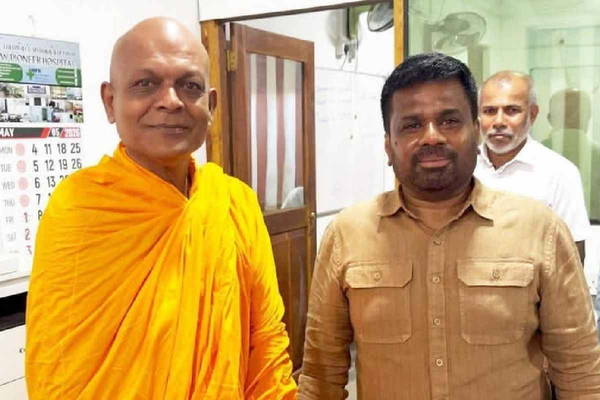
Against that backdrop, your reported meeting with Ampitiye Sumanarathana Thera becomes deeply troubling. Reports say you met him. Credited him publicly. Welcomed his shift from the Rajapaksa camp to the National People’s Power. All this while the case is active. All this while the Tamil community, whose safety gave rise to the complaint, has received no comparable audience, no acknowledgement, no dignity. Those who brought the complaint are still waiting. Those affected by the alleged threat are still waiting.
So I must ask you directly: what message does this send?
To many of us, the answer is clear. It says that political usefulness can soften a serious allegation. That the law moves differently when the accused has influence. That even under a government elected on promises of change, the fears of a minority community still come second to political convenience.
I say this with care but also with honesty. Not because of the meeting alone, but because of what it reveals. The culture of impunity in this country runs deep, and your government seems unwilling to break it.
Sri Lanka’s record on ICCPR enforcement tells a damning story. Writers and ordinary social media users have been arrested swiftly and detained for months over speech-related allegations. The machinery of law has moved fast and severely when the accused is weak. But in this matter, despite complaints from parliamentarians, civil society, and the Human Rights Commission, it took years to reach arrest and indictment.
That contrast cannot be brushed aside. When the law is harsh with the powerless and patient with the powerful, people see selective justice. And selective justice is injustice wearing a legal mask.
Your reported meeting raises a further constitutional concern. The case is sub judice. The Attorney-General prosecutes in the name of the people. As Head of the Executive, your public association with the accused risks creating a reasonable fear that the prosecution may not receive the independence it deserves. Even if no interference was intended, the appearance alone damages public confidence. Justice is undermined as much by perception as by action.
I call on you to state clearly, without ambiguity, that the Batticaloa prosecution will proceed free of executive influence, and that all persons stand equal before the law regardless of religion, office, robe, or political allegiance.
There is also a religious dimension here, and I raise it with respect for the Buddha’s teaching and for the many humble and disciplined members of the Sangha. The Dhamma does not endorse threats. It does not countenance speech that frightens a community. The first precept teaches abstention from harm. Right speech, as the tradition holds, is speech that is truthful, gentle, and not divisive. If a person in robes is accused of threatening a minority, the duty of political leaders is not to celebrate his political usefulness. The duty is to uphold the law and protect the moral integrity of the Sasana.
The Buddha Sasana is not served by turning monks into political assets. It is not served when the robe shields against accountability. It is served when the State refuses to allow religion to be used as a weapon against vulnerable communities.
This also touches the core of transitional justice. You came to the office after a moment when the people demanded a System Change. That demand was about more than corruption or economic collapse. It was about the abuse of power, the absence of accountability, and the long refusal of the State to face the pain of those who have suffered disappearances, torture, displacement, and violence.
Have you met the families of the disappeared with the seriousness this moment demands? Have you sat with survivors of torture? Have you listened to communities in the North and East, not as voters but as victims and citizens? Have you met those connected to emblematic cases that still stand as monuments to impunity?
The victims of this country did not survive all they endured only to receive another commission whose report is destined for an archive. What they ask for is simple and long overdue: truth spoken plainly, accountability that reaches those responsible, and guarantees of non-recurrence embedded in our constitutional and institutional life. These are not extra demands. They are the minimum conditions of a just peace. Economic recovery alone cannot extinguish the still-burning ember of denied constitutional rights. It cannot answer the mother who has spent decades asking where her child is.
A victim-centred process means victims are not decoration in reconciliation speeches. They must have a real role in shaping truth-seeking, reparations, institutional reform, and guarantees of non-recurrence. They must be treated as rights-bearing citizens, not as people told to wait quietly until the State finds it convenient to remember them.
Republic Day makes this discussion unavoidable. The 1972 Constitution did not merely change our legal status. For many minorities, it removed vital safeguards. Section 29(2) of the Soulbury Constitution, which prohibited discriminatory legislation, was deleted. The Senate was abolished. Sinhala was made the sole official language. Buddhism was elevated to the foremost place. These were not neutral adjustments. They created a hierarchy of belonging that Tamil-speaking and non-Buddhist citizens have felt for decades in daily life, in public service, and before the courts.
This is not about reopening history for its own sake. It is about recognising that today’s events do not arise in a vacuum. A political culture where an accused monk can be treated as a prize while a threatened minority community waits for justice is the product of a long constitutional and social history. Ethnocentrism has been built, protected, and rewarded. It will not vanish through speeches about national unity.
Your government holds a historic mandate. The NPP promised to repeal the Prevention of Terrorism Act. It remains. You promised Provincial Council elections. They have not been held. You promised a political solution to the ethnic question. The country still waits to hear it in concrete terms. You promised constitutional reform and a break from the old order. These promises cannot stay as campaign language. They must become time-bound commitments.
Ethnic injustice is the elephant in the room. It has been there since independence. It was there in 1972. It was there during the pogroms against Tamils. It was there when the war ended in 2009 without accountability. It is there now, when the Tamil community is again asked to wait while political leaders embrace those accused of threatening them.
Every government has avoided this truth in its own way. Some ignored it. Some exploited it. The Rajapaksas made it worse. Many of us hoped the NPP would be different. That hope is now being tested.
In light of all this, I respectfully call on you to do five things.
First, make a clear public statement that the prosecution before the High Court of Batticaloa against Ampitiye Sumanarathana Thera will proceed without any executive interference.
Second, meet the Tamil community affected by the alleged statements in this case, and meet victims and also the families connected to emblematic human rights cases, with at least the same seriousness shown to the accused.
Third, provide a clear timeline for repealing the Prevention of Terrorism Act, holding Provincial Council elections, and presenting a credible political solution based on meaningful power-sharing.
Fourth, establish a credible, independent, and victim-centred truth and accountability process in which victims participate as principals, not as witnesses summoned to recount their suffering before another indifferent commission.
Fifth, use your parliamentary majority to advance constitutional reform that addresses the structural roots of majoritarian impunity and builds a Republic based on pluralism, constitutional supremacy, enforceable rights, and equal citizenship.
Sri Lanka needs more than economic recovery. It needs moral recovery. It needs constitutional honesty. It needs governance that can say to every community, without hesitation, that the law applies equally, that justice will not be sacrificed for political convenience, and that no citizen’s dignity is negotiable.
Until that happens, the Republic at fifty-four remains unfinished.
If you want change in Sri Lanka, you must be willing to become the change you promised.
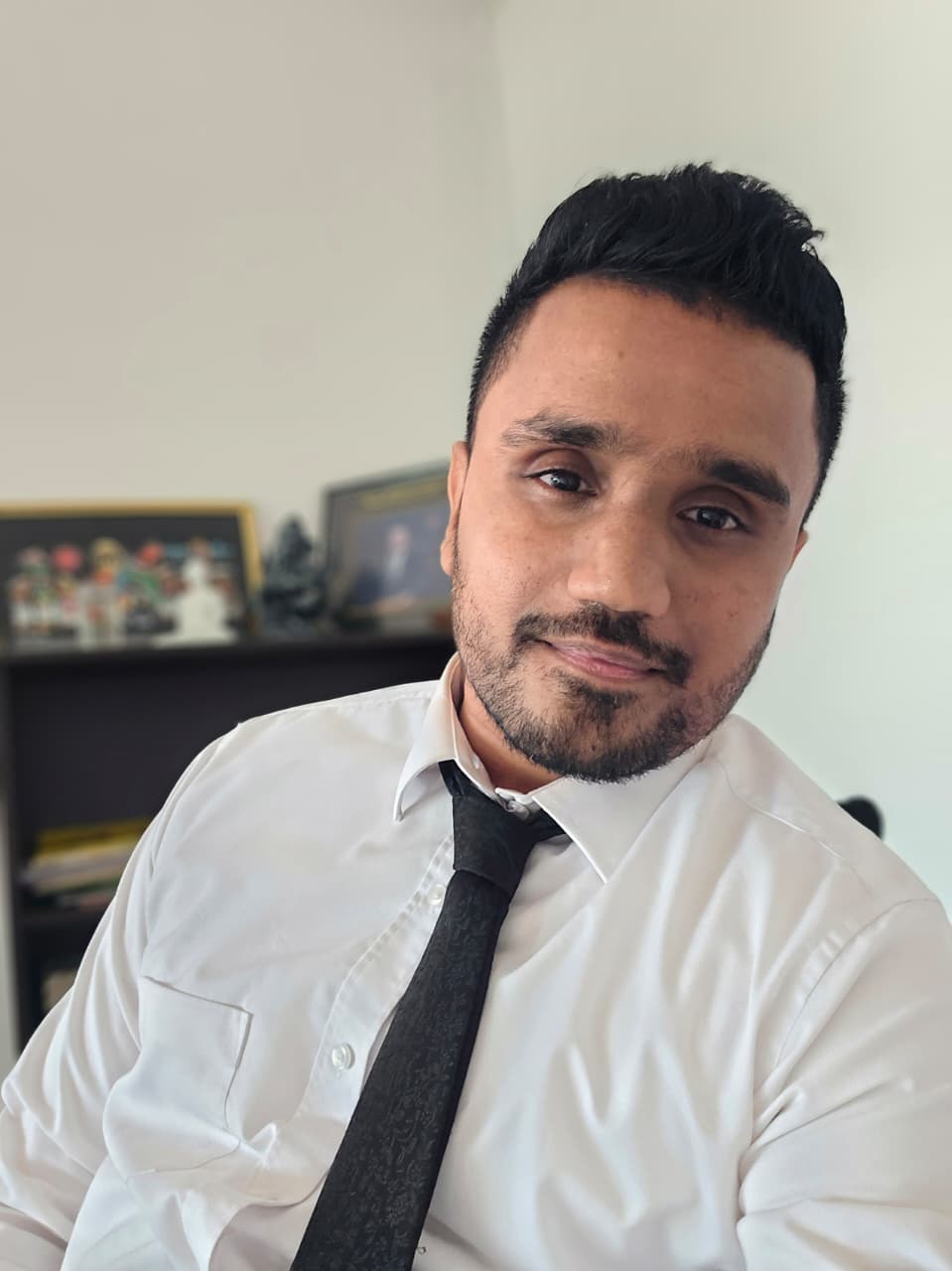
Dhanuka Rananjaka Kahandagamage
Attorney-at-Law
Sri Lanka
Editor’s Note: Dhanuka Rananjaka Kahandagamage is an Attorney-at-Law of the Supreme Court of Sri Lanka and one of the complainants in the ICCPR case against Ampitiye Sumanarathana Thera. He is also an activist known for advocating intercommunal understanding, protesting the alleged Sinhala-centric rebranding of state broadcasters, and authoring a book on Isai Priya, the LTTE broadcaster who was killed after surrendering to the Sri Lankan military at the end of the civil war.