
By: Aruliniyan Mahalingam
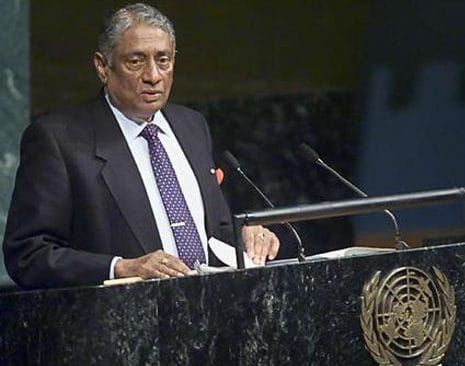
Twenty-one years after Lakshman Kadirgamar was assassinated in Colombo, Sri Lanka’s high commissioner to India has remembered the former foreign minister as the man who helped inspire her to join the diplomatic service and set a standard that continued to shape her career.
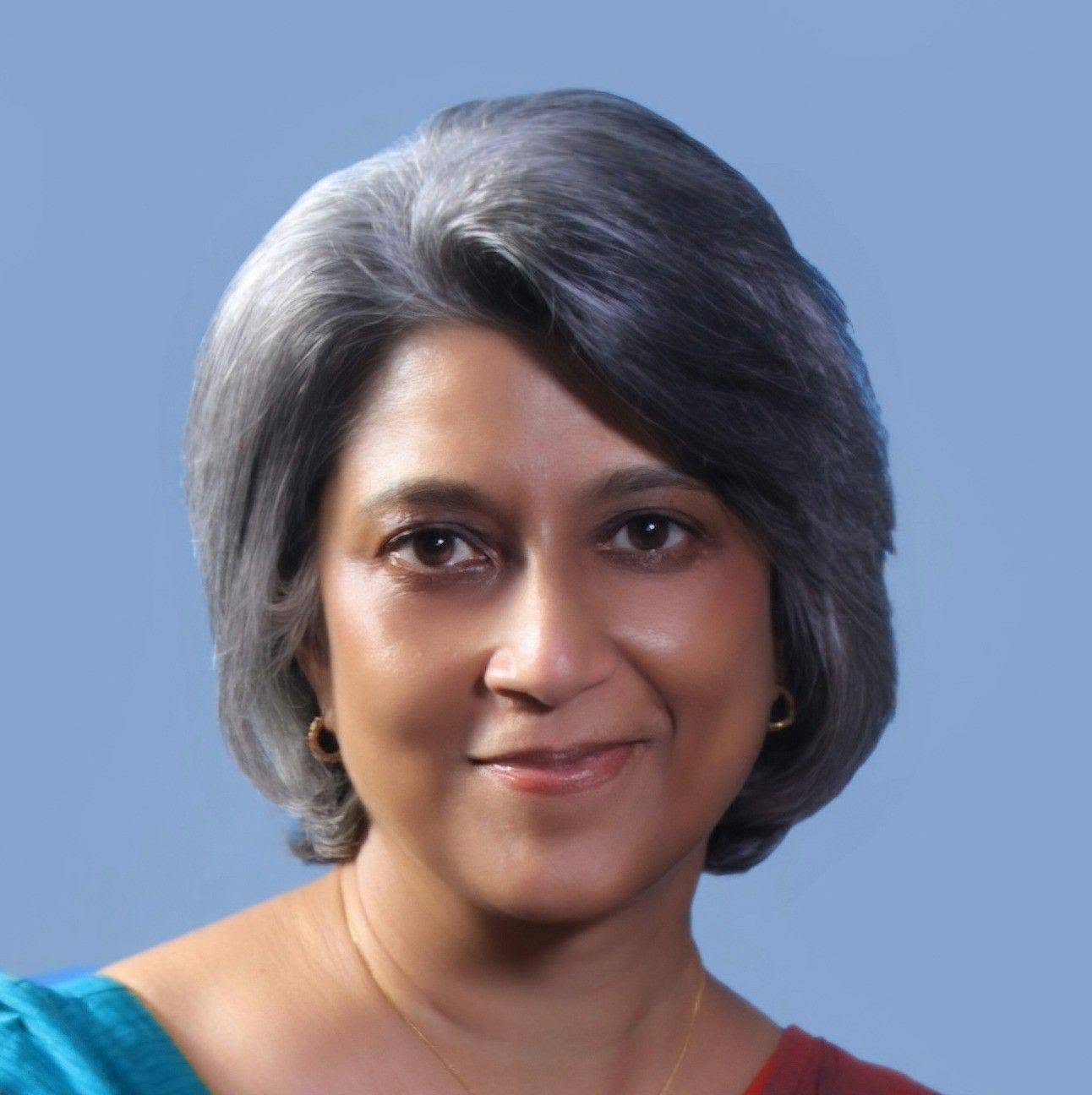
Mahishini Colonne, herself widely regarded in Sri Lankan diplomatic circles as one of the country’s most accomplished career diplomats, said Wednesday that Kadirgamar was foreign minister when she entered the Sri Lanka Foreign Service and recalled the exacting standards he set for a generation of diplomats who served under him.
“Twenty-one years ago today, Sri Lanka lost Honourable Lakshman Kadirgamar,” Colonne wrote in a Facebook post marking the anniversary. “For me, this is a deeply personal remembrance.”
Colonne joined the Foreign Service in July 1998, during Kadirgamar’s first tenure as foreign minister. She took up her current post as High Commissioner to India in June 2025 and presented her credentials to President Droupadi Murmu the following month. Her previous assignments included two postings at Sri Lanka’s Permanent Mission to the United Nations in New York and a stint as deputy high commissioner in India from 2011 to 2014. Before returning to New Delhi, she served as Additional Secretary for Multilateral Affairs at the Foreign Ministry.
“When I joined the Foreign Service, he was the Foreign Minister,” Colonne wrote. “His intellect, professionalism, and the dignity with which he represented Sri Lanka were among the reasons I was inspired to enter the Foreign Service.”
Kadirgamar’s expectations, she recalled, extended beyond the formal duties of diplomacy.
“He held us to a higher standard,” she wrote. “He believed that a diplomat’s work is never finished — that wherever we are and whatever we are doing, we are always representing our country.”
There was another lesson she remembered: precision.
“Among the things he taught us is that every word has meaning, and that in diplomacy, words matter.”
Colonne also recalled Kadirgamar’s emphasis on institutions and the need to build a professional foreign service capable of outlasting individual governments and personalities.
“He also understood the importance of institutions — of building institutions grounded in professionalism, competence, integrity, and institutional memory; institutions that are stronger than individuals and endure beyond political cycles,” she wrote.
Born in Colombo in 1932, Lakshman Kadirgamar was a Tamil Christian who became one of Sri Lanka’s most prominent international figures during the civil war. He studied law at the University of Ceylon and later attended Balliol College, Oxford, becoming president of the Oxford Union in 1959. He practised law in Sri Lanka and Britain and worked for international organizations in Geneva, including the International Labour Organization and the World Intellectual Property Organization.
He entered national politics relatively late, becoming foreign minister in President Chandrika Bandaranaike Kumaratunga’s government in 1994, at the age of 62. He served until 2001, returned to the ministry in 2004, and remained foreign minister until his assassination.
His years in office covered some of the bloodiest periods of the conflict between the Sri Lankan state and the Liberation Tigers of Tamil Eelam, which fought for an independent Tamil state in the North and East.
Kadirgamar became one of the LTTE’s most determined international opponents. He travelled extensively to make the government’s case abroad and worked to restrict the Tigers’ overseas political and financial networks. His diplomatic campaign contributed to the LTTE’s proscription in several countries, including the United States and Britain.
Yet he resisted the idea that opposition to the LTTE meant rejecting Tamil identity. He repeatedly argued for a Sri Lanka in which citizenship was not determined by ethnicity or religion and spoke of the need for Tamils, Sinhalese, and Muslims to rebuild trust after years of war.
His tenure also produced a diplomatic legacy unrelated to the conflict. Kadirgamar led Sri Lanka’s campaign at the United Nations for international recognition of Vesak, resulting in a 1999 General Assembly resolution providing for its international observance at the United Nations.
The Other Side of Kadirgamar's Legacy
Kadirgamar’s legacy also carries a darker counter-narrative among human rights advocates, who argue that his diplomatic gifts served to shield successive governments while security forces faced mounting allegations of disappearances, extrajudicial killings and other abuses. Chemmani stands as perhaps the starkest case. After the 1996 rape and murder of Jaffna schoolgirl Krishanthy Kumarasamy, a convicted soldier claimed that hundreds of people who disappeared after the military retook Jaffna had been buried in mass graves there. Amnesty International documented roughly 600 disappearances in Jaffna during that period and called for an independent inquiry; later excavations recovered human remains, lending grim weight to the allegations.
Critics accuse Kadirgamar of helping contain the international fallout, conveying Colombo’s assurances that allegations would be investigated even as accountability stalled. In their view, he became an extraordinarily effective defender on the world stage of a state whose own security forces stood accused of grave human rights violations.
A Killing He Saw Coming
On the night of Aug. 12, 2005, Kadirgamar was shot by a sniper at his heavily guarded private residence in Colombo, shortly after leaving his swimming pool. He was rushed to the National Hospital and underwent emergency surgery, but died of his wounds. He was 73.
The government blamed the LTTE. As was often the case with high-profile assassinations attributed to the group, the Tigers denied responsibility.
Kadirgamar had little doubt, however, that the organization wanted him dead.
Just two weeks earlier, in an interview with The Hindu on July 29, he had spoken about intelligence reports warning of an LTTE plot against him.
“They can get me anytime,” he said. “I get very serious reports that things are hotting up.”
Fourteen days later, he was dead.
The Assassination — and the Men and Woman Behind It
More than two decades later, Jaffna Monitor has spoken to former LTTE members and sources familiar with the organization’s intelligence apparatus who provided an account of the team they say carried out the assassination.
According to those sources, the man who fired the fatal shots was an LTTE operative known as Sempiyan, an experienced marksman. Another operative, Veerathevan, accompanied him.
The sources identified Manimekalai, a senior female member of the LTTE intelligence wing, as the field commander of the operation. Former members who knew of her work described her as an intelligent and highly capable operative.
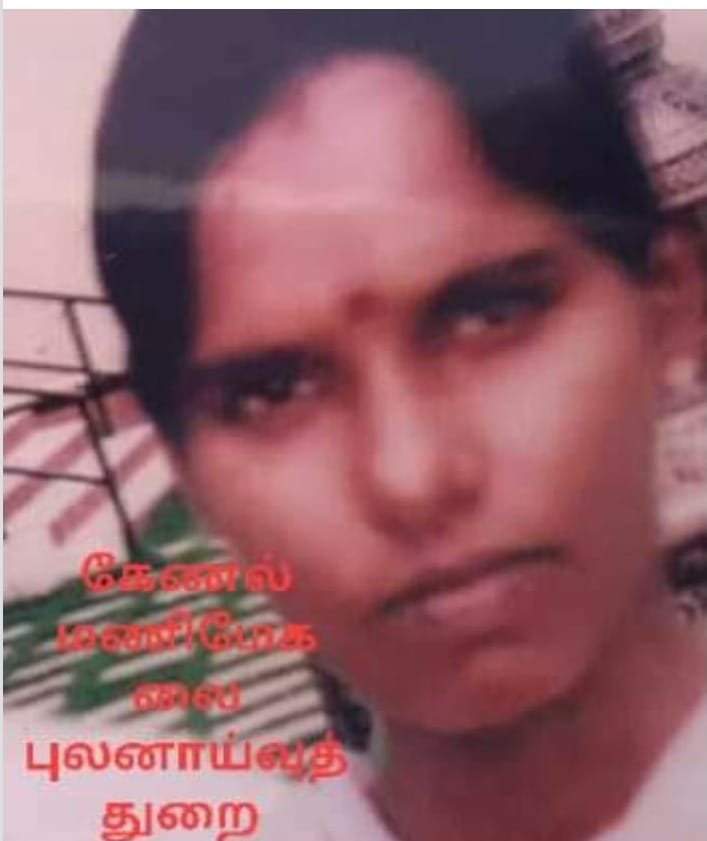
At the time, the sources said, Manimekalai headed a small unit operating under Shanmugalingam Sivashankar, better known as Pottu Amman, the LTTE’s intelligence chief.
Earlier in her career, they said, she had worked with Charles, a senior LTTE intelligence operative whose networks operated in Colombo and elsewhere in the South. Charles was associated with some of the organization’s most sensitive clandestine operations outside LTTE-controlled territory, including assassinations and bomb attacks.
The three people whom the sources identified as directly involved in the Kadirgamar operation had markedly different fates.
Veerathevan was killed in fighting at Semmalai in the Mullaitivu district in 2009, according to the former LTTE members who spoke to Jaffna Monitor.
Manimekalai survived until the final phase of the war. As government forces closed in on the last LTTE-held territory around Mullivaikkal in May 2009, the sources said, she detonated an explosive vest and killed herself.
What became of Sempiyan is less clear.
None of the sources interviewed by Jaffna Monitor could establish his fate with certainty. Former LTTE members believe he was killed during the final days of the war in May 2009. One account holds that he remained with the LTTE leadership until the end and may have died alongside Prabhakaran and a small group of operatives during the final fighting near the Nanthikadal Lagoon.
Solheim: The Killing Signalled the Collapse of the Peace Process
Erik Solheim, Norway’s chief peace facilitator during the ceasefire, places Kadirgamar’s assassination in the turbulent months after the 2004 tsunami, when an attempt to create a joint mechanism for the government and the LTTE to distribute international aid had collapsed.
Solheim recalled in an interview with Jaffna Monitor that the tsunami had briefly created an unusual sense of common purpose. Government forces and the LTTE were helping civilians across communal lines, and Norway hoped that the cooperation could be turned into something more durable through a joint aid mechanism.
It did not last. The arrangement became caught up in political disputes and was eventually blocked by the Supreme Court.
“After that breakdown, the LTTE responded with the terrible killing of Lakshman Kadirgamar,” Solheim said. “It might not have happened without the collapse of that mechanism.”
Solheim said the assassination sent an unmistakable message to those trying to keep the ceasefire alive.
“He had been a very key figure on the government side, so his assassination sent an extremely strong signal that the LTTE did not truly believe in the peace process.”
Prabhakaran never admitted ordering the assassination, Solheim said. But Solheim has no doubt about who was responsible.
“There is no way such a meticulous attack could have been orchestrated by anyone other than the LTTE,” he said. Nor, in his assessment, could an operation of that scale have been undertaken without approval at the highest level of the organization.
“These were not freelance actions,” Solheim said. “In my understanding, all major military operations of this kind had to be approved either by Prabhakaran himself or by Pottu Amman.”
For Solheim, the consequences extended well beyond the death of one of Sri Lanka’s most prominent ministers. He had repeatedly warned Prabhakaran that continued assassinations would further isolate the LTTE internationally and ultimately lead to its proscription in Europe.
For Colonne, Aug. 12, 2005, remains both a national event and a personal memory.
“I remember 12 August 2005 as a terrible day,” she wrote. “His assassination was not only the loss of an exceptional Foreign Minister and statesman. For some of us who had entered the Foreign Service inspired by his example, it was also the loss of a standard to which we aspired.”
Kadirgamar was posthumously awarded Sri Lankabhimanya, Sri Lanka’s highest national honour. The Lakshman Kadirgamar Institute of International Relations and Strategic Studies in Colombo now bears his name.
“Twenty-one years later, I remain grateful for the inspiration he gave me and for the example he set,” Colonne wrote. “Some standards are worth trying to hold on to, even when the institutions that once embodied them have faltered.”
She ended:
“Remembered with respect and deep gratitude.”