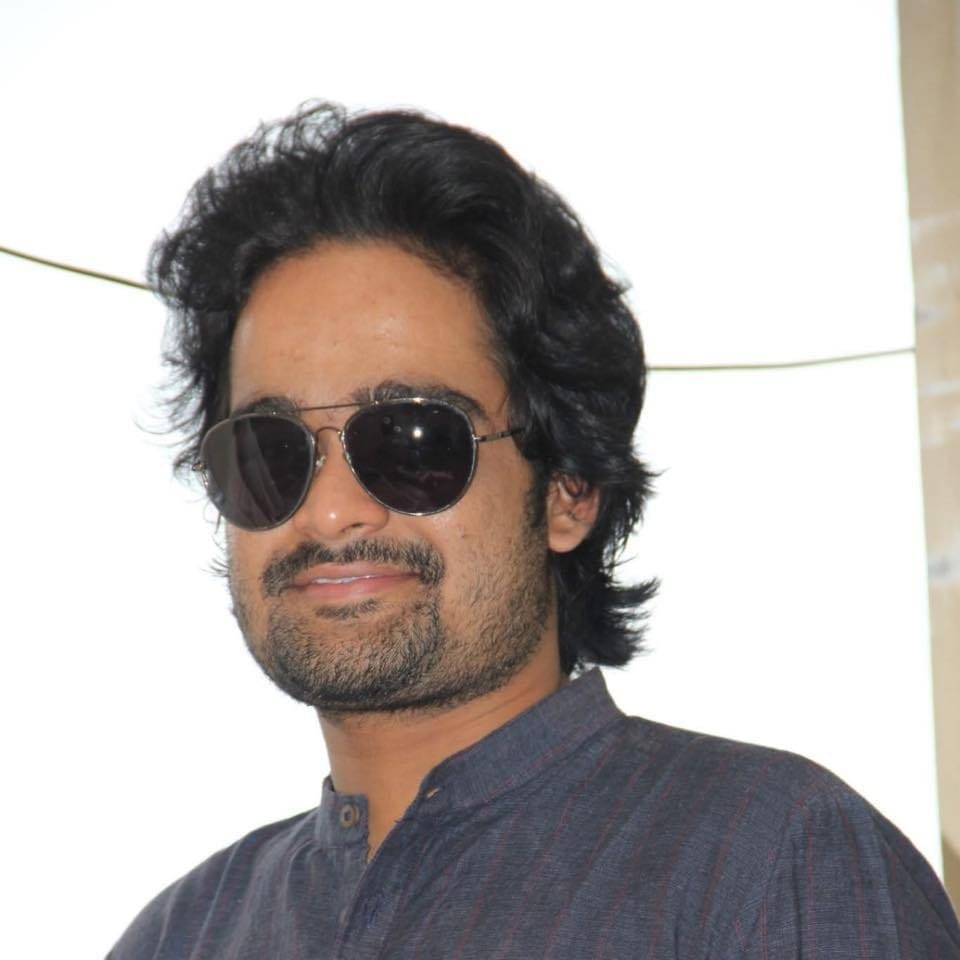
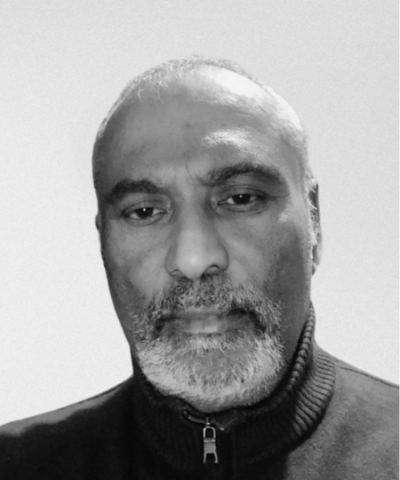
Ana Pararajasingham, the author of Uprooted — a work that documents the journeys and successes of the Sri Lankan Tamil diaspora across the world — is an independent researcher and writer based in Australia. His work has long engaged with questions of justice, displacement and identity.
His earlier publication, Sri Lanka: A Victor’s Peace (2019), brought together a series of essays originally published in international journals and newspapers, offering a critical perspective on post-war Sri Lanka.
He previously served as Director of Programmes at the Centre for Just Peace and Democracy (CJPD), a Switzerland-based action research organisation, from 2007 to 2009, where he was involved in initiatives linked to the peace process.
A strong advocate of multiculturalism, Pararajasingham views it as a practical and necessary framework for multiethnic societies striving for lasting peace, inclusion and social cohesion. He is currently based in Sydney, Australia.
This is a Jaffna Monitor exclusive interview.
Congratulations on your insightful work, Uprooted. What sparked the idea to document the success stories of the Sri Lankan Tamil diaspora? While their achievements are widely acknowledged, they remain surprisingly under-documented. Did you see this book as an attempt to fill that gap?
I have always had this notion—not only of reading, but also of recording what I read—mainly to gain a better perspective on what is happening. So this compulsion to write has always been there.
A few years ago, when I was reflecting on the situation of our people, particularly those living in the global diaspora, I realized that a significant number had been displaced. Yet, even among them, many did not fully grasp the extent of that displacement. The younger generation, in particular, often does not know why they are where they are; they lack a clear understanding of how their families came to be in these different countries.
In multicultural societies like Australia and Canada, there often comes a stage in life when young people begin to rediscover their roots. You see this among Irish Australians, and among people of Greek and Italian backgrounds—second- or third-generation individuals who feel the need to reconnect with their origins.
In the case of Sri Lankan Tamils, I found that there needed to be a source through which they could understand their own history. In many instances, even parents had not shared the story of their displacement with their children. So I felt there was a real need—not only to inform young people about what happened, but also to help the wider communities in which we live understand who we are as a people.
As you know, there is considerable discussion around migration, immigrants, and multiculturalism, especially in Australia and the broader Western world. These were the factors that prompted me to write this book, a project I began about two years ago.
The criteria I used were not limited to individuals who had simply achieved personal success. Rather, I focused on those who had made meaningful contributions to mainstream society—individuals who have been recognized by the wider community for enhancing the quality of life around them.
Some have emerged as public intellectuals, while others are recognized writers, artists, and professionals. My intention was not to include just those who had done well individually, but those who had contributed in a way that positively shaped the societies they are part of.
Given the scale and diversity of the Tamil diaspora, documenting all its success stories is undoubtedly a challenging task. Do you see this book as a comprehensive account, or as the beginning of a larger series you plan to continue?
At the moment, I don’t have plans to turn this into a series. But I must acknowledge that there are many more individuals who could have been included—easily another 30 to 50.
In this book, I documented 34 success stories. However, the decision was not about capturing everyone, but about maintaining a balance—across different disciplines, backgrounds, and countries—while keeping the book to a manageable size.
Having completed the book, I am even more aware that there are many more deserving stories within the Tamil diaspora that could not be included. Unfortunately, it simply wasn’t possible to accommodate all of them in a single volume.
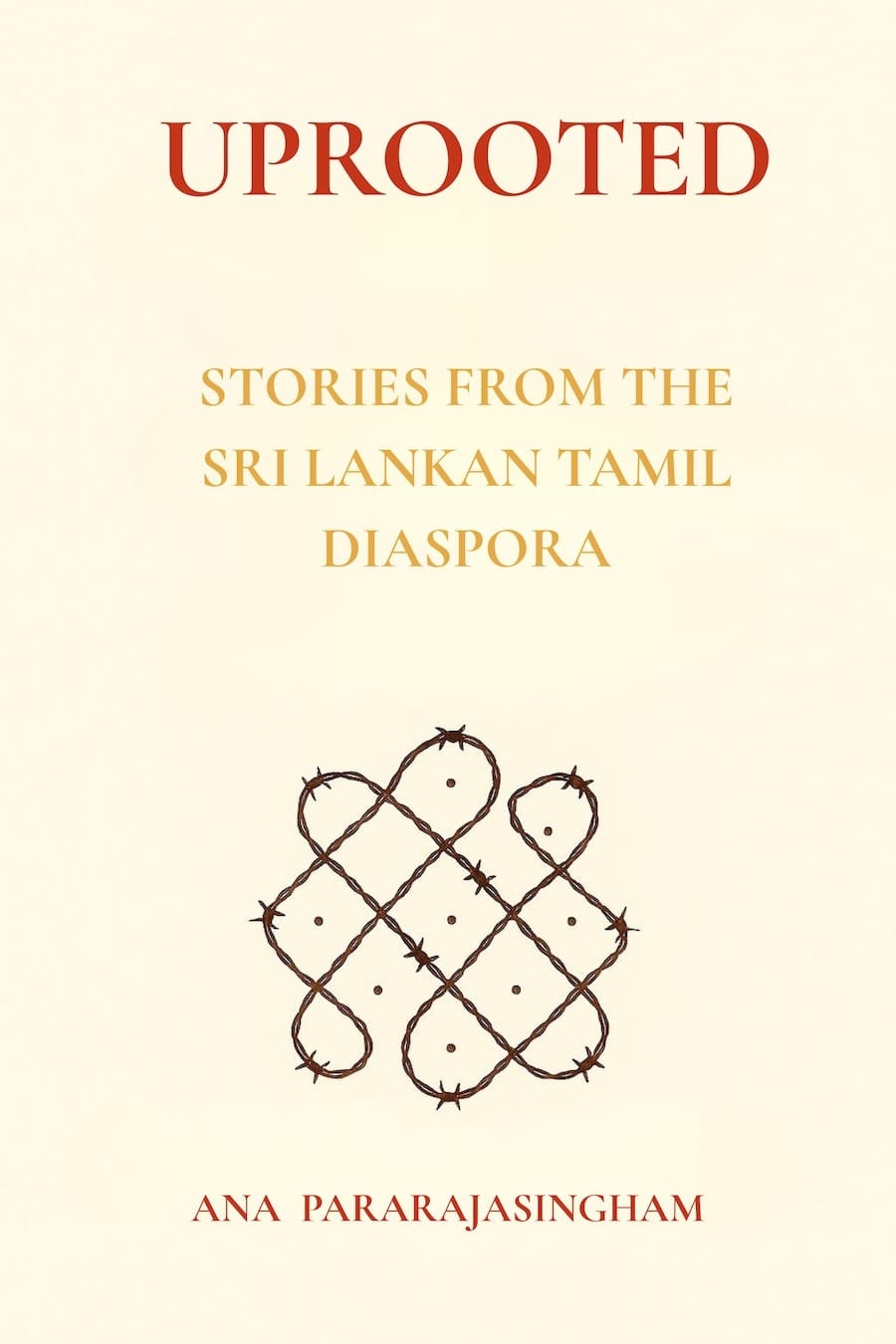
The cover of Uprooted, a book by Ana Pararajasingham documenting the journeys of the Sri Lankan Tamil diaspora.
Do you have any future plans to continue writing Part 2 of this book?
Not immediately. For now, I want to see how this book is received—both within the Tamil diaspora and among people back in Sri Lanka, as well as within the broader mainstream societies where our communities now live.
There are some encouraging signs. For instance, in Australia, the book is currently ranked number one in the South Asian history/biography category, which I find quite gratifying—especially as it is placed alongside well-known works like Shashi Tharoor’s Inglorious Empire.
However, the reception varies across countries. In smaller markets like Australia, even a relatively modest number of sales can push a book to the top of the rankings. But in larger markets such as the UK, Canada, and the United States, I am still waiting to see how the book performs.
So, at this stage, I am observing how it is received before deciding on any future writing plans.
Out of the 34 individuals featured in the book, how many are first-generation migrants, and how many belong to the second generation?
Offhand, I would estimate that, of the 34 individuals featured in the book, 12 are first-generation migrants. In this context, I consider children who migrated with their parents and received all their education in host countries to be part of the second generation, even though they may technically be classified as first generation.
The majority—belong to the second generation, meaning their parents, and in some cases, grandparents, were the ones who initially migrated. In most instances, it is the parents who constitute the first generation.
I’d also like to understand, among the individuals featured, how many are able to speak Tamil and how many are not?
Among the first-generation migrants, almost all of them are able to speak Tamil.
When it comes to the second generation, it varies. Out of the roughly 25 individuals, I would estimate that around 7 to 10 are able to speak Tamil, particularly those from European countries.
In fact, in many parts of Europe, even second- or third-generation individuals tend to be multilingual—they often speak Tamil, English, and the local language, such as Norwegian or German.
However, in English-speaking countries, the pattern is different. With some exceptions, the second generation tends to speak predominantly English, and in many cases, Tamil proficiency is limited or absent.
Do you see the decline of Tamil language use in English-speaking countries as a reflection of a colonial mindset?
Absolutely—yes, I think there is some truth to that. I quite like the term ‘colonised mindset,’ and to an extent, this does reflect that reality.
That said, I must add that many of these individuals are aware of it, and they are making efforts to move beyond it. However, they have largely been brought up in environments where English dominates, so their choices are shaped by those circumstances.
They understand why they have adopted this pattern, and in many cases, it is less a conscious decision and more a result of the context in which they were raised.
My question is this: language is often considered one of the fundamental markers of ethnic identity. If someone is unable to speak the language, how do we then understand or define their identity as Tamil?
That’s a very good question. I do believe that language is of primary importance to ethnicity. However, I would also argue that an understanding of history is equally important.
Let me give you two examples. Take the Irish—there was a time when many did not speak Gaelic. The revival of the language largely came after Ireland gained independence from British rule. Similarly, in Israel, Hebrew had to be consciously revived and reintroduced as a spoken language. In both cases, however, there was a strong sense of identity rooted in history and collective memory, even when the language was not widely spoken.
In the case of the Tamil diaspora, particularly among the first and second generations featured in my book, there is a strong awareness of history—especially the circumstances of displacement and migration. Many may not be fully fluent in Tamil, but they often have some level of understanding, and more importantly, a clear sense of who they are and where they come from.
That said, I fully take your point—language does matter. What I am beginning to observe now, especially among the younger generation, is a renewed interest in reconnecting with the language. Even in cases where parents may not speak Tamil fluently, they are increasingly sending their children to Tamil schools or enrolling them in online classes.
So there is, in a sense, a reawakening—a desire to reconnect with the language, alongside an already strong awareness of history and identity.
We often draw comparisons with communities like the Jews, who have made sustained efforts to preserve their language and identity. Yet within our own diaspora, there appears to be a growing trend where some parents do not teach Tamil to their children—and in some cases, even take pride in that. How do you interpret this shift?
That is indeed unfortunate. However, in my experience, I have encountered more people who regret not being able to speak Tamil than those who take pride in not speaking it. Many say they can understand the language quite well but are unable to speak it fluently.
Personally, I have not encountered many who are genuinely proud of not speaking Tamil. On the contrary, most express a sense of regret. Many parents, especially once they have children or grandchildren, reflect on this and wish they had spoken more Tamil at home.
In households where Tamil was spoken regularly, children have at least developed a good level of comprehension. However, in more westernised families where Tamil was not spoken at home, there has been a greater degree of disconnection, and in some cases, children have become completely alienated from the language.
Interestingly, even among those who have lost the language, there is often a desire to relearn it. That said, for some, the connection has been largely lost.
I also take your point about comparisons with the Jewish community. However, I would say that the comparison is not entirely accurate, given that Jewish communities have sustained their identity through over two thousand years of displacement and historical experience, which is quite different from ours.
Would you agree with the concern that, over the next few generations, the Tamil diaspora may gradually lose its linguistic and cultural distinctiveness through assimilation and intermixing, and come to identify primarily with the countries they live in—such as being Australian or Canadian?
It is very difficult to predict what will happen in the third or fourth generation. You raise a valid concern.
Personally, I believe the world is moving toward becoming increasingly multicultural over the next century. In many ways, this transition is already underway, even if some societies are still grappling with it. Western countries, in particular, are facing ageing populations and will inevitably rely on migration—both skilled and unskilled labour—from what is often referred to as the developing world to sustain their economies.
As a result, these societies will become even more multicultural in the years ahead. Whether people accept it or resist it, this shift is likely to continue.
At the same time, I believe that even within such a multicultural world, there will remain a strong desire among people to understand their roots. We already see this among communities of Irish, Italian, and Greek descent—many of whom, even after several generations and without speaking the original language, still seek to reconnect with their heritage.
I think a similar pattern may emerge more broadly in the future. People may increasingly identify themselves as having mixed ancestry, yet still feel a need to understand where they come from.
That said, this is, of course, speculative. We cannot say with certainty what the world will look like in 50 or 100 years—especially with the rapid pace of technological change, including developments in artificial intelligence, which may reshape societies in ways we can hardly imagine today.
Do you think there is a need to develop formal systems in diaspora countries to help younger generations learn Tamil and stay connected to their cultural roots?
Yes, I do believe there should be systems in place to support this. In some ways, this book itself is an attempt to contribute by documenting history and creating awareness.
That said, there are already some encouraging developments—particularly in countries like Australia. For instance, we have a fairly well-established Tamil school system, with community-run schools teaching the language to younger generations.
Through sustained advocacy, Tamil has also been recognised as a subject in the Year 12 Higher School Certificate (HSC) in states like New South Wales and Victoria. This is significant, as HSC results are used for university admissions, and many Tamil students are now opting to study Tamil at this level. It is certainly encouraging to see the language gaining this kind of institutional recognition.
In addition, there are dedicated Tamil libraries—particularly in cities like Sydney—where younger members of the community do engage with Tamil literature. While the level of participation may not be as high as we would hope, there is clearly an ongoing effort and a growing awareness.
There may be even more extensive initiatives in countries like Canada, which has a larger Tamil population, although I am not as familiar with those developments.
More broadly, I agree with your point that stronger support systems are needed to sustain language and cultural learning.
Looking ahead, there is also an important economic dimension to consider. As Tamil Nadu’s economy continues to grow—and is already performing strongly—there may be practical incentives for people to learn Tamil. For example, in Australia, many people learn languages such as Indonesian or Japanese due to strong economic and professional ties with those countries. A similar trend could emerge with Tamil, particularly if economic engagement with Tamil Nadu continues to deepen.
Of course, this is somewhat speculative—but it is certainly a possibility worth considering.
Diaspora remittances play a crucial role in sustaining day-to-day life in Jaffna and the Northern Province. However, I have a concern that over the next couple of decades, these remittances may decline significantly. First, do you agree with this assessment? And second, if that happens, what impact do you think it will have on the region’s economy and society?
Yes, I do agree with that concern. In fact, I have discussed this issue with a number of people.
At present, many in the diaspora continue to support their families—particularly siblings and close relatives—back home. However, as we move into the second and third generations, that connection is likely to weaken. While some may still contribute, they are unlikely to have the same level of commitment as their parents.
This needs to be addressed collectively—by the diaspora and by communities in the North and East—especially as there is a real possibility that remittance flows will gradually decline.
In that context, there needs to be a stronger focus on education, skills development, and creating sustainable employment opportunities locally, so that people are less dependent on external financial support.
Instead of individual remittances, do you think the diaspora should move towards more collective, structured investments in the North and East—such as establishing industries, educational institutions, or universities?
I ask this because, at times, it feels that sections of the diaspora have been more willing to support conflict-related causes in the past than long-term development initiatives. Not generalising, of course, but this contrast can be quite striking.
Yes, to some extent, there are already individuals and groups within the diaspora engaging in such efforts. For example, organisations such as the Palmyrah initiative and the Vanni Group, along with other community-based groups in Australia, are involved in development activities. There are also informal networks of Tamils who are willing to invest.
However, many in the diaspora remain cautious. A key concern has been the attitude of successive Sri Lankan governments. There is a lingering perception that investments may not be adequately protected or supported, which has created a degree of hesitation. While the current government under Anura Kumara Dissanayake may be attempting to change this perception, there was certainly considerable mistrust in the past.
Interestingly, during the years of conflict, those who were more politically engaged were often more willing to contribute financially, whereas others remained more distant. At present, much of the financial support from the diaspora continues to flow through personal channels—primarily to family members and relatives.
That said, I believe there is significant potential for more structured and collective investment. If proper infrastructure is put in place, along with transparency and confidence that investments will be secure and effectively managed, the diaspora can certainly be encouraged to invest more meaningfully in the North and East.
I understand the mistrust in the past, but have diaspora groups begun engaging with the new government? Or are there still hurdles—particularly from the government’s side—that are limiting this engagement?
I don’t have a definitive answer to that. From what I understand, some diaspora-linked organisations—such as Vanni Hope and similar groups—are active on the ground. However, their work appears to focus primarily on relief and rehabilitation rather than on large-scale investment, such as establishing industries or factories.
I also mention in my book individuals like Raj Rajaratnam, who has shown a strong interest in contributing to development in the North and East. He has spent considerable time in the region and indicated to me that he hopes to act as a catalyst for business and investment there.
That said, I do not have detailed information on the scale or impact of these efforts so far. It may still be in its early stages, and it would be useful to verify, on the ground, how far such initiatives have progressed.
So, while there are indications of interest and intent, the extent of structured engagement or investment remains unclear.
Many young people once took up arms, believing they were protecting their community. Today, however, a significant number of former cadres are living in difficult conditions, even poverty. There have been reports—such as that of a former female cadre who allegedly sold a kidney to repay debt. How do you view this situation, and what responsibility do society and the diaspora have toward these individuals?
Yes, I did read about that in the Jaffna Monitor, and I completely agree—this is one of the saddest aspects of the situation.
Those who once supported these individuals have, to some extent, moved on, and there is clearly a need for much greater support. From what I hear, assistance does exist, but it is often provided on an individual basis. Some groups claim to offer help, but it is certainly not sufficient. In fact, I would say it is far from adequate.
This points to a significant gap. I am not entirely sure what is missing—whether it is a lack of awareness, coordination, or access—but there is clearly something lacking in the way support is organised and delivered.
There needs to be a more structured and sustained approach to addressing this issue.
At the moment, there doesn’t seem to be a clear, coordinated mechanism in place.
I have come across individuals in the diaspora who genuinely want to support people in need. They often express a willingness to contribute, and some even ask if there are reliable contacts or channels through which they can send assistance.
However, the challenge lies in the lack of a structured, transparent system. Many donors are unsure where their contributions are going or how effectively they are being used. This uncertainty creates hesitation.
So while the intent to help certainly exists, what is missing is proper coordination, accountability, and a trusted framework—whether established locally or in partnership with the diaspora—to channel that support in a meaningful and organised way.
Among the 34 individuals featured in your book, each story is compelling in its own way. But were there one or two, in particular, that stood out to you as especially unique or personally interesting?
That’s a difficult question, because I found all of them interesting in their own way. But if I had to highlight a few, three individuals stood out to me.
One is an older figure, Ambalavanar Sivanandan, who migrated in 1958. His story is quite remarkable—having escaped the violence of that period, he later found himself in Nottingham during a time of racial tensions in Britain. He became actively involved in issues of race and was well regarded within sections of the British left. His journey is truly fascinating.
Another is Umesh Arunagirinathan, who left for Germany at the age of 13. His life story, particularly his early migration and subsequent achievements, is quite compelling.
And of course, the artist M.I.A. is also a very interesting figure, with a unique global presence and influence.
That said, each of the 34 individuals has a distinctive story. While these few stood out to me personally, I found something meaningful and engaging in almost every profile.
The style and narrative flow of your book are quite engaging. For readers who may not be familiar with your background, would you describe yourself primarily as a journalist or a writer? How did this writing approach develop?
I would describe myself primarily as a writer. I have always had an inclination to write, and over the past 15 to 16 years, I have been writing quite regularly on a range of topics. I also see myself, to some extent, as an analyst.
Professionally, however, my background is different. I worked as an independent management consultant until I retired a few years ago. My academic background is in business—I have accounting qualifications and an MBA—so my career was largely in that field.
Alongside my professional work, I was also involved in several organisations. For instance, I was associated with the Australasian Federation of Tamil Associations. I also worked with the Centre for Just Peace and Democracy (CJPD) during the peace process
That initiative was part of what is often referred to as Track II diplomacy—bringing together Tamil activists, Sinhala stakeholders, and international academics to explore and support pathways toward a peaceful resolution. I was involved in that work between 2007 and 2009.
So while my profession was in management consulting, writing has always been a consistent and important part of my life.
Could you tell us a bit about yourself—where you were born and when you migrated to Australia?
I was born in Colombo and lived there until my mid-twenties—around the age of 25 or 26. I left Sri Lanka for good in 1978.
After that, I spent a couple of years working in the Middle East, although I didn’t enjoy it very much. I then moved to Zambia in Africa, where I worked for about three years. Following that, I migrated to Australia in 1983.
In terms of family background, my parents and grandparents are originally from Jaffna. My grandparents were from Jaffna, and although my parents later lived in Colombo, they were also born in Jaffna.
My father is from a village called Alaveddy, and my mother is from Tellippalai, which is nearby.
As for myself, I continue to read and write in Tamil regularly, and I remain closely connected to the language.
As a member of the Tamil diaspora, what would be your message or request to three key groups: first, the diaspora community itself; second, Sri Lankan Tamils; and third, the Sri Lankan government?
As for the Sri Lankan Tamil community, I would say that there is a need to strengthen links with the diaspora as much as possible. As you rightly pointed out, if these connections can be channelled into more structured mechanisms of support—rather than relying solely on informal, family-based remittances—it would create a more sustainable and reliable system.
At present, some initiatives are in place, but they are limited in scale and not yet substantial. I believe that individuals in positions of influence within the Sri Lankan Tamil community—people like yourself and others—can play an important role in establishing such structures and facilitating stronger engagement with the diaspora.
Regarding the government, I think the priority should be to build confidence among the diaspora. If there is trust and a sense of security, diaspora communities will be far more willing to invest. Alongside this, progress toward a meaningful political solution—particularly one that includes genuine power-sharing—would also encourage greater engagement. Many in the diaspora view these issues through a political lens, and such developments would make it easier for them to reconnect and contribute.
As for the diaspora itself, I would say there needs to be a renewed sense of responsibility and engagement. Those who are already committed remain deeply involved, while others have remained largely disengaged both during and after the conflict.
However, what is encouraging is the emerging role of the younger generation. In many cases, while parents may have been relatively indifferent, their children—the second and third generations—are showing a growing interest and concern. This is a positive development.
I believe diaspora activists should focus more on engaging and empowering this younger generation, as they are likely to play a key role in the community's future development.