By Aruliniyan Mahalingam
JAFFNA, Sri Lanka — The letter ran to a few hundred words, but its message to the President of Sri Lanka was unambiguous: lawyers in Jaffna, the country's Tamil heartland, believed that the executive branch had reached into the judiciary and moved a judge who had displeased it.
That document — an appeal from the Jaffna Bar Association to President Anura Kumara Dissanayake over the abrupt transfer of High Court Judge A.G. Alexraja — was precisely the kind of accusation the governing National People’s Power, elected in late 2024 on a promise of clean institutions, could least afford.
Yet within hours of its becoming public, a misleading counter-narrative began to spread across NPP-aligned media outlets and social media accounts, recasting the appeal as the work of a small section of the Jaffna Bar Association rather than the association as a whole.
In that telling, the bar association was deeply divided. Only a faction of lawyers had signed on. The association’s own president had resigned in protest. And neighbouring bars across the Jaffna zone had been kept in the dark.
A reconstruction of the bar’s deliberations by Jaffna Monitor, drawing on interviews with more than a dozen lawyers, several of them directly involved in the decision, found that account contradicted by the record at nearly every point.
The appeal to the President was not the initiative of a small faction but the result of a recorded vote of 59 to 1. The sole dissenter was the association’s own president. According to multiple lawyers familiar with the matter, he did not resign in protest over the letter; rather, he stepped down after declining to sign a letter the membership had overwhelmingly voted to send.
Lawyers also rejected suggestions that other bar associations should have been consulted. The posting and transfer of a High Court judge, they noted, fall squarely within the professional remit of the Jaffna Bar Association, making broader consultation unnecessary.
The transfer, in brief
Judge A.G. Alexraja was appointed to the Jaffna High Court on April 22. Barely a month later, he was reassigned to the Badulla High Court, some 350 kilometres away in the central highlands, effective May 31 — an unusually short tenure for a posting in which High Court judges ordinarily serve three to four years. No public explanation has been given.
Lawyers who spoke with Jaffna Monitor have linked the move to interim orders the judge issued in a writ petition in which the Northern Province Governor was a respondent, and to his uncompromising sentencing in narcotics cases. The Judicial Service Commission, which is chaired by the Chief Justice and ordered the transfer, has not publicly addressed the matter.
The Northern Province Governor's Secretariat said Monday that the governor had no connection to the transfer, issuing the statement to dispel what it described as unnecessary speculation. The clarification, however, appeared to do little to quiet the concerns circulating within Jaffna's legal community, where many lawyers said they remained unconvinced by the official denial.
On May 30, the Jaffna Bar Association wrote to President Dissanayake, expressing “complete disbelief and shock” and asking him to investigate.
The narrative
The pro-government version rests on three claims: that the letter represented only a minority of lawyers; that the bar association’s president resigned in protest over its handling; and that other bars in the Jaffna zone — among them Mallakam and Kayts — were neither consulted nor told.
Examined against the bar’s own process, each collapses.
Claim one: a divided bar, a handful of lawyers
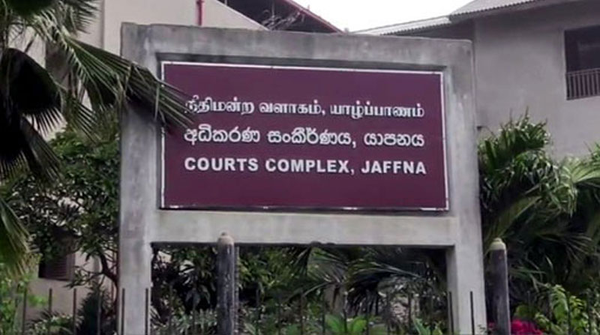
The Jaffna Bar Association’s 16-member executive committee met first, virtually. According to lawyers present, every member except the president agreed that some form of action was warranted, and the committee resolved to convene the general body. That meeting took place on Friday, May 29, at the Jaffna court complex, with roughly 27 to 28 lawyers in attendance. Several members were absent, lawyers said, largely because of the short notice.
The general body then put the central question — whether to write to the president — to a vote conducted through the association’s WhatsApp group, with a deadline of midnight on Saturday, May 30. Fifty-nine lawyers voted in favour. One voted against: the association’s president.
The bar association has roughly 110 members, and not all cast a ballot. But lawyers who described the process said the abstentions should not be read as support for the transfer. Some members were unfamiliar with the messaging application through which the vote was conducted. Others abstained for a procedural reason, believing the petition should have been addressed to the Chief Justice rather than the president.
That preference was rejected by the majority for a reason lawyers described as plain logic. The Chief Justice chairs the Judicial Service Commission, the body that ordered the transfer. To ask him to intervene, several lawyers said, would have been to ask the architect of the decision to undo it. The membership concluded that there was little use in addressing the commission and instead turned to the head of state.
A small number kept their distance from the matter altogether, out of caution. None of that, lawyers stressed, amounted to a defence of the transfer. “Apart from the president, no one raised a voice against taking some form of action,” one lawyer said.
The arithmetic settles the point. The 59 votes in favour were themselves a majority of the association’s roughly 110 members — meaning support for the petition extended well beyond those who actively cast a ballot, and far beyond the handful the counter-narrative describes.
Claim two: a president who resigned ‘in protest’
The president did resign. The dispute is over why.
By the bar’s own conventions, lawyers said, once the general body reaches a decision, the president and secretary are bound to execute it — including by signing the resulting document — whatever their private view. “He can hold his personal opinion, but he cannot act against the decision of the general committee,” one lawyer said.
According to several lawyers, the president declined to sign the letter. When colleagues pressed him, noting that the membership had voted decisively in favour, he resigned rather than put his name to it. The letter was then signed by the vice president, P. Thavapalan, who was subsequently elected to succeed him.
Lawyers familiar with the events said the president’s reluctance was political rather than principled. Several, speaking on condition of anonymity because of the sensitivity of the matter, characterised him as sympathetic to the government and said they believed he was unwilling to be seen publicly opposing it. Those claims could not be independently verified, and he has not publicly set out his reasons for resigning.
Claim three: the bars that were ‘never told’
The assertion that Mallakam, Kayts, and other zone associations were bypassed rests, lawyers said, on a misreading of how jurisdiction works.
A High Court judge’s posting falls within the professional purview of the Jaffna Bar Association, which practices before that court. Bar associations attached to other courts have no standing to deliberate on a Jaffna High Court transfer. “On what authority would another bar take a decision on this?” asked a lawyer who has practised in the Chavakacheri Court.
Consultation across bars becomes necessary only in one circumstance, lawyers said: a strike. Because a work stoppage requires coordination across courts, a decision to strike would have to be communicated to other associations — as happened in a past transfer matter involving the Mullaitivu court. But the Jaffna Bar Association took no decision to strike, so the question of coordinating with other bars did not arise.
Nor, lawyers said, were the other associations in fact kept in the dark. Nagendran Parthipan, vice president for the Jaffna zone of the Bar Association of Sri Lanka — the national, or “mother,” bar — told Jaffna Monitor that in that capacity he serves as a representative and coordinating figure for all the zone’s associations, including Jaffna, Mallakam, Chavakacheri, Point Pedro, Kilinochchi, and Kayts. He said the Jaffna Bar Association had kept him informed and discussed its decisions with him throughout.
Parthipan is also secretary of the Mallakam Bar Association — one of the very bodies the counter-narrative says was not consulted.
The claim that the Jaffna bar acted without consulting other associations, he said, was baseless. “Within the jurisdiction of the Jaffna High Court, ninety-nine percent of lawyers are dissatisfied with this transfer and view it as a grave threat to judicial independence,” Parthipan added.
What the letter cost
For the lawyers who supported the move, the decision carried real personal and professional risk.
To petition the President over a transfer ordered by the Judicial Service Commission is, in practice, to challenge a decision in which the Chief Justice himself took part. Several lawyers spoke candidly about what that could mean for a practitioner: the displeasure of the most powerful figure in the judiciary, the possibility of disciplinary consequences, or damage to one’s professional standing.
There was a further concern. Some feared their stand might be misread as hostility toward the judge appointed to replace Alexraja — an impression that could sour relations with a bench before which they must continue to appear, and invite professional backlash of its own.
They proceeded anyway.
“We are prepared to risk our income and even our livelihoods,” one lawyer told Jaffna Monitor. “What we are not prepared to do is remain silent when we believe judicial independence may be at stake.”